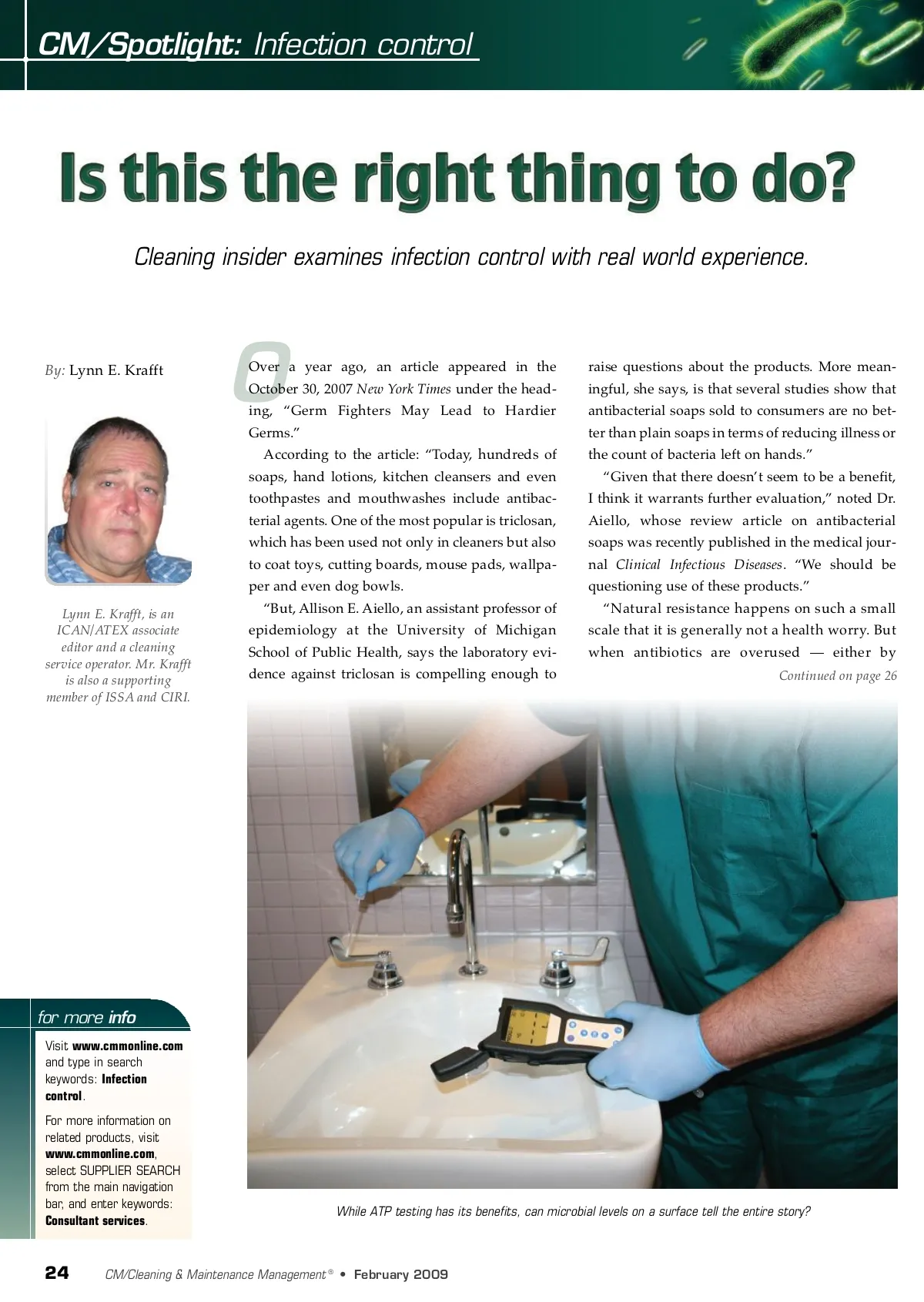
CM/Spotlight: Infection control Cleaning insider examines infection control with real world experience. By: Lynn E. Krafft O Over a year ago, an article appeared in the October 30, 2007 New York Times under the head-ing, “Germ Fighters May Lead to Hardier Germs.” According to the article: “Today, hundreds of soaps, hand lotions, kitchen cleansers and even toothpastes and mouthwashes include antibac-terial agents. One of the most popular is triclosan, which has been used not only in cleaners but also to coat toys, cutting boards, mouse pads, wallpa-per and even dog bowls. raise questions about the products. More mean-ingful, she says, is that several studies show that antibacterial soaps sold to consumers are no bet-ter than plain soaps in terms of reducing illness or the count of bacteria left on hands.” “Given that there doesn’t seem to be a benefit, I think it warrants further evaluation,” noted Dr. Aiello, whose review article on antibacterial soaps was recently published in the medical jour-nal Clinical Infectious Diseases . “We should be questioning use of these products.” “Natural resistance happens on such a small scale that it is generally not a health worry. But when antibiotics are overused — either by Continued on page 26 Lynn E. Krafft, is an ICAN/ATEX associate editor and a cleaning service operator. Mr. Krafft is also a supporting member of ISSA and CIRI. “But, Allison E. Aiello, an assistant professor of epidemiology at the University of Michigan School of Public Health, says the laboratory evi-dence against triclosan is compelling enough to for more info Visit www.cmmonline.com and type in search keywords: Infection control . For more information on related products, visit www.cmmonline.com , select SUPPLIER SEARCH from the main navigation bar, and enter keywords: Consultant services . While ATP testing has its benefits, can microbial levels on a surface tell the entire story? 24 CM/Cleaning & Maintenance Management ® • February 2009
CMM – Archives Feb 2009: 24