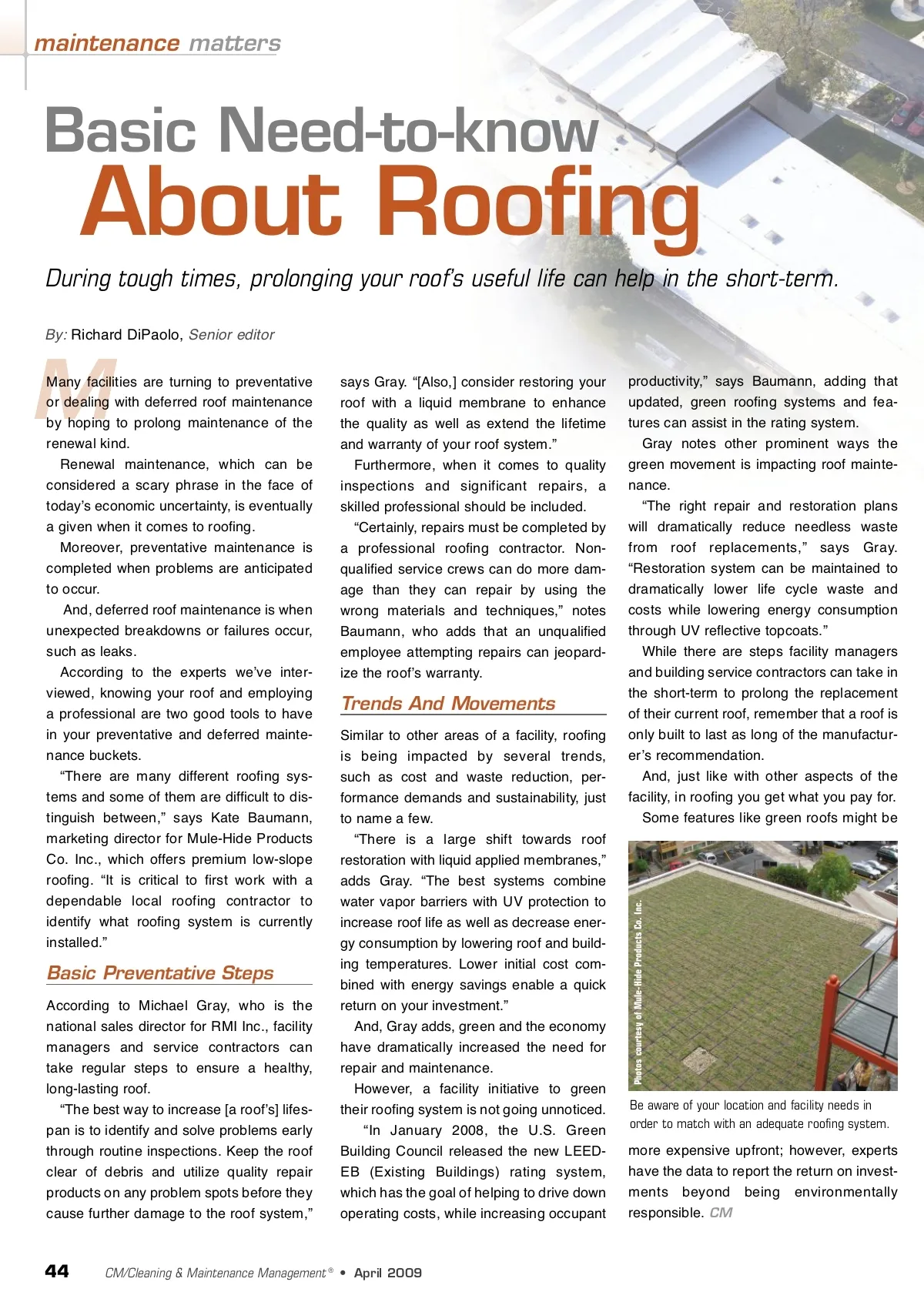
maintenance matters Basic Need-to-know About Roofing says Gray. “[Also,] consider restoring your roof with a liquid membrane to enhance the quality as well as extend the lifetime and warranty of your roof system.” Furthermore, when it comes to quality inspections and significant repairs, a skilled professional should be included. “Certainly, repairs must be completed by a professional roofing contractor. Non-qualified service crews can do more dam-age than they can repair by using the wrong materials and techniques,” notes Baumann, who adds that an unqualified employee attempting repairs can jeopard-ize the roofʼs warranty. productivity,” says Baumann, adding that updated, green roofing systems and fea-tures can assist in the rating system. Gray notes other prominent ways the green movement is impacting roof mainte-nance. “The right repair and restoration plans will dramatically reduce needless waste from roof replacements,” says Gray. “Restoration system can be maintained to dramatically lower life cycle waste and costs while lowering energy consumption through UV reflective topcoats.” While there are steps facility managers and building service contractors can take in the short-term to prolong the replacement of their current roof, remember that a roof is only built to last as long of the manufactur-erʼs recommendation. And, just like with other aspects of the facility, in roofing you get what you pay for. Some features like green roofs might be During tough times, prolonging your roof’s useful life can help in the short-term. By: Richard DiPaolo, Senior editor M Basic Preventative Steps According to Michael Gray, who is the national sales director for RMI Inc., facility managers and service contractors can take regular steps to ensure a healthy, long-lasting roof. “The best way to increase [a roofʼs] lifes-pan is to identify and solve problems early through routine inspections. Keep the roof clear of debris and utilize quality repair products on any problem spots before they cause further damage to the roof system,” Be aware of your location and facility needs in order to match with an adequate roofing system. more expensive upfront; however, experts have the data to report the return on invest-ments beyond being environmentally responsible. CM 44 CM/Cleaning & Maintenance Management ® • April 2009 Photos courtesy of Mule-Hide Products Co. Inc. Many facilities are turning to preventative or dealing with deferred roof maintenance by hoping to prolong maintenance of the renewal kind. Renewal maintenance, which can be considered a scary phrase in the face of todayʼs economic uncertainty, is eventually a given when it comes to roofing. Moreover, preventative maintenance is completed when problems are anticipated to occur. And, deferred roof maintenance is when unexpected breakdowns or failures occur, such as leaks. According to the experts weʼve inter-viewed, knowing your roof and employing a professional are two good tools to have in your preventative and deferred mainte-nance buckets. “There are many different roofing sys-tems and some of them are difficult to dis-tinguish between,” says Kate Baumann, marketing director for Mule-Hide Products Co. Inc., which offers premium low-slope roofing. “It is critical to first work with a dependable local roofing contractor to identify what roofing system is currently installed.” Trends And Movements Similar to other areas of a facility, roofing is being impacted by several trends, such as cost and waste reduction, per-formance demands and sustainability, just to name a few. “There is a large shift towards roof restoration with liquid applied membranes,” adds Gray. “The best systems combine water vapor barriers with UV protection to increase roof life as well as decrease ener-gy consumption by lowering roof and build-ing temperatures. Lower initial cost com-bined with energy savings enable a quick return on your investment.” And, Gray adds, green and the economy have dramatically increased the need for repair and maintenance. However, a facility initiative to green their roofing system is not going unnoticed. “In January 2008, the U.S. Green Building Council released the new LEED-EB (Existing Buildings) rating system, which has the goal of helping to drive down operating costs, while increasing occupant
CMM – Archives Apr 2009: 44