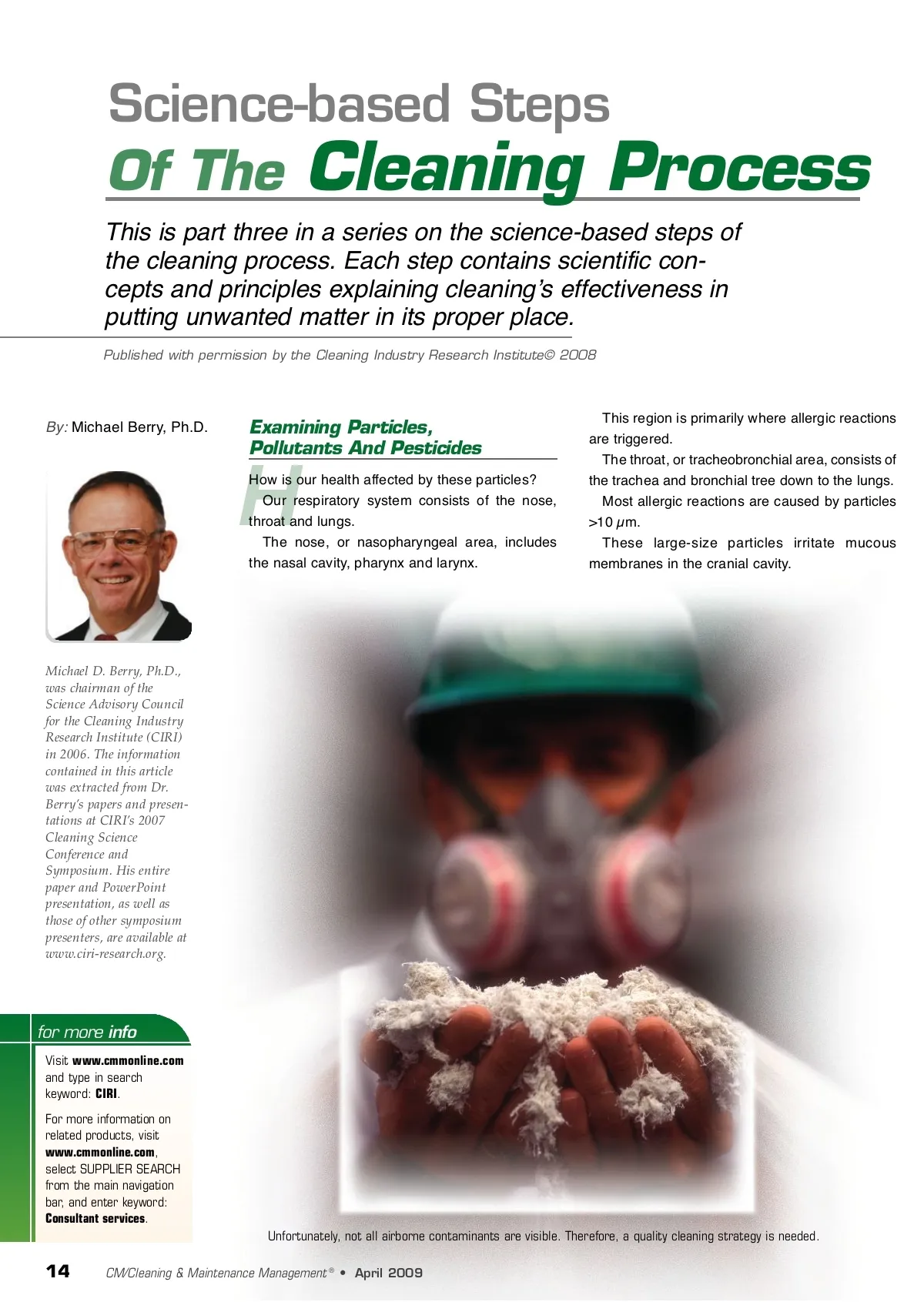
Science-based Steps Of The Cleaning Process This is part three in a series on the science-based steps of the cleaning process. Each step contains scientific con-cepts and principles explaining cleaningʼs effectiveness in putting unwanted matter in its proper place. Published with permission by the Cleaning Industry Research Institute© 2008 By: Michael Berry, Ph.D. Examining Particles, Pollutants And Pesticides H Michael D. Berry, Ph.D., was chairman of the Science Advisory Council for the Cleaning Industry Research Institute (CIRI) in 2006. The information contained in this article was extracted from Dr. Berry’s papers and presen-tations at CIRI’s 2007 Cleaning Science Conference and Symposium. His entire paper and PowerPoint presentation, as well as those of other symposium presenters, are available at www.ciri-research.org. How is our health affected by these particles? Our respiratory system consists of the nose, throat and lungs. The nose, or nasopharyngeal area, includes the nasal cavity, pharynx and larynx. This region is primarily where allergic reactions are triggered. The throat, or tracheobronchial area, consists of the trachea and bronchial tree down to the lungs. Most allergic reactions are caused by particles >10 µm. These large-size particles irritate mucous membranes in the cranial cavity. for more info Visit www.cmmonline.com and type in search keyword: CIRI . For more information on related products, visit www.cmmonline.com , select SUPPLIER SEARCH from the main navigation bar, and enter keyword: Consultant services . Unfortunately, not all airborne contaminants are visible. Therefore, a quality cleaning strategy is needed. 14 CM/Cleaning & Maintenance Management ® • April 2009
CMM – Archives Apr 2009: 14