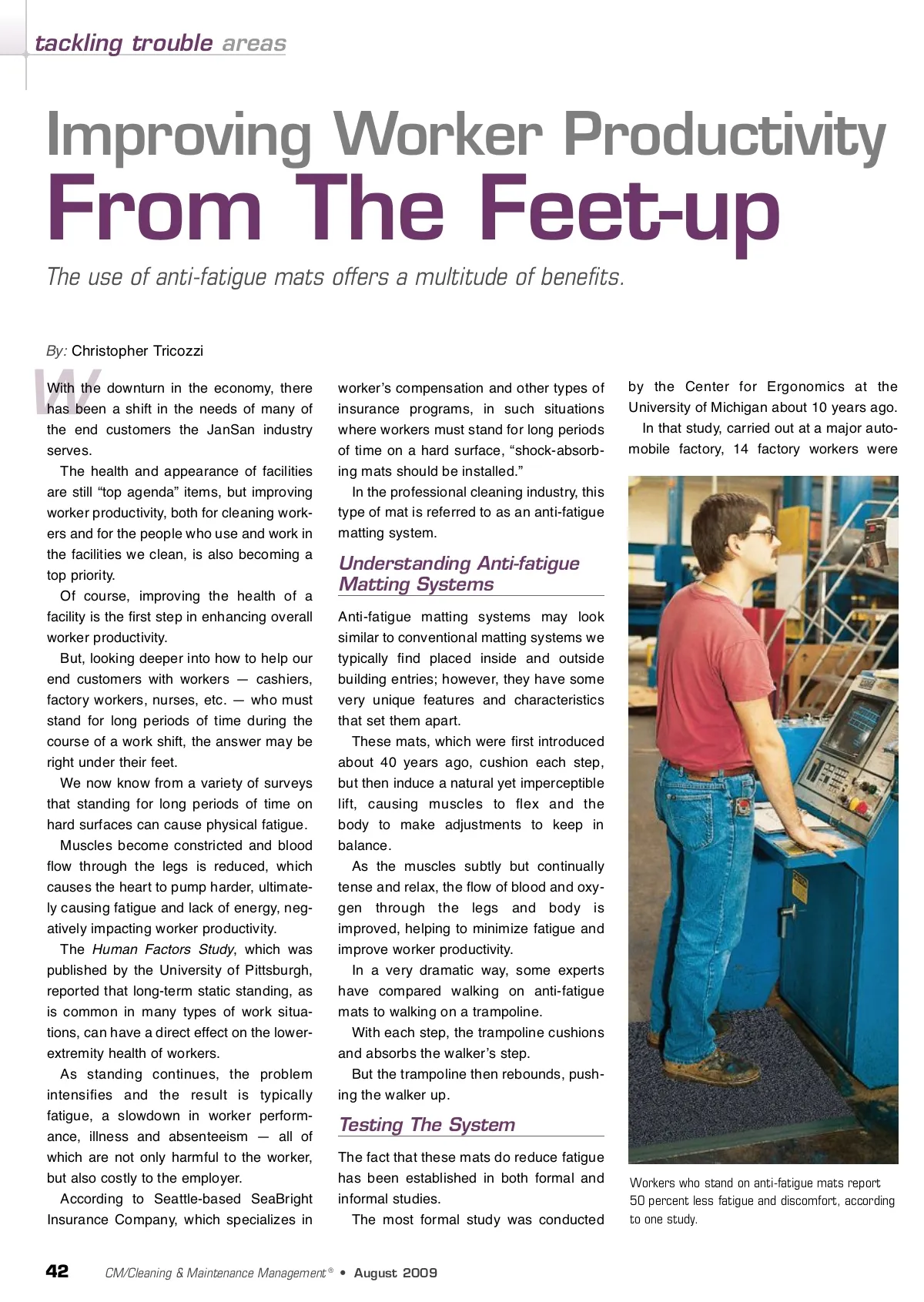
selected and asked to perform their duties standing on different types of floor surfaces and conditions — from concrete to a 3 ⁄ 8 -inch-thick anti-fatigue matting system. The results: The workers who stood on the hard concrete floors during their work shift reported significant levels of fatigue and discomfort in the legs, back and throughout the body, which is enough to potentially impact worker productivity and production. On the other hand, those workers who stood on the anti-fatigue mats reported 50 percent less fatigue and discomfort, mini-mizing or eliminating these problems. A less formal test was conducted by the editors of an industrial facility and safety magazine hoping to answer their own ques-tions about long-term standing and the value of anti-fatigue matting systems. They asked workers in a factory that manufactured washing machines to fill out a “Worker Perception” questionnaire three times per week for two weeks. The questionnaire was designed to evaluate the workersʼ level of fatigue as well as the amount of pain in their legs, feet and lower back before and after working their shifts. The survey indicated: “Considerably less fatigue” was reported after work following the installation of the anti-fatigue matting systems Pain in legs, feet and lower back was also reported to be “much less” after the anti-fatigue mats were installed. However, this study went a step further, seeking to find a direct correlation between less fatigue and leg pain and improved worker productivity. To determine this, the researchers evaluated worker absenteeism and injuries over a 12-month period prior to installation of the mats. Their conclusion, as reported by Compliance Magazine , “We found clear evidence that the installation of the anti-fatigue matting systems resulted in a 2.2 percent increase in worker productivity. Fifty percent of this [productivity] boost came from lower absenteeism while the other 50 percent was linked to decreased down time from injuries.” The Surprise Under The Feet Of the many tools available to cleaning pro-fessionals, matting systems are typically some of the least understood and most undervalued. Fortunately, more and more studies are being published that prove mats do far more than just absorb moisture on a stormy day or keep soils outside. Mats also protect occupant health, are a key component in green cleaning and now we also know they can help improve work-er productivity, all of which makes them far more valuable than many of us had thought before. CM Christopher Tricozzi is vice president of sales and marketing for Crown Mats and Matting, one of the oldest and largest matting companies in the United States. Circle Product Information no. 213 on page 32 www.cmmonline.com 43
CMM – Archives Aug 2009: 43