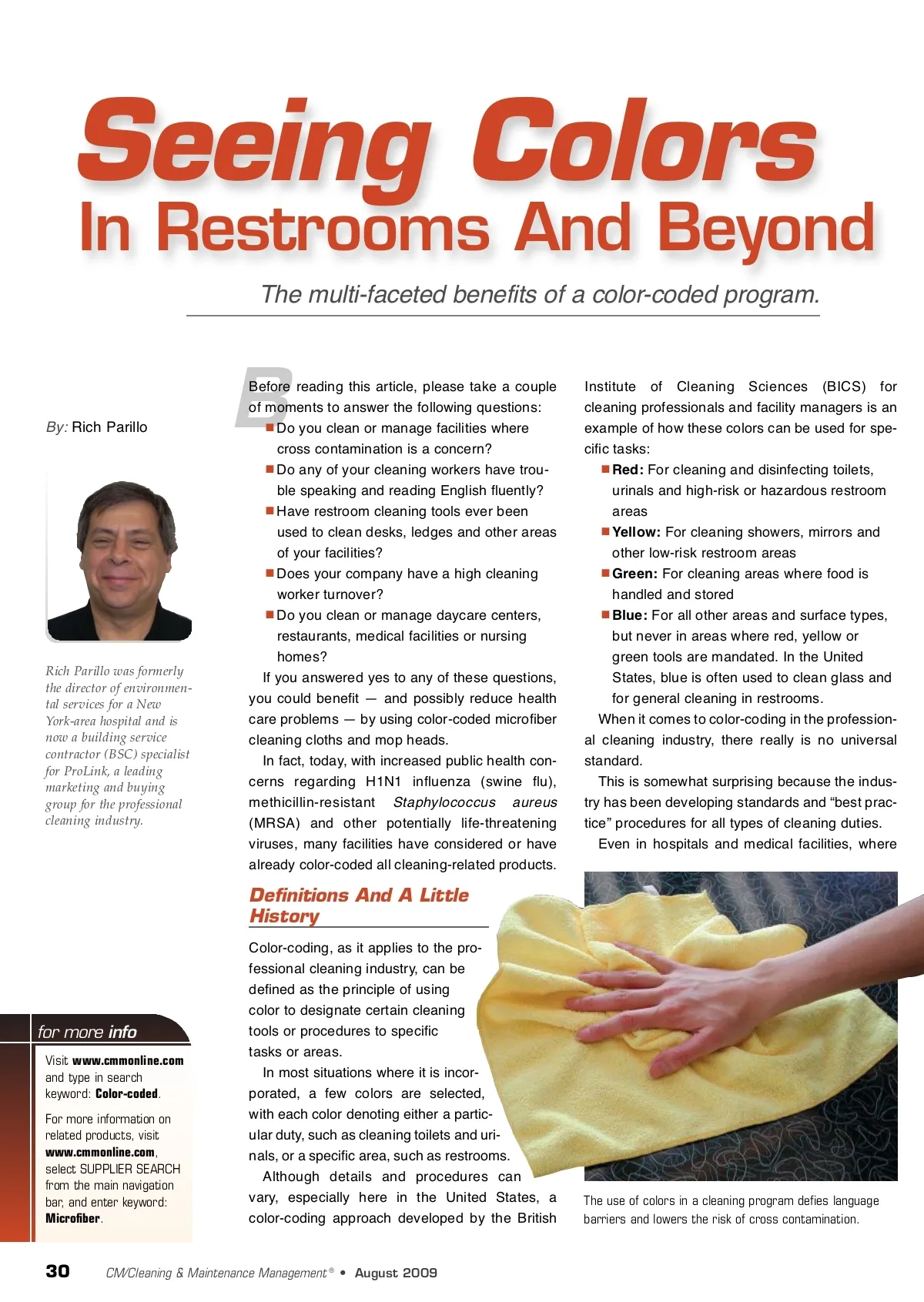
color-coding was first developed and is used most extensively, the procedure used in one facility may not carry over to another. One of the goals of color-coding, and one of the key reasons it was developed in medical facilities, is to help avoid mistakes and to promote safety and training. For instance, at one time, intravenous (IV) injections filled with sodium chloride and those with potassium chloride looked exactly the same. The problem was that potassium chlo-ride, if used by mistake, could cause heart failure and even death. Now, these items are color-coded to avoid the error. Medical facilities have expanded their use of color-coding from drug identification to a broad set of uses, including: Washing machines are color-coded to designate what items may be put in them Patients wear colored wristbands to alert caretakers about whether they can have blood transfusions, what allergies they may have and even whether they have given DNR (do not resuscitate) orders. Red plastic bags are used to indicate hazardous/infectious waste. These products are manufactured in spe-cific colors, making them easy to use in a color-coding cleaning system. However, BICS suggests that most cleaning tools, from floor machines and vacuum cleaners to brushes and hand tools, can also be color-coded based on use and purpose. In addition to helping stop the spread of disease and contamination that might come from using the wrong tool in the wrong area, color-coding helps eliminate literacy barriers because the use of color is not dependent on language. Supervisors report that when a color-coding system is in place, it is easier to ensure that steps are being taken to protect the health of building occupants. Color-coding In The United States England and other areas in Europe and parts of Asia appear to be ahead of the U.S. when it comes to color-coding clean-ing tools and procedures. Considering all of its benefits and the ease of implementation, it is somewhat sur-prising that color-coding has not become more commonplace in the U.S. Possibly, this is because other areas of the world have been more affected by epi-demics and public health issues than we have, and they have learned in the process that color-coding can help prevent these issues. Although many U.S. cleaning contractors do follow color-coding guidelines similar to those listed earlier, contractors and facility managers will often devise their own color combinations to meet their specific needs. This means no standard is in place, which can result in confusion and mistakes. It is hoped that — especially after our recent scare over the swine flu — the industryʼs leading cleaning associations and more of its experts will hear the call and encourage the establishment of a color-coding standard to help protect public health and improve the effectiveness of cleaning in the United States. CM Use In The Professional Cleaning Industry More than a decade ago, the BICS worked directly with cleaning contractors, manufac-turers, distributors and facility managers to develop a color-coding system for cleaning; it is used in many facilities throughout England. “The purpose and reasoning behind the system is simple: To prevent cross contami-nation,” says Mike Sweeny, director of BICS. Sweeny explains that by separating sup-plies used to clean urinals and toilets, for instance, from tools used to clean food preparation areas, contamination is virtual-ly eliminated. In some cases, cleaning contractors place decals on specific tools and equip-ment, designating their use. In other cases, the actual tool used may be a specific color. An often used example of this is microfiber cleaning cloths and mop heads. THE NEW STANDARD IN TOUCHLESS CLEANING CONVENIENCE ICS SERIES BATTERY POWERED MOBILE CLEANING SYSTEM The ICS Series Mobile Cleaning System utilizes automated touchless technology for daily cleaning applications. Ideal for use in: s 3CHOOLS  5NIVERSITIES s (EALTHCARE &ACILITIES s &ITNESS #ENTERS -6 3 2 1 ) 2 s 3UPERMARKETS  2ETAIL s 4HEME 0ARKS AND -ORE 0 8 % 0 = 6 ) 7 4 3 2 & 0 7 -) ' 0 ) % : )2 2 &OR CONTACT & OR MORE INFORMATION�c; INFORMA TION�c; PLEASE CONT TACT US ATa; A Ta; www.hydro-ics.com www .hydro-ics.com or call: 1-800-543-7184 Circle Product Information no. 207 on page 32 www.cmmonline.com -2 = 7 8 ) 1 + 7 31
CMM – Archives Aug 2009: 31