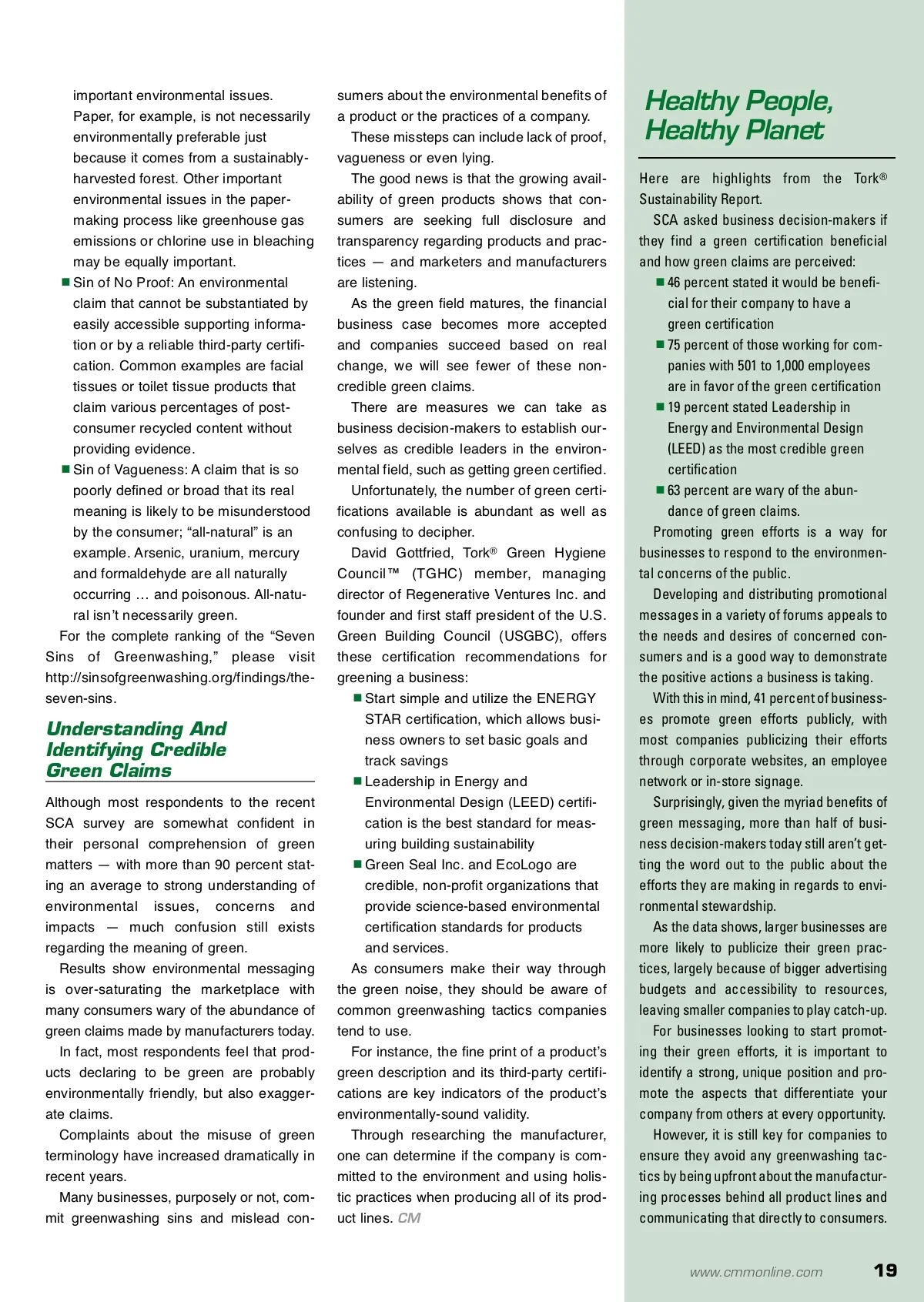
Greenwashing: Making Companies Come Clean About Their Claims By: Mike Kapalko W Mike Kapalko, SCA Tissue North America sustainabili-ty marketing manager, works to promote health and environmental respon-sibility with customers by taking SCA’s holistic approach to manufacturing its Tork systems and cost saving solutions. Kapalko has more than 12 years experience working in the away-from-home sanitary paper market and in the commercial foodservice industry. SCA, maker of the Tork ® brand, is a global hygiene and paper company and was ranked as the world’s greenest paper com-pany in 2007 by The Independent and Experts In Responsible Investment Solutions (EIRIS) research. With another company claiming to be “green” seemingly every day, itʼs becoming more difficult to decipher whatʼs real and whatʼs hype. As the business of going green becomes increasingly more important, itʼs necessary to understand the meaning of green and where the future of this movement is headed so that compa-nies can implement environmentally responsible programs to help sustain our planet. The Rise Of The Green Business Revolution Some people are convinced that going green is just another trend and are unwilling to adopt envi-ronmentally responsible lifestyles and operations and remain standing on the sidelines of the envi-ronmental movement. This group, however, is shrinking. According to a recent survey by SCA Tissue North America, the business of green is on the rise with more than three-quarters of business decision-makers purchasing green products and most saying they believe the role of the environ-ment will increase in the future. These are strong indications that the green movement is here to stay. Additionally, the facts regarding our environ-ment make the case for corporate, holistic stew-ardship. The planetʼs population has increased from 4 billion people in 1950 to 6.8 billion in 2008. By 2025, experts predict 9 billion people will inhabit the Earth, further straining limited reserves of natural resources unless environmen-tally responsible practices become a way of life. More and more businesses are initiating green efforts as the benefits of strategically aligning environmentally friendly practices with specific business goals become apparent. Larger companies are more likely to make the transition to environmental responsibility, since they have more customers and stakeholders influencing the adoption of such practices. Being sustainable is now a universal cause, but the movement comes with mixed messages. However, greenwashing, which is understood as the act of misleading consumers regarding the environmental practices of a company or the environmental benefits of a product or service, remains a reoccurring theme as companies join the bandwagon and make green claims about products and services that may not be valid. The definition of greenwashing has also contin-ued to change because the marketing and value put behind products are also evolving. For instance, companies are starting their own green certification programs and publicizing broad statements about environmentally responsible practices that may or may not be legitimate. Lowering The Green Noise The green noise has become overwhelming and saturated in the industry. Companies should be educated to work within standards already set by trusted third parties. In a recent study commissioned by TerraChoice Environmental Marketing and their EcoLogo Program, “Seven Sins of Greenwashing” were found to exist in the realm of the consumer market. Here are a few of the most common mistakes companies are making when trying to bolster green efforts and claims: Sin of the Hidden Trade-off: A claim suggest-ing that a product is green based on a nar-row set of attributes without attention to other for more info Visit www.cmmonline.com and type in search keyword: Sustainability . For more information on related products, visit www.cmmonline.com , select SUPPLIER SEARCH from the main navigation bar, and enter keyword: Green . 18 CM/Cleaning & Maintenance Management ® • January 2010
CMM – Archives Jan 2010: 18