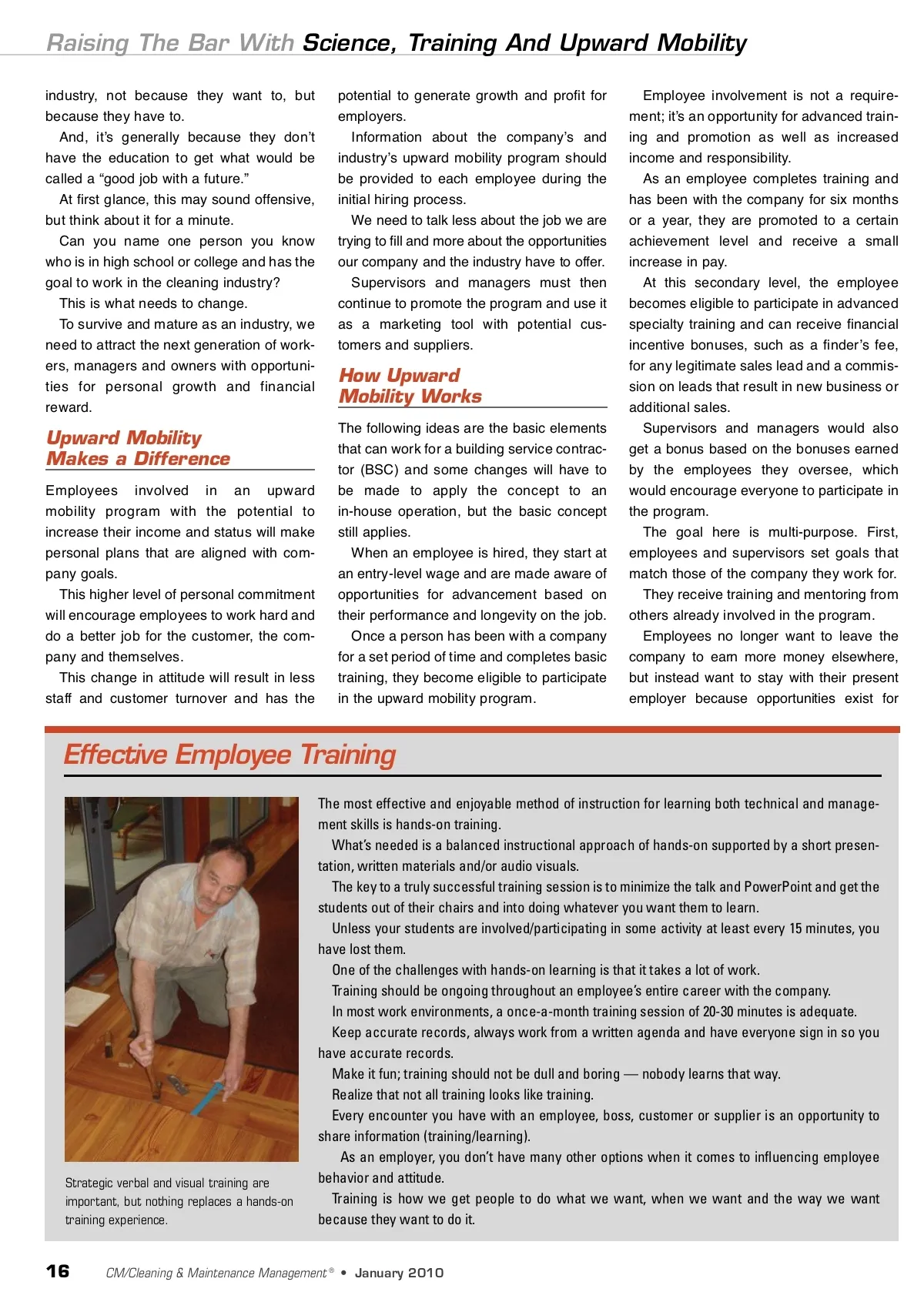
Raising The Bar With Science, Training And Upward Mobility industry, not because they want to, but because they have to. And, itʼs generally because they donʼt have the education to get what would be called a “good job with a future.” At first glance, this may sound offensive, but think about it for a minute. Can you name one person you know who is in high school or college and has the goal to work in the cleaning industry? This is what needs to change. To survive and mature as an industry, we need to attract the next generation of work-ers, managers and owners with opportuni-ties for personal growth and financial reward. potential to generate growth and profit for employers. Information about the companyʼs and industryʼs upward mobility program should be provided to each employee during the initial hiring process. We need to talk less about the job we are trying to fill and more about the opportunities our company and the industry have to offer. Supervisors and managers must then continue to promote the program and use it as a marketing tool with potential cus-tomers and suppliers. Employee involvement is not a require-ment; itʼs an opportunity for advanced train-ing and promotion as well as increased income and responsibility. As an employee completes training and has been with the company for six months or a year, they are promoted to a certain achievement level and receive a small increase in pay. At this secondary level, the employee becomes eligible to participate in advanced specialty training and can receive financial incentive bonuses, such as a finderʼs fee, for any legitimate sales lead and a commis-sion on leads that result in new business or additional sales. Supervisors and managers would also get a bonus based on the bonuses earned by the employees they oversee, which would encourage everyone to participate in the program. The goal here is multi-purpose. First, employees and supervisors set goals that match those of the company they work for. They receive training and mentoring from others already involved in the program. Employees no longer want to leave the company to earn more money elsewhere, but instead want to stay with their present employer because opportunities exist for How Upward Mobility Works The following ideas are the basic elements that can work for a building service contrac-tor (BSC) and some changes will have to be made to apply the concept to an in-house operation, but the basic concept still applies. When an employee is hired, they start at an entry-level wage and are made aware of opportunities for advancement based on their performance and longevity on the job. Once a person has been with a company for a set period of time and completes basic training, they become eligible to participate in the upward mobility program. Upward Mobility Makes a Difference Employees involved in an upward mobility program with the potential to increase their income and status will make personal plans that are aligned with com-pany goals. This higher level of personal commitment will encourage employees to work hard and do a better job for the customer, the com-pany and themselves. This change in attitude will result in less staff and customer turnover and has the Effective Employee Training The most effective and enjoyable method of instruction for learning both technical and manage-ment skills is hands-on training. What’s needed is a balanced instructional approach of hands-on supported by a short presen-tation, written materials and/or audio visuals. The key to a truly successful training session is to minimize the talk and PowerPoint and get the students out of their chairs and into doing whatever you want them to learn. Unless your students are involved/participating in some activity at least every 15 minutes, you have lost them. One of the challenges with hands-on learning is that it takes a lot of work. Training should be ongoing throughout an employee’s entire career with the company. In most work environments, a once-a-month training session of 20-30 minutes is adequate. Keep accurate records, always work from a written agenda and have everyone sign in so you have accurate records. Make it fun; training should not be dull and boring — nobody learns that way. Realize that not all training looks like training. Every encounter you have with an employee, boss, customer or supplier is an opportunity to share information (training/learning). As an employer, you don’t have many other options when it comes to influencing employee behavior and attitude. Training is how we get people to do what we want, when we want and the way we want because they want to do it. Strategic verbal and visual training are important, but nothing replaces a hands-on training experience. 16 CM/Cleaning & Maintenance Management ® • January 2010
CMM – Archives Jan 2010: 16