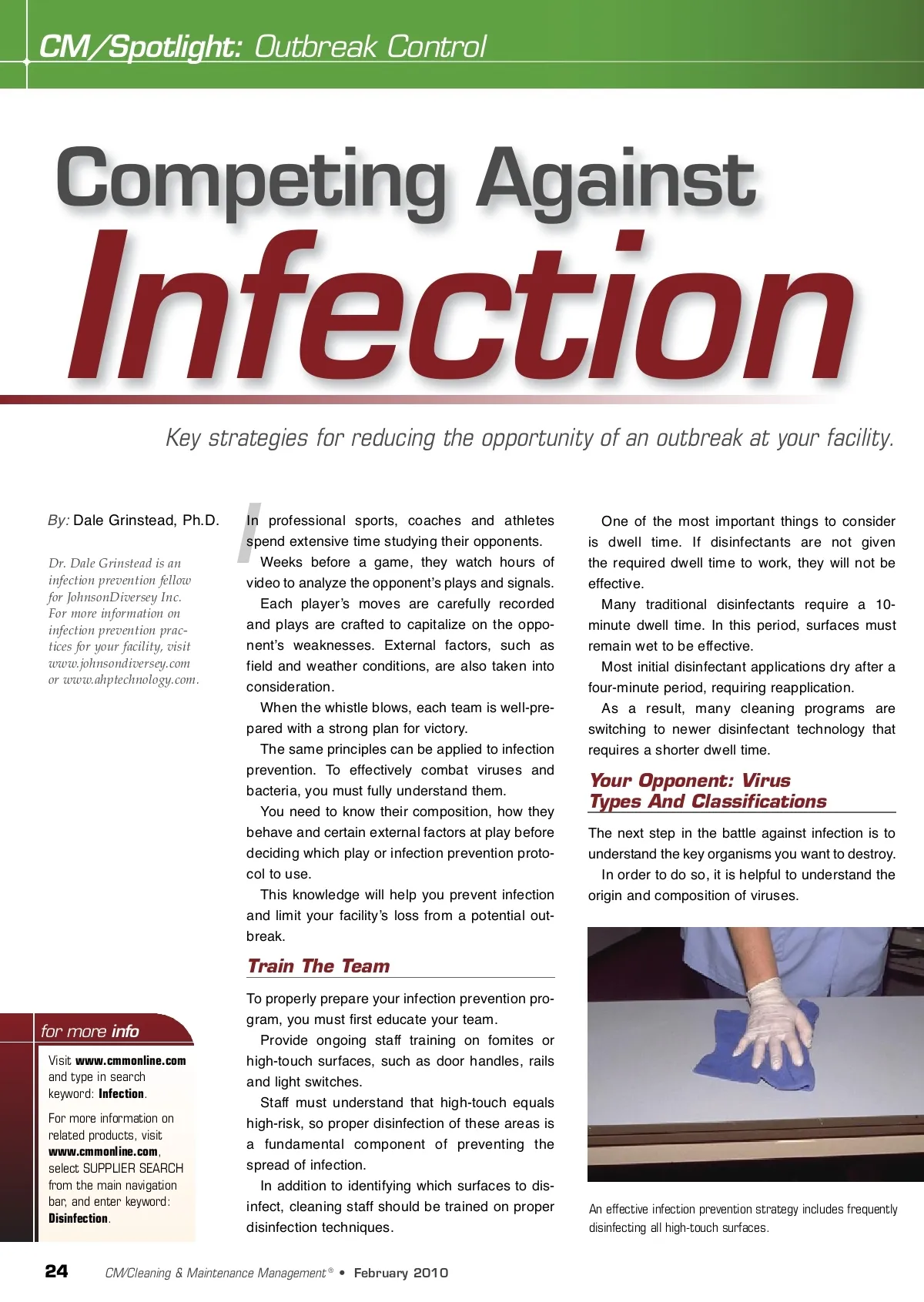
CM/Spotlight: Outbreak Control Competing Against Infection Key strategies for reducing the opportunity of an outbreak at your facility. By: Dale Grinstead, Ph.D. Dr. Dale Grinstead is an infection prevention fellow for JohnsonDiversey Inc. For more information on infection prevention prac-tices for your facility, visit www.johnsondiversey.com or www.ahptechnology.com. I In professional sports, coaches and athletes spend extensive time studying their opponents. Weeks before a game, they watch hours of video to analyze the opponentʼs plays and signals. Each playerʼs moves are carefully recorded and plays are crafted to capitalize on the oppo-nentʼs weaknesses. External factors, such as field and weather conditions, are also taken into consideration. When the whistle blows, each team is well-pre-pared with a strong plan for victory. The same principles can be applied to infection prevention. To effectively combat viruses and bacteria, you must fully understand them. You need to know their composition, how they behave and certain external factors at play before deciding which play or infection prevention proto-col to use. This knowledge will help you prevent infection and limit your facilityʼs loss from a potential out-break. One of the most important things to consider is dwell time. If disinfectants are not given the required dwell time to work, they will not be effective. Many traditional disinfectants require a 10-minute dwell time. In this period, surfaces must remain wet to be effective. Most initial disinfectant applications dry after a four-minute period, requiring reapplication. As a result, many cleaning programs are switching to newer disinfectant technology that requires a shorter dwell time. Your Opponent: Virus Types And Classifications The next step in the battle against infection is to understand the key organisms you want to destroy. In order to do so, it is helpful to understand the origin and composition of viruses. Train The Team To properly prepare your infection prevention pro-gram, you must first educate your team. Provide ongoing staff training on fomites or high-touch surfaces, such as door handles, rails and light switches. Staff must understand that high-touch equals high-risk, so proper disinfection of these areas is a fundamental component of preventing the spread of infection. In addition to identifying which surfaces to dis-infect, cleaning staff should be trained on proper disinfection techniques. for more info Visit www.cmmonline.com and type in search keyword: Infection . For more information on related products, visit www.cmmonline.com , select SUPPLIER SEARCH from the main navigation bar, and enter keyword: Disinfection . An effective infection prevention strategy includes frequently disinfecting all high-touch surfaces. 24 CM/Cleaning & Maintenance Management ® • February 2010
CMM – Archives Feb 2010: 24