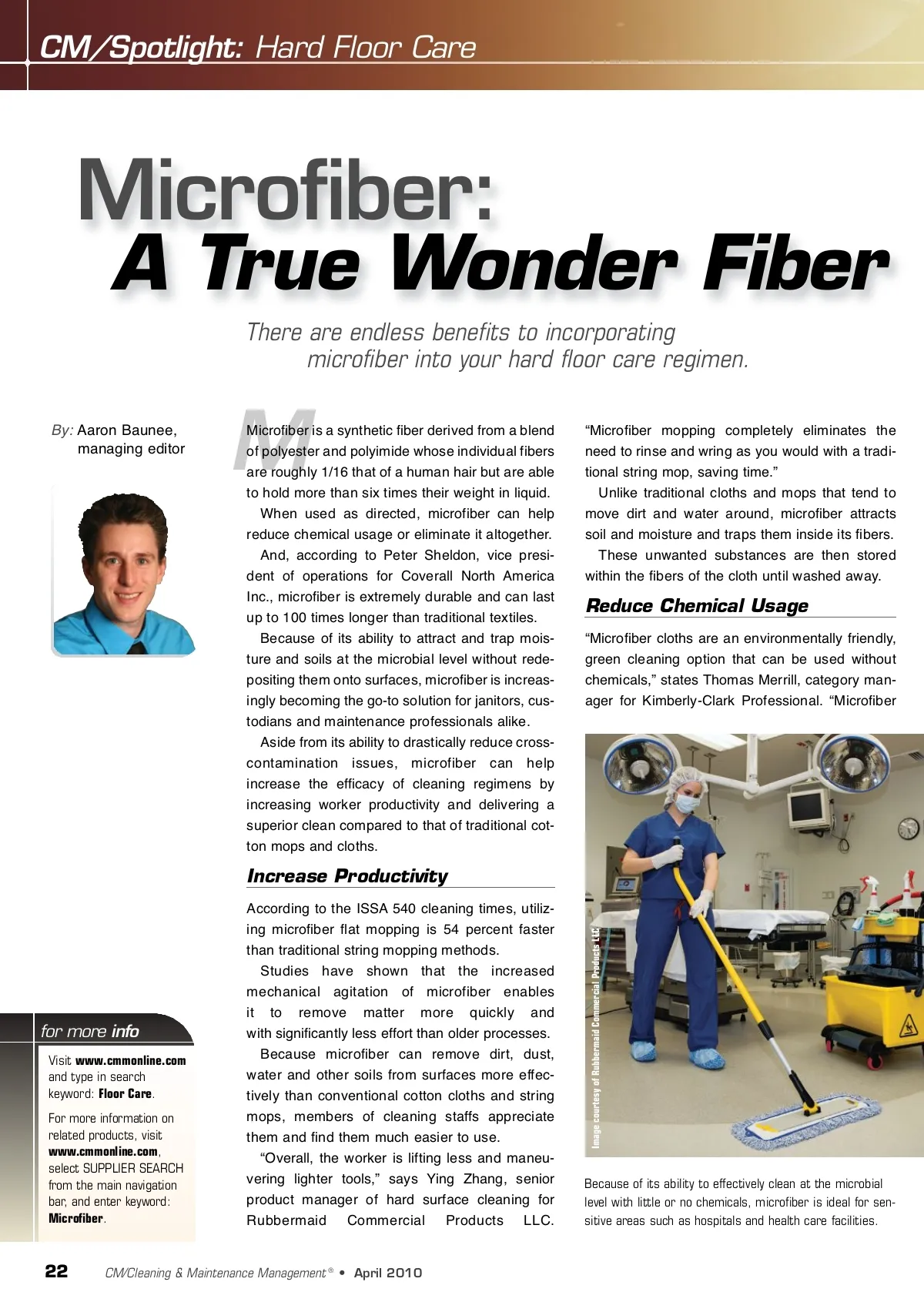
cloths effectively trap soil and quickly absorb liquid for streak-free cleaning on vir-tually any surface — from glass, mirrors and bathroom fixtures, to stainless steel, brass and more.” There are now even microfiber cloths offering antimicrobial protection, meaning they clean while inhibiting the growth of stain-and odor-causing bacteria on the cloths or mops. “Because microfiber can trap more dust and dirt than traditional mops, and remove up to 95 percent of microorganisms, microfiber requires less chemical use than traditional cleaning tools,” notes Zhang. The U.S. Green Building Council (USGBC) specifies microfiber products as part of their Leadership in Energy and Environmental Design (LEED) certification requirements because they conserve water, reduce the use of disposable prod-ucts and require fewer harsh chemicals. and have discovered the benefits microfiber has to offer. “Microfiber allows for better soil removal with less water and fewer chemicals than any other textile currently available,” adds Sheldon. “While vacuum recovery methods are the most effective at complete soil removal, textiles will continue to be needed to clean irregular surfaces that simply have to be wiped.” As microfiber continues to expand into different markets, the technology itself will continue to evolve. But, as Zhang points out, buyers should be aware because “not all microfiber is created equal.” CM Reduce Your Carbon Footprint “Microfiber mops require less space in washers and dryers than conventional mops do, saving on water, detergent and energy,” proclaims Zhang. “This extended life cycle, along with the reduction in labor and chemi-cal costs, results in a lower overall cost.” A traditional microfiber cloth or mop can withstand as many as 500 launderings — far surpassing the launderability of cotton counterparts. Because of this — coupled with the fact that fewer chemicals are required with their use — an investment in microfiber will undoubtedly pay for itself. According to Kathy Ledford of Microfiber Products Ltd., the trick is to train workers to use microfiber and get them away from the old ways of cotton cloths and mops. “Once workers learn the benefits and the ease of use microfiber products provide, they will gladly throw down that old string mop and kick that bucket of dirty water away,” concludes Ledford. While certain industries embraced microfiber technology years ago, new mar-ket segments such as health care, educa-tion and office buildings have started using microfiber cleaning solutions more often Circle Product Information no. 202 on page 32 www.cmmonline.com 23
CMM – Archives Apr 2010: 23