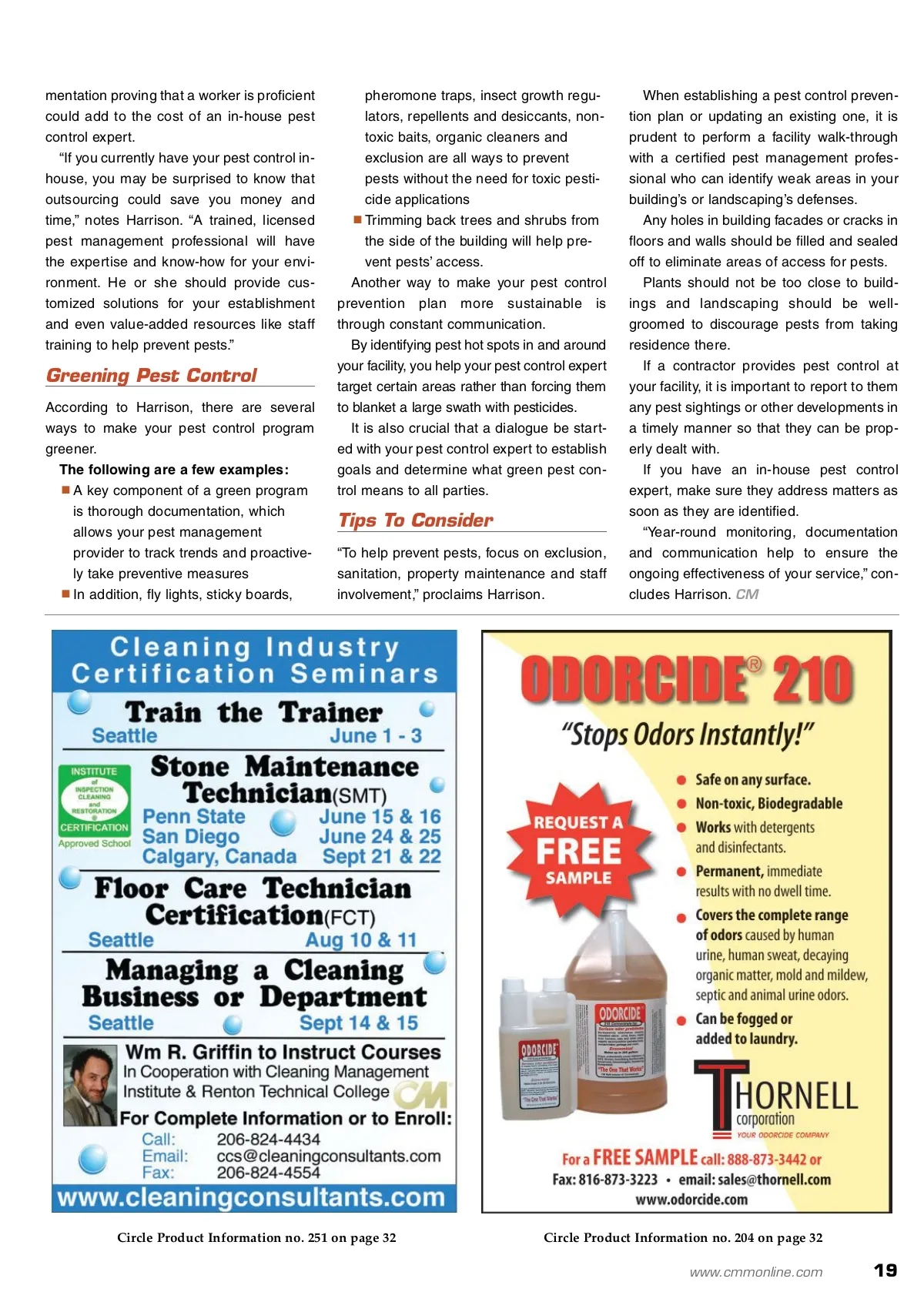
Pest Control Give yourself an advantage and address pest control issues before they manifest into problems. By: Aaron Baunee Proactive W Whether they welcome themselves into your facil-ity or onto the surrounding grounds or are brought in with flowers, food or other items, pesky pests can be a source of persistent problems. By identifying which pests are common in your region and their modes of operation, a possible infestation can be conquered. An argument commonly heard from building owners is, “We don’t need a pest control plan because we don’t have any problem pests.” Well, the reason there are no pests is because the prevention plan in place is functioning properly. Eliminate the pest control prevention plan or scale it back and those birds, bats, mice and other bugs with exoskeletons and thoraxes will swoop down and come marching into your facility. Who Should Handle The Problem? Because it is not always feasible for all facilities to pay the salary and benefits of an in-house pest control expert, many are outsourcing the work to licensed and reputable companies. And, with the ever-changing pesticide regula-tions and laws, the necessary education and con-stant training to keep an in-house pest control expert abreast to the latest in product formulations and application could become costly and time-consuming. “If you are business who performs pest control, you must possess a pest control business license,” opines Robert Jess, owner of RJ Cleaning Service Inc. In addition, the licensed applicator must pass examinations from their state Department of Agriculture. “We are not licensed for pest control, so we don’t do it,” says Ed Samson, owner of Ameri-Clean Commercial Inc. Failure to obtain the proper licensing and docu-Eliminate The Problem At Its Source While it is human nature to react to situations, pest control experts recommend being proactive in your approach. By implementing an integrated pest manage-ment (IPM) approach, elements that could make your establishment attractive to pests — readily available sources of food, water and shelter — are reduced and make your facility or grounds less fitting for pests’ needs. “I like to compare IPM to taking vitamins for your health — it’s a lot easier to prevent a cold on the front end than treating once you have it,” states Dr. Ron Harrison, director of technical services for Orkin LLC. “Through proactive meas-ures, IPM helps reduce the need for pesticide applications and other reactive measures.” By adhering to the proactive IPM approach, potentially toxic chemical and pesticide treat-ments are used only as a last resort, which lessens the chance of adverse health effects to end-users and building occupants alike. Visit www.cmmonline.com and type in search keyword: Pest Control . For more information on related products, visit www.cmmonline.com , select SUPPLIER SEARCH from the main navigation bar, and enter keyword: Pest Control . Regular inspections of your property’s exterior should be performed to identify and correct any potential pest entry points such as cracks and crevices along walls. 18 CM/Cleaning & Maintenance Management ® • May 2010 Image courtesy of Orkin LLC for more info
CMM – Archives May 2010: 18