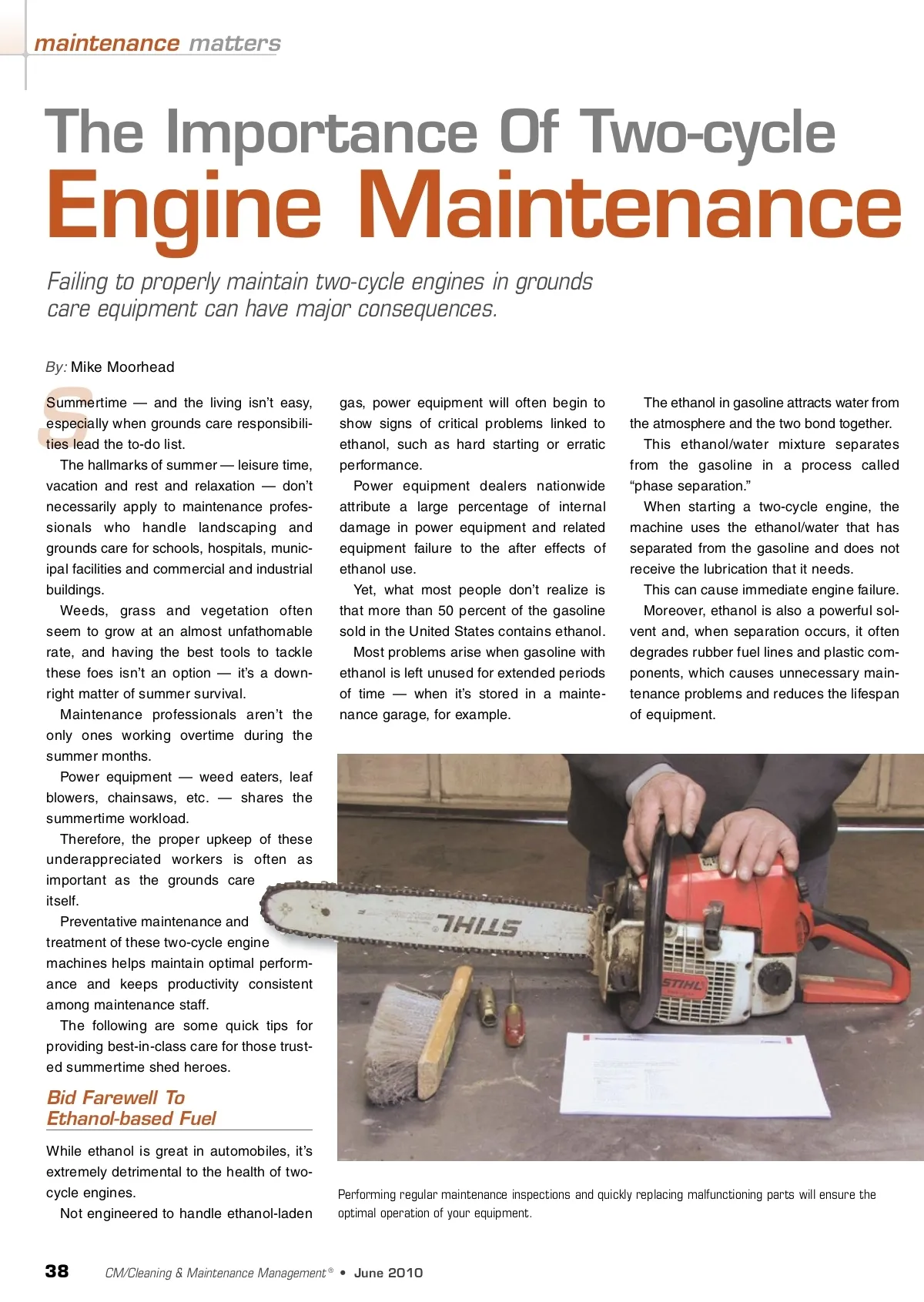
maintenance matters The Importance Of Two-cycle Engine Maintenance Failing to properly maintain two-cycle engines in grounds care equipment can have major consequences. By: Mike Moorhead S Summertime — and the living isn’t easy, especially when grounds care responsibili-ties lead the to-do list. The hallmarks of summer — leisure time, vacation and rest and relaxation — don’t necessarily apply to maintenance profes-sionals who handle landscaping and grounds care for schools, hospitals, munic-ipal facilities and commercial and industrial buildings. Weeds, grass and vegetation often seem to grow at an almost unfathomable rate, and having the best tools to tackle these foes isn’t an option — it’s a down-right matter of summer survival. Maintenance professionals aren’t the only ones working overtime during the summer months. Power equipment — weed eaters, leaf blowers, chainsaws, etc. — shares the summertime workload. Therefore, the proper upkeep of these underappreciated workers is often as important as the grounds care itself. Preventative maintenance and treatment of these two-cycle engine machines helps maintain optimal perform-ance and keeps productivity consistent among maintenance staff. The following are some quick tips for providing best-in-class care for those trust-ed summertime shed heroes. gas, power equipment will often begin to show signs of critical problems linked to ethanol, such as hard starting or erratic performance. Power equipment dealers nationwide attribute a large percentage of internal damage in power equipment and related equipment failure to the after effects of ethanol use. Yet, what most people don’t realize is that more than 50 percent of the gasoline sold in the United States contains ethanol. Most problems arise when gasoline with ethanol is left unused for extended periods of time — when it’s stored in a mainte-nance garage, for example. The ethanol in gasoline attracts water from the atmosphere and the two bond together. This ethanol/water mixture separates from the gasoline in a process called “phase separation.” When starting a two-cycle engine, the machine uses the ethanol/water that has separated from the gasoline and does not receive the lubrication that it needs. This can cause immediate engine failure. Moreover, ethanol is also a powerful sol-vent and, when separation occurs, it often degrades rubber fuel lines and plastic com-ponents, which causes unnecessary main-tenance problems and reduces the lifespan of equipment. Bid Farewell To Ethanol-based Fuel While ethanol is great in automobiles, it’s extremely detrimental to the health of two-cycle engines. Not engineered to handle ethanol-laden Performing regular maintenance inspections and quickly replacing malfunctioning parts will ensure the optimal operation of your equipment. 38 CM/Cleaning & Maintenance Management ® • June 2010
CMM – Archives Jun 2010: 38