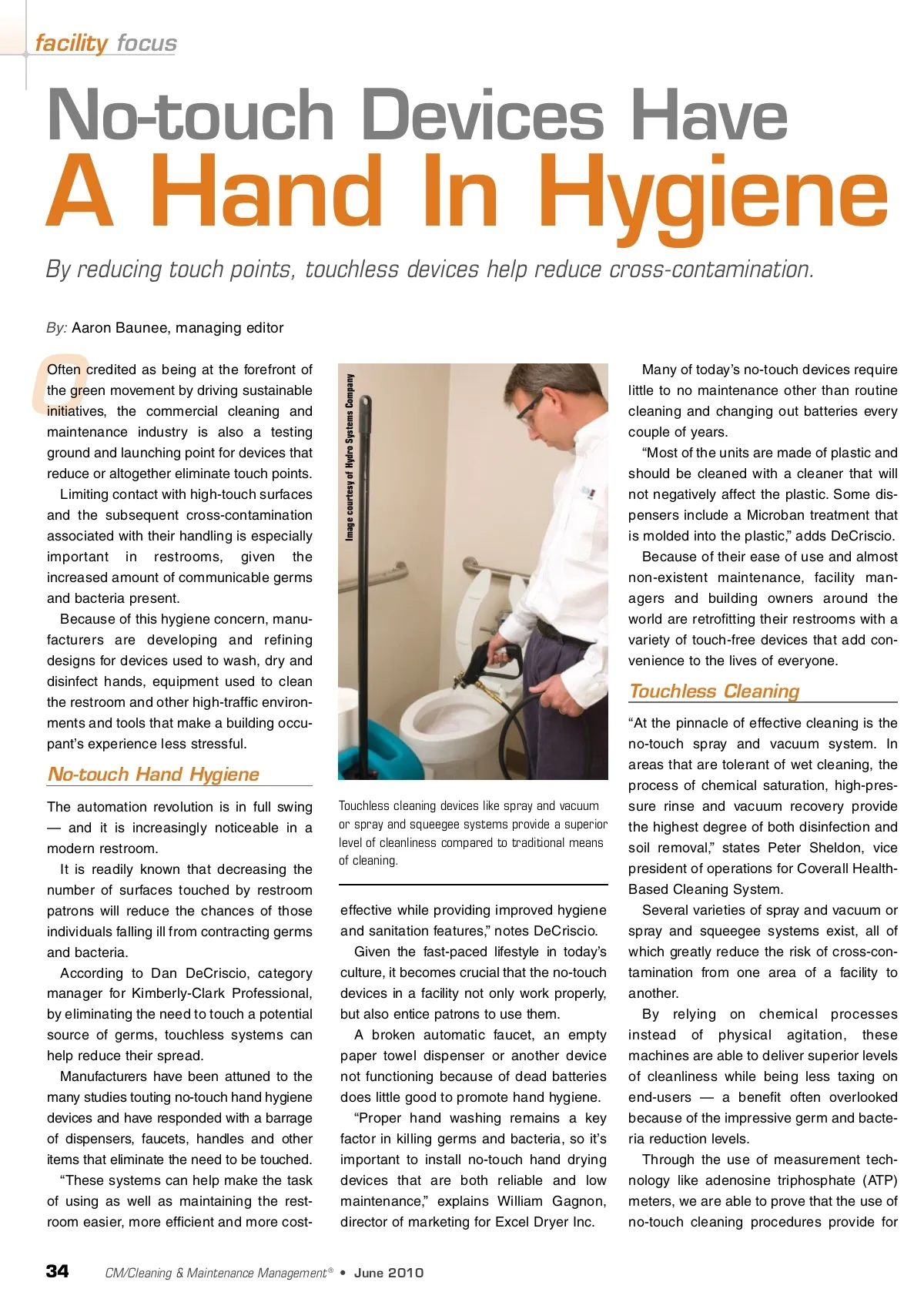
facility focus No-touch Devices Have By: Aaron Baunee, managing editor A Hand In Hygiene By reducing touch points, touchless devices help reduce cross-contamination. Image courtesy of Hydro Systems Company O Often credited as being at the forefront of the green movement by driving sustainable initiatives, the commercial cleaning and maintenance industry is also a testing ground and launching point for devices that reduce or altogether eliminate touch points. Limiting contact with high-touch surfaces and the subsequent cross-contamination associated with their handling is especially important in restrooms, given the increased amount of communicable germs and bacteria present. Because of this hygiene concern, manu-facturers are developing and refining designs for devices used to wash, dry and disinfect hands, equipment used to clean the restroom and other high-traffic environ-ments and tools that make a building occu-pant’s experience less stressful. Many of today’s no-touch devices require little to no maintenance other than routine cleaning and changing out batteries every couple of years. “Most of the units are made of plastic and should be cleaned with a cleaner that will not negatively affect the plastic. Some dis-pensers include a Microban treatment that is molded into the plastic,” adds DeCriscio. Because of their ease of use and almost non-existent maintenance, facility man-agers and building owners around the world are retrofitting their restrooms with a variety of touch-free devices that add con-venience to the lives of everyone. Touchless Cleaning “At the pinnacle of effective cleaning is the no-touch spray and vacuum system. In areas that are tolerant of wet cleaning, the process of chemical saturation, high-pres-sure rinse and vacuum recovery provide the highest degree of both disinfection and soil removal,” states Peter Sheldon, vice president of operations for Coverall Health-Based Cleaning System. Several varieties of spray and vacuum or spray and squeegee systems exist, all of which greatly reduce the risk of cross-con-tamination from one area of a facility to another. By relying on chemical processes instead of physical agitation, these machines are able to deliver superior levels of cleanliness while being less taxing on end-users — a benefit often overlooked because of the impressive germ and bacte-ria reduction levels. Through the use of measurement tech-nology like adenosine triphosphate (ATP) meters, we are able to prove that the use of no-touch cleaning procedures provide for No-touch Hand Hygiene The automation revolution is in full swing — and it is increasingly noticeable in a modern restroom. It is readily known that decreasing the number of surfaces touched by restroom patrons will reduce the chances of those individuals falling ill from contracting germs and bacteria. According to Dan DeCriscio, category manager for Kimberly-Clark Professional, by eliminating the need to touch a potential source of germs, touchless systems can help reduce their spread. Manufacturers have been attuned to the many studies touting no-touch hand hygiene devices and have responded with a barrage of dispensers, faucets, handles and other items that eliminate the need to be touched. “These systems can help make the task of using as well as maintaining the rest-room easier, more efficient and more cost-Touchless cleaning devices like spray and vacuum or spray and squeegee systems provide a superior level of cleanliness compared to traditional means of cleaning. effective while providing improved hygiene and sanitation features,” notes DeCriscio. Given the fast-paced lifestyle in today’s culture, it becomes crucial that the no-touch devices in a facility not only work properly, but also entice patrons to use them. A broken automatic faucet, an empty paper towel dispenser or another device not functioning because of dead batteries does little good to promote hand hygiene. “Proper hand washing remains a key factor in killing germs and bacteria, so it’s important to install no-touch hand drying devices that are both reliable and low maintenance,” explains William Gagnon, director of marketing for Excel Dryer Inc. 34 CM/Cleaning & Maintenance Management ® • June 2010
CMM – Archives Jun 2010: 34