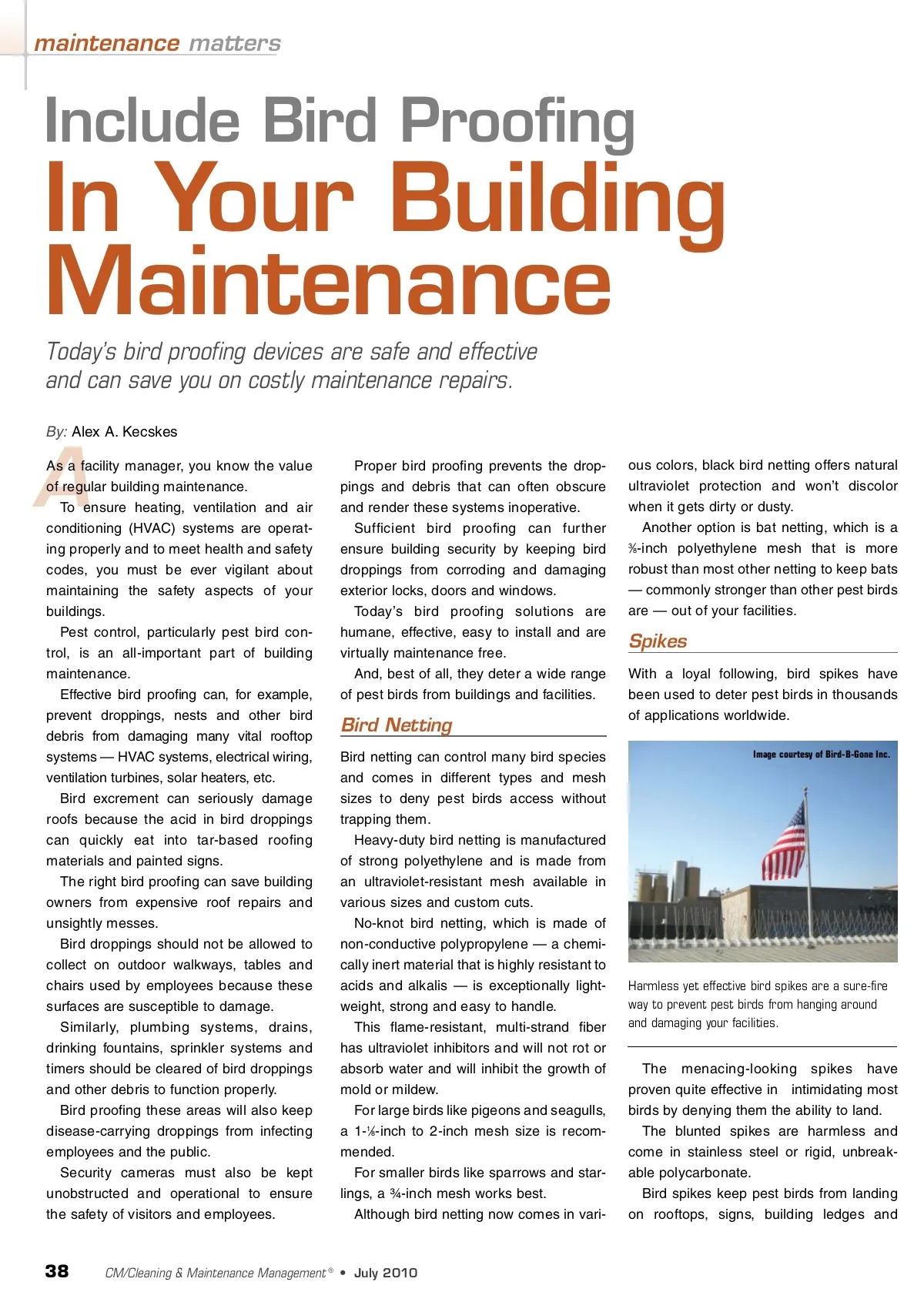
maintenance matters Include Bird Proofing In Your Building Maintenance Today’s bird proofing devices are safe and effective and can save you on costly maintenance repairs. By: Alex A. Kecskes A As a facility manager, you know the value of regular building maintenance. To ensure heating, ventilation and air conditioning (HVAC) systems are operat-ing properly and to meet health and safety codes, you must be ever vigilant about maintaining the safety aspects of your buildings. Pest control, particularly pest bird con-trol, is an all-important part of building maintenance. Effective bird proofing can, for example, prevent droppings, nests and other bird debris from damaging many vital rooftop systems — HVAC systems, electrical wiring, ventilation turbines, solar heaters, etc. Bird excrement can seriously damage roofs because the acid in bird droppings can quickly eat into tar-based roofing materials and painted signs. The right bird proofing can save building owners from expensive roof repairs and unsightly messes. Bird droppings should not be allowed to collect on outdoor walkways, tables and chairs used by employees because these surfaces are susceptible to damage. Similarly, plumbing systems, drains, drinking fountains, sprinkler systems and timers should be cleared of bird droppings and other debris to function properly. Bird proofing these areas will also keep disease-carrying droppings from infecting employees and the public. Security cameras must also be kept unobstructed and operational to ensure the safety of visitors and employees. Proper bird proofing prevents the drop-pings and debris that can often obscure and render these systems inoperative. Sufficient bird proofing can further ensure building security by keeping bird droppings from corroding and damaging exterior locks, doors and windows. Today’s bird proofing solutions are humane, effective, easy to install and are virtually maintenance free. And, best of all, they deter a wide range of pest birds from buildings and facilities. ous colors, black bird netting offers natural ultraviolet protection and won’t discolor when it gets dirty or dusty. Another option is bat netting, which is a 3 ⁄ 8 -inch polyethylene mesh that is more robust than most other netting to keep bats — commonly stronger than other pest birds are — out of your facilities. Spikes With a loyal following, bird spikes have been used to deter pest birds in thousands of applications worldwide. Image courtesy of Bird-B-Gone Inc. Bird Netting Bird netting can control many bird species and comes in different types and mesh sizes to deny pest birds access without trapping them. Heavy-duty bird netting is manufactured of strong polyethylene and is made from an ultraviolet-resistant mesh available in various sizes and custom cuts. No-knot bird netting, which is made of non-conductive polypropylene — a chemi-cally inert material that is highly resistant to acids and alkalis — is exceptionally light-weight, strong and easy to handle. This flame-resistant, multi-strand fiber has ultraviolet inhibitors and will not rot or absorb water and will inhibit the growth of mold or mildew. For large birds like pigeons and seagulls, a 1-1 ⁄ 8 -inch to 2-inch mesh size is recom-mended. For smaller birds like sparrows and star-lings, a ¾-inch mesh works best. Although bird netting now comes in vari-Harmless yet effective bird spikes are a sure-fire way to prevent pest birds from hanging around and damaging your facilities. The menacing-looking spikes have proven quite effective in intimidating most birds by denying them the ability to land. The blunted spikes are harmless and come in stainless steel or rigid, unbreak-able polycarbonate. Bird spikes keep pest birds from landing on rooftops, signs, building ledges and 38 CM/Cleaning & Maintenance Management ® • July 2010
CMM – Archives July 2010: 38