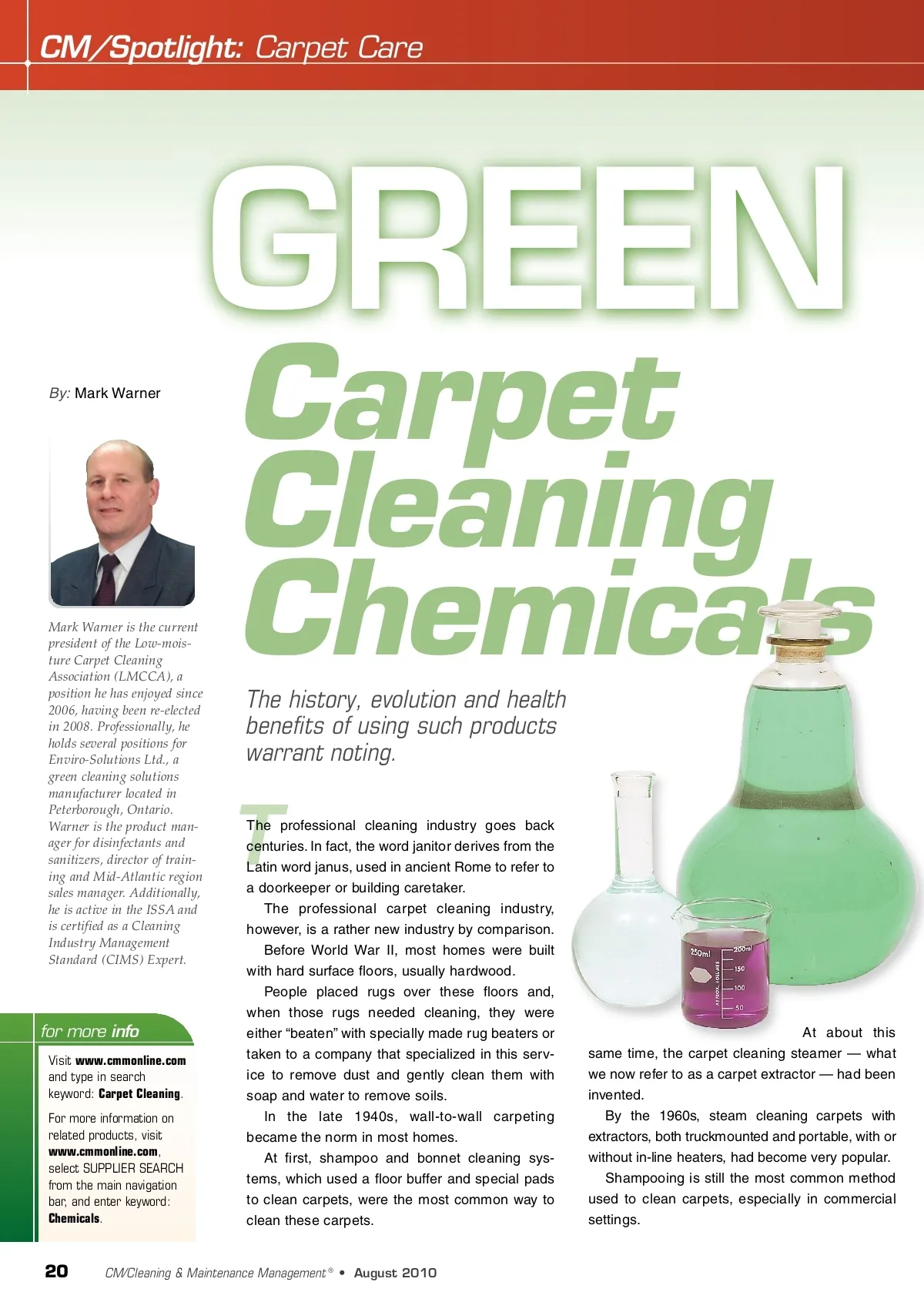
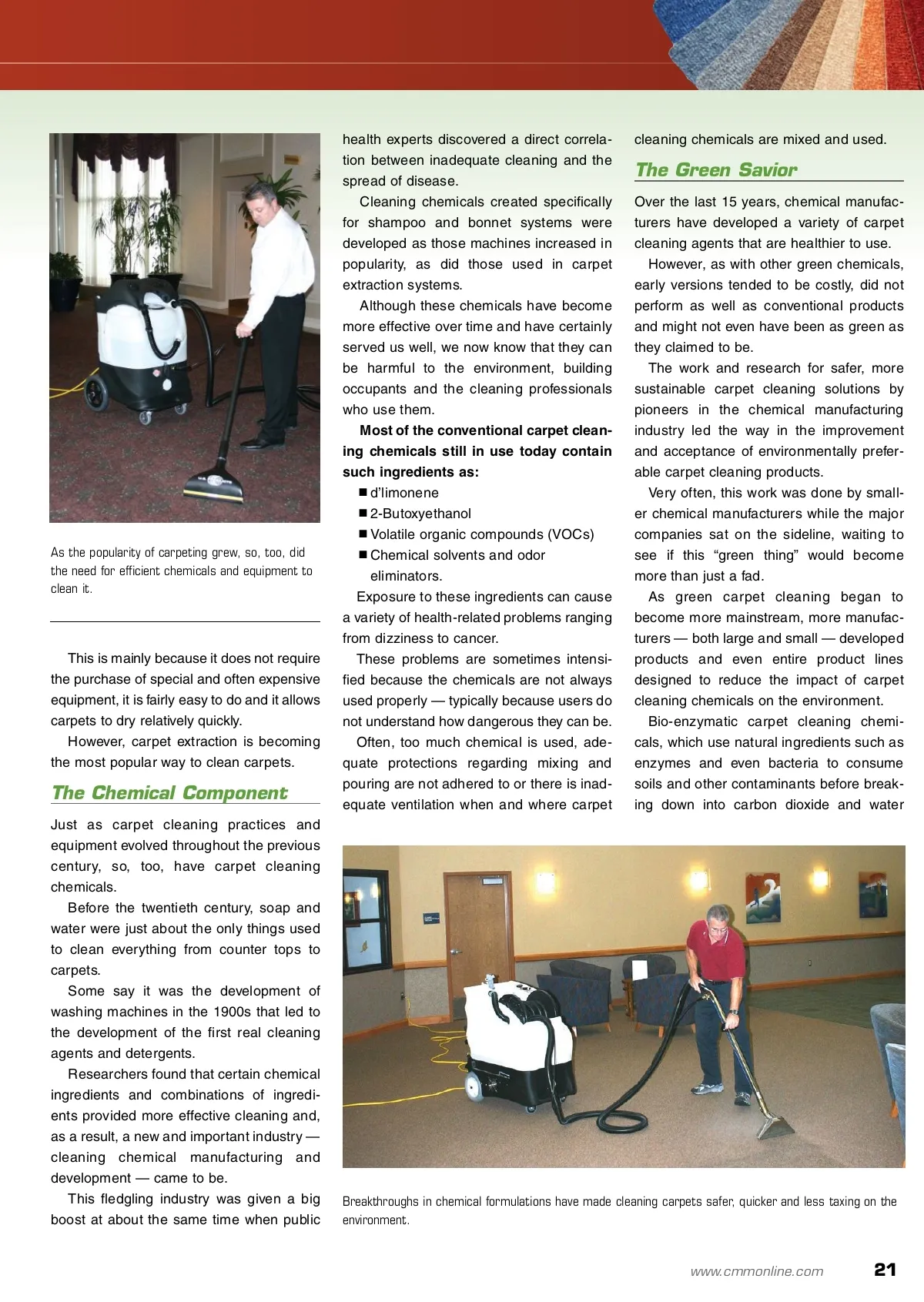
As the popularity of carpeting grew, so, too, did the need for efficient chemicals and equipment to clean it. This is mainly because it does not require the purchase of special and often expensive equipment, it is fairly easy to do and it allows carpets to dry relatively quickly. However, carpet extraction is becoming the most popular way to clean carpets. The Chemical Component Just as carpet cleaning practices and equipment evolved throughout the previous century, so, too, have carpet cleaning chemicals. Before the twentieth century, soap and water were just about the only things used to clean everything from counter tops to carpets. Some say it was the development of washing machines in the 1900s that led to the development of the first real cleaning agents and detergents. Researchers found that certain chemical ingredients and combinations of ingredi-ents provided more effective cleaning and, as a result, a new and important industry — cleaning chemical manufacturing and development — came to be. This fledgling industry was given a big boost at about the same time when public health experts discovered a direct correla-tion between inadequate cleaning and the spread of disease. Cleaning chemicals created specifically for shampoo and bonnet systems were developed as those machines increased in popularity, as did those used in carpet extraction systems. Although these chemicals have become more effective over time and have certainly served us well, we now know that they can be harmful to the environment, building occupants and the cleaning professionals who use them. Most of the conventional carpet clean-ing chemicals still in use today contain such ingredients as: d’limonene 2-Butoxyethanol Volatile organic compounds (VOCs) Chemical solvents and odor eliminators. Exposure to these ingredients can cause a variety of health-related problems ranging from dizziness to cancer. These problems are sometimes intensi-fied because the chemicals are not always used properly — typically because users do not understand how dangerous they can be. Often, too much chemical is used, ade-quate protections regarding mixing and pouring are not adhered to or there is inad-equate ventilation when and where carpet cleaning chemicals are mixed and used. The Green Savior Over the last 15 years, chemical manufac-turers have developed a variety of carpet cleaning agents that are healthier to use. However, as with other green chemicals, early versions tended to be costly, did not perform as well as conventional products and might not even have been as green as they claimed to be. The work and research for safer, more sustainable carpet cleaning solutions by pioneers in the chemical manufacturing industry led the way in the improvement and acceptance of environmentally prefer-able carpet cleaning products. Very often, this work was done by small-er chemical manufacturers while the major companies sat on the sideline, waiting to see if this “green thing” would become more than just a fad. As green carpet cleaning began to become more mainstream, more manufac-turers — both large and small — developed products and even entire product lines designed to reduce the impact of carpet cleaning chemicals on the environment. Bio-enzymatic carpet cleaning chemi-cals, which use natural ingredients such as enzymes and even bacteria to consume soils and other contaminants before break-ing down into carbon dioxide and water Breakthroughs in chemical formulations have made cleaning carpets safer, quicker and less taxing on the environment. www.cmmonline.com 21
CMM – Archives Aug 2010: 21