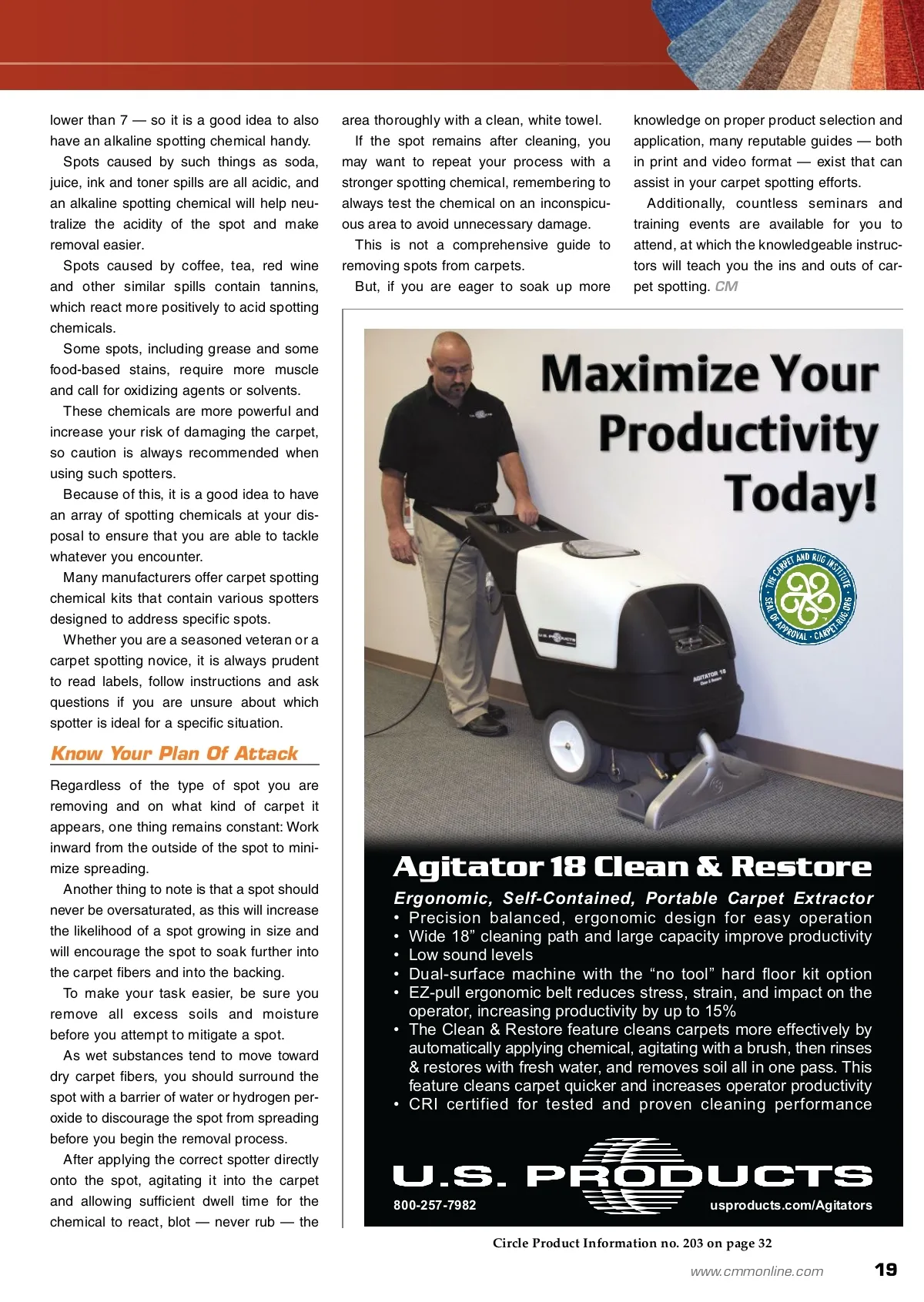
lower than 7 — so it is a good idea to also have an alkaline spotting chemical handy. Spots caused by such things as soda, juice, ink and toner spills are all acidic, and an alkaline spotting chemical will help neu-tralize the acidity of the spot and make removal easier. Spots caused by coffee, tea, red wine and other similar spills contain tannins, which react more positively to acid spotting chemicals. Some spots, including grease and some food-based stains, require more muscle and call for oxidizing agents or solvents. These chemicals are more powerful and increase your risk of damaging the carpet, so caution is always recommended when using such spotters. Because of this, it is a good idea to have an array of spotting chemicals at your dis-posal to ensure that you are able to tackle whatever you encounter. Many manufacturers offer carpet spotting chemical kits that contain various spotters designed to address specific spots. Whether you are a seasoned veteran or a carpet spotting novice, it is always prudent to read labels, follow instructions and ask questions if you are unsure about which spotter is ideal for a specific situation. area thoroughly with a clean, white towel. If the spot remains after cleaning, you may want to repeat your process with a stronger spotting chemical, remembering to always test the chemical on an inconspicu-ous area to avoid unnecessary damage. This is not a comprehensive guide to removing spots from carpets. But, if you are eager to soak up more knowledge on proper product selection and application, many reputable guides — both in print and video format — exist that can assist in your carpet spotting efforts. Additionally, countless seminars and training events are available for you to attend, at which the knowledgeable instruc-tors will teach you the ins and outs of car-pet spotting. CM Know Your Plan Of Attack Regardless of the type of spot you are removing and on what kind of carpet it appears, one thing remains constant: Work inward from the outside of the spot to mini-mize spreading. Another thing to note is that a spot should never be oversaturated, as this will increase the likelihood of a spot growing in size and will encourage the spot to soak further into the carpet fibers and into the backing. To make your task easier, be sure you remove all excess soils and moisture before you attempt to mitigate a spot. As wet substances tend to move toward dry carpet fibers, you should surround the spot with a barrier of water or hydrogen per-oxide to discourage the spot from spreading before you begin the removal process. After applying the correct spotter directly onto the spot, agitating it into the carpet and allowing sufficient dwell time for the chemical to react, blot — never rub — the Agitator 18 Clean & Restore Ergonomic, Self-Contained, Portable Carpet Extractor Precision balanced, ergonomic design for easy operation Wide 18 cleaning path and large capacity improve productivity Low sound levels Dual-surface machine with the no tool hard floor kit option EZ-pull ergonomic belt reduces stress, strain, and impact on the operator, increasing productivity by up to 15% The Clean & Restore feature cleans carpets more effectively by automatically applying chemical, agitating with a brush, then rinses & restores with fresh water, and removes soil all in one pass. This feature cleans carpet quicker and increases operator productivity CRI certified for tested and proven cleaning performance 800-257-7982 usproducts.com/Agitators Circle Product Information no. 203 on page 32 www.cmmonline.com 19
CMM – Archives Aug 2010: 19