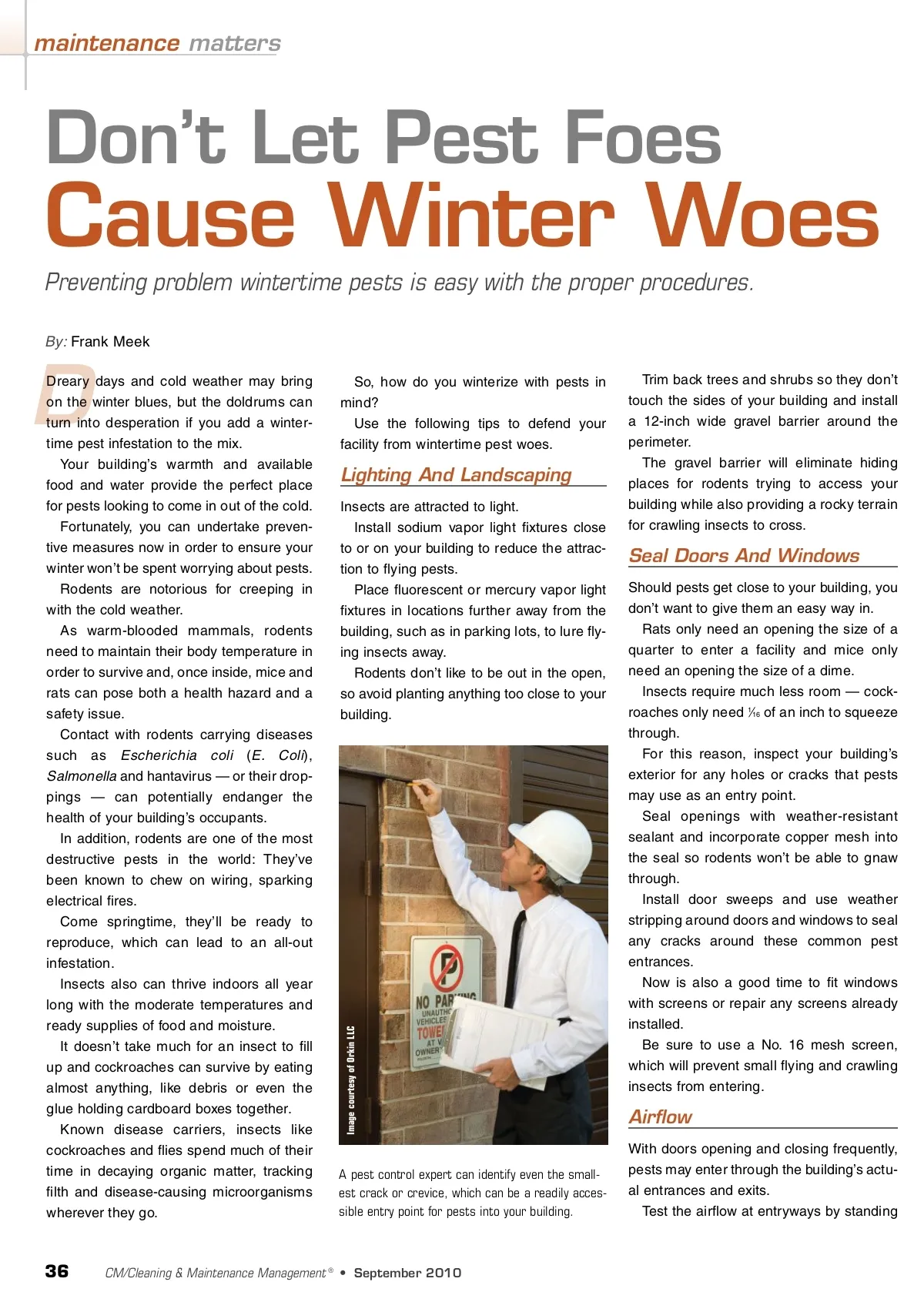
maintenance matters Don’t Let Pest Foes Cause Winter Woes Preventing problem wintertime pests is easy with the proper procedures. By: Frank Meek D Dreary days and cold weather may bring on the winter blues, but the doldrums can turn into desperation if you add a winter-time pest infestation to the mix. Your building’s warmth and available food and water provide the perfect place for pests looking to come in out of the cold. Fortunately, you can undertake preven-tive measures now in order to ensure your winter won’t be spent worrying about pests. Rodents are notorious for creeping in with the cold weather. As warm-blooded mammals, rodents need to maintain their body temperature in order to survive and, once inside, mice and rats can pose both a health hazard and a safety issue. Contact with rodents carrying diseases such as Escherichia coli ( E. Coli ), Salmonella and hantavirus — or their drop-pings — can potentially endanger the health of your building’s occupants. In addition, rodents are one of the most destructive pests in the world: They’ve been known to chew on wiring, sparking electrical fires. Come springtime, they’ll be ready to reproduce, which can lead to an all-out infestation. Insects also can thrive indoors all year long with the moderate temperatures and ready supplies of food and moisture. It doesn’t take much for an insect to fill up and cockroaches can survive by eating almost anything, like debris or even the glue holding cardboard boxes together. Known disease carriers, insects like cockroaches and flies spend much of their time in decaying organic matter, tracking filth and disease-causing microorganisms wherever they go. So, how do you winterize with pests in mind? Use the following tips to defend your facility from wintertime pest woes. Lighting And Landscaping Insects are attracted to light. Install sodium vapor light fixtures close to or on your building to reduce the attrac-tion to flying pests. Place fluorescent or mercury vapor light fixtures in locations further away from the building, such as in parking lots, to lure fly-ing insects away. Rodents don’t like to be out in the open, so avoid planting anything too close to your building. Trim back trees and shrubs so they don’t touch the sides of your building and install a 12-inch wide gravel barrier around the perimeter. The gravel barrier will eliminate hiding places for rodents trying to access your building while also providing a rocky terrain for crawling insects to cross. Seal Doors And Windows Should pests get close to your building, you don’t want to give them an easy way in. Rats only need an opening the size of a quarter to enter a facility and mice only need an opening the size of a dime. Insects require much less room — cock-roaches only need 1 ⁄ 16 of an inch to squeeze through. For this reason, inspect your building’s exterior for any holes or cracks that pests may use as an entry point. Seal openings with weather-resistant sealant and incorporate copper mesh into the seal so rodents won’t be able to gnaw through. Install door sweeps and use weather stripping around doors and windows to seal any cracks around these common pest entrances. Now is also a good time to fit windows with screens or repair any screens already installed. Be sure to use a No. 16 mesh screen, which will prevent small flying and crawling insects from entering. Image courtesy of Orkin LLC Airflow With doors opening and closing frequently, pests may enter through the building’s actu-al entrances and exits. Test the airflow at entryways by standing A pest control expert can identify even the small-est crack or crevice, which can be a readily acces-sible entry point for pests into your building. 36 CM/Cleaning & Maintenance Management ® • September 2010
CMM – Archives Sept 2010: 36