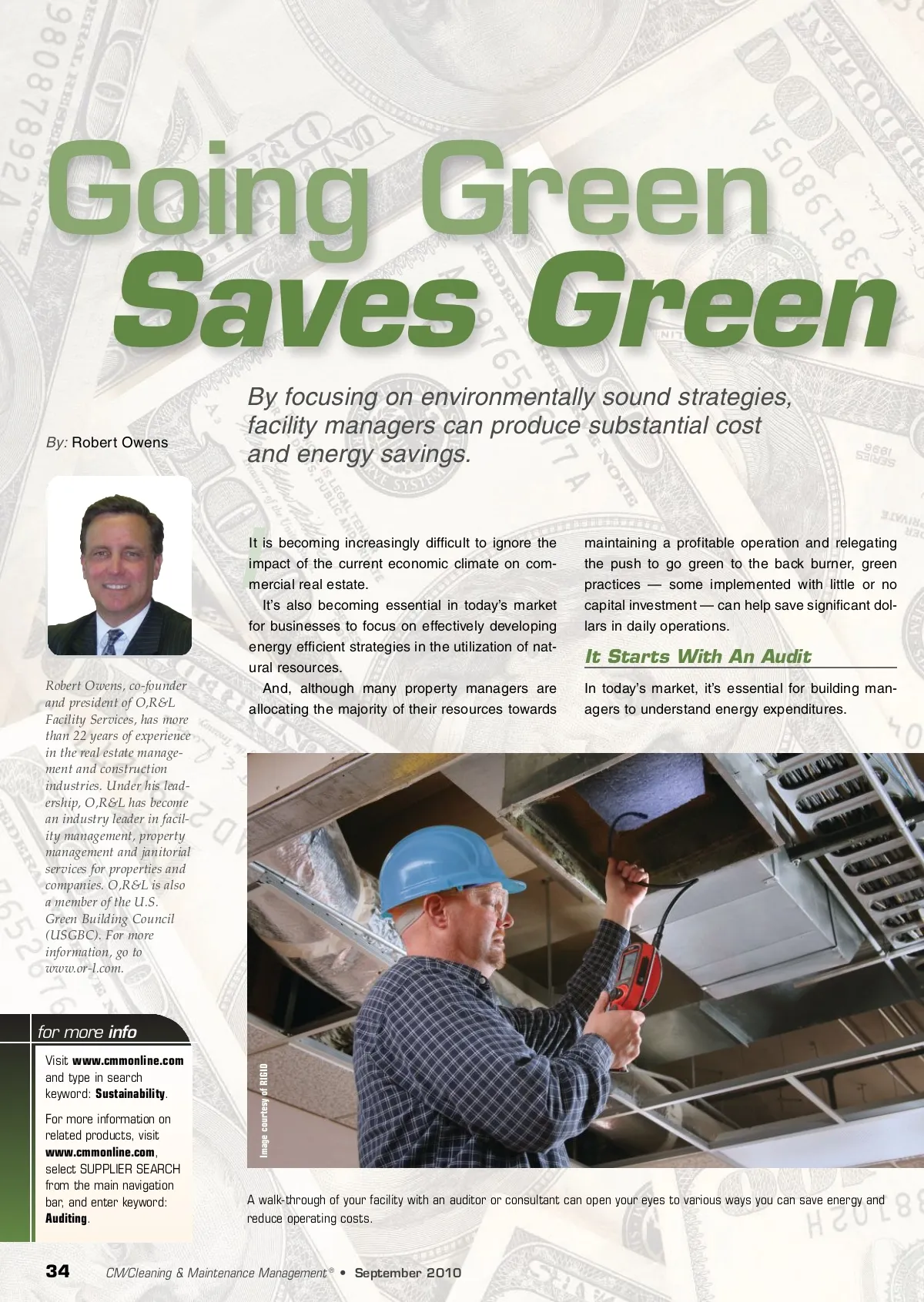
Cognizant facility management teams dig deep into the layers of a building to achieve maximum savings. This process begins by performing a complete energy audit, including such things as the building envelope and insula-tion; electrical, lighting and hot water sys-tems; heating ventilation and air condition-ing (HVAC) systems, pumps, fans and motors; energy management software; electronic equipment; and utility rates, demand and consumption. The next step is to develop a comprehen-sive, long-term energy management strate-gy to ensure that the property will be pre-pared to respond to the changing market, as well as facility operating cost challenges. Recommendations for immediate improvements often start when evaluating the current energy management system. Minor programming changes, such as adjusting settings so lighting isn’t left on 24/7 or the HVAC system doesn’t run on the weekends, can result in big savings. trash taken to the landfill and selling recy-clable materials. Other low-cost efforts to green an exist-ing building include: Landscaping — low-maintenance native plant species can greatly reduce irrigation costs and monthly landscaping fees Automatic or motion-sensor lighting Partnering with green vendors along the supply chain Non-toxic, biodegradable, environ-mentally safe cleaning and paper products Integrated pest control services Sustainable and recycled materials such as paint and carpet with low volatile organic compound (VOC) emissions. maintenance program, controlled and scheduled electronically, to ensure that the building systems are maximizing their functionality. Staying Ahead Of The Curve In order to better respond to the present and future energy market, facility managers must keep up with industry trends. For example, the continuing evolution of computer-aided design (CAD) software for building design has produced new add-on tools with increasingly accurate algorithms for energy modeling as well as embedded energy properties for many materials and features. Using the most effective tools when performing energy audits increases assessment accuracy and leads to client savings. Also, with new building codes constantly emerging from the green movement, man-agers need to keep tabs on what regulators and legislators are thinking. Buildings contribute roughly half the car-bon emissions in the environment, and pro-gressive elements in the industry are look-ing at ways to document, measure and reduce greenhouse gas creation in materi-als and processes. Another interesting trend comes from the financial sector. Lenders and insurers have come to see green buildings as better for their bottom line and are working to get new reduced-rate loan products and insurance packages into place. They’re realizing that green building own-ers are more responsible, place higher value on maintenance and are less likely to default as a result of lower operating costs of buildings. The ROI Factor While most clients embrace running green-er operations, providing them with a detailed cost-benefit model can ease any apprehension over upfront costs by helping them better anticipate how quickly an investment can be recouped. For example, businesses can net signifi-cant savings by installing eco-friendly, ener-gy-efficient lamping indoors and out — and the return on that investment is typically quick. Using light-emitting diodes (LEDs) for exterior lamping applications has become a popular option for parking lot and street lighting because LEDs use very little ener-gy and have no filaments to burn out. Compact fluorescent lights (CFLs) also have become much more efficient in recent years, as the ballasts have been improved to the point that the required voltages can be greatly reduced. In addition, some CFL options substitute extremely well for halogen or metal halide without retrofitting the fixtures. These new lamps produce more lumens with lower wattage, lasting up to five times longer than their predecessors. Preventative maintenance can go a long way in generating a positive return on investment as well. Operating facilities at peak performance conserves energy and extends life cycles of equipment. This is done by implementing a frequent Myth: You Have To Spend Green To Go Green In order to be creative with clients’ energy management budgets, many auditors and consultants try to suggest options that are either cost-neutral or have reasonably affordable upfront costs — such as installing low-flow or waterless toilets in restroom facilities. By doing this, some facilities can realize savings of 700,000 gallons of water in the first year alone. If the budget is tight, auditors and con-sultants advise clients not to abandon sustainable management approaches and enforce passive conservation, which requires no additional capital invest-ment — just communication and continuing education. Passive conservation initiatives include encouraging employees or tenants to turn off lights when not in use, staging nighttime lighting by floor in high-rise build-ings, lowering window shades on the south side of the building during periods of direct sun exposure and printing double-sided documents. Even something as easy as implement-ing a recycling program can impact the bot-tom line — lowering the tonnage rates of Setting A Standard As a property or facility manager, you can help commercial real estate owners avoid letting economic concerns stall environmentally friendly upgrades to their buildings. By understanding trends, accessing the latest available green technology and pro-viding a comprehensive energy manage-ment strategy, you can offer sustainable solutions and significant cost savings to clients. CM www.cmmonline.com 35
CMM – Archives Sept 2010: 35