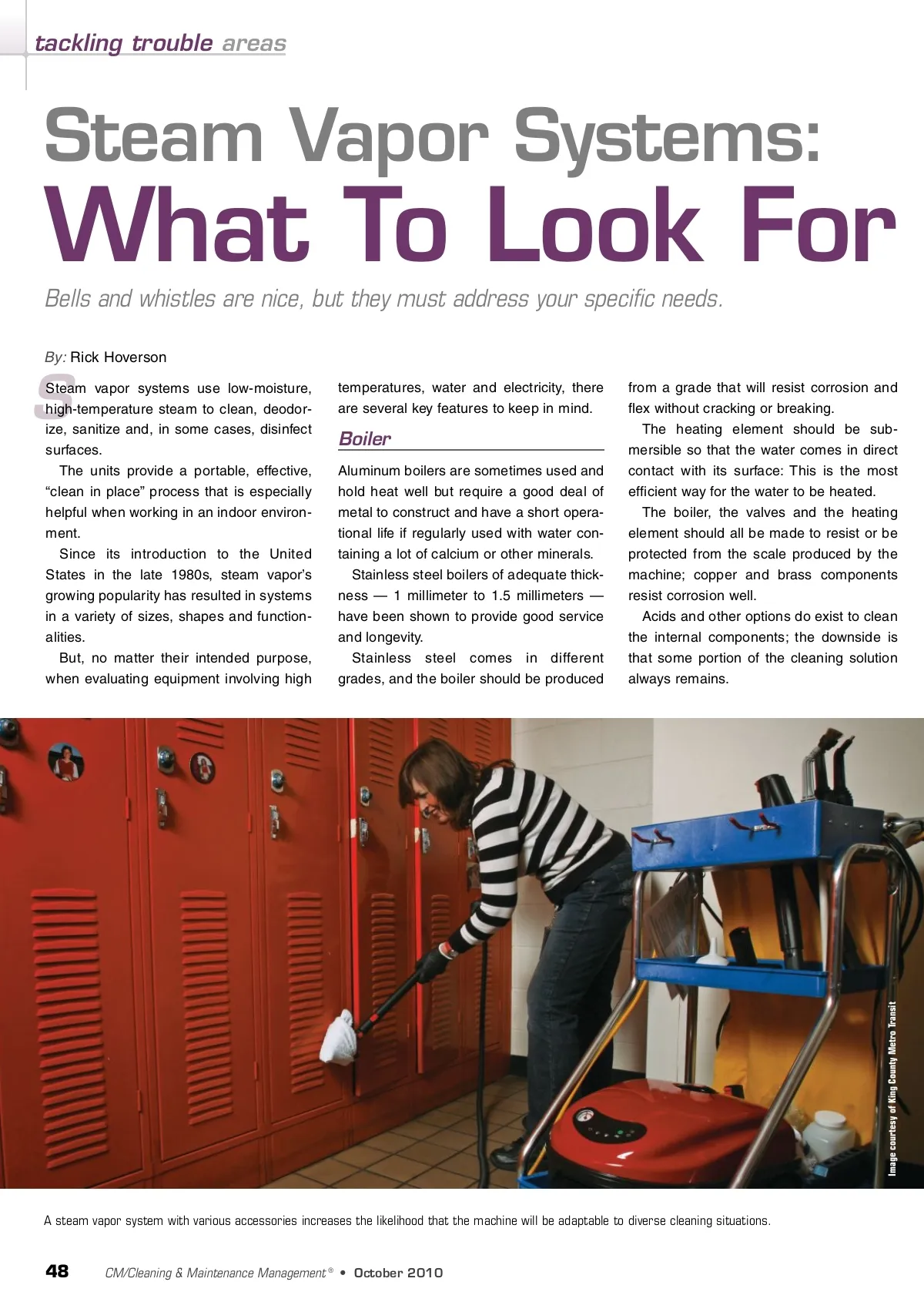
tackling trouble areas Steam Vapor Systems: What To Look For Bells and whistles are nice, but they must address your specific needs. By: Rick Hoverson S Steam vapor systems use low-moisture, high-temperature steam to clean, deodor-ize, sanitize and, in some cases, disinfect surfaces. The units provide a portable, effective, “clean in place” process that is especially helpful when working in an indoor environ-ment. Since its introduction to the United States in the late 1980s, steam vapor’s growing popularity has resulted in systems in a variety of sizes, shapes and function-alities. But, no matter their intended purpose, when evaluating equipment involving high temperatures, water and electricity, there are several key features to keep in mind. Boiler Aluminum boilers are sometimes used and hold heat well but require a good deal of metal to construct and have a short opera-tional life if regularly used with water con-taining a lot of calcium or other minerals. Stainless steel boilers of adequate thick-ness — 1 millimeter to 1.5 millimeters — have been shown to provide good service and longevity. Stainless steel comes in different grades, and the boiler should be produced from a grade that will resist corrosion and flex without cracking or breaking. The heating element should be sub-mersible so that the water comes in direct contact with its surface: This is the most efficient way for the water to be heated. The boiler, the valves and the heating element should all be made to resist or be protected from the scale produced by the machine; copper and brass components resist corrosion well. Acids and other options do exist to clean the internal components; the downside is that some portion of the cleaning solution always remains. A steam vapor system with various accessories increases the likelihood that the machine will be adaptable to diverse cleaning situations. 48 CM/Cleaning & Maintenance Management ® • October 2010 Image courtesy of King County Metro Transit
CMM – Archives Oct 2010: 48