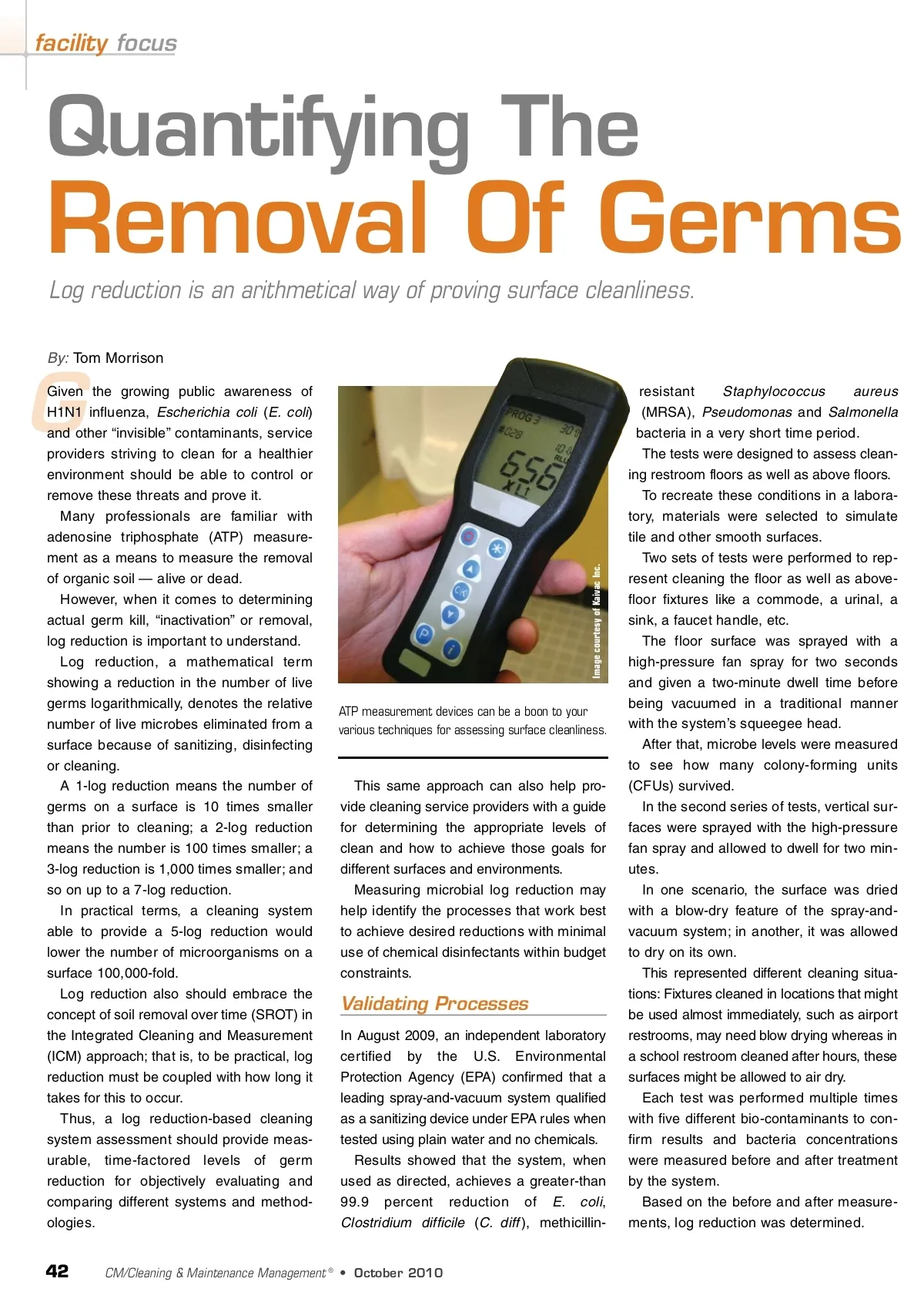
For an EPA sanitizing device claim to be made, a system needs to be able to show at least a 3-log reduction of the bacteria; tests showed the system achieved between 4-log and 6-log reductions in all categories. Measurable Savings Instead of following the traditional method-ology of putting down chemical with a low-pressure fan spray, letting it dwell, then returning and rinsing with a high-pressure fan spray, one-pass, water-only cleaning delivered in a high-pressure fan spray not only achieved the desired cleaning results, it cut 30 percent to 50 percent off the time required to clean and greatly reduced the amount of water needed. Separately, recent tests conducted at the University of Washington also found that cleaning without chemicals to remove organic soil may be as good as or better than cleaning with those products. Two identical sets of restrooms in the uni-versity’s Health Sciences Building, one male and one female, were selected. An experienced worker used properly diluted EPA-registered products to clean and wipe down faucets, sinks and counters in one set of restrooms. Toilets were disinfected and the floors were cleaned using a microfiber wet mop and properly diluted and applied EPA-regis-tered products. In the other set of restrooms, a worker used a spray-and-vacuum system filled with water — no chemicals. Vertical and horizontal surfaces were spray-washed, fixtures were wiped down, countertops were squeegeed and the floor was vacuumed. Before and after both sets of restrooms were cleaned, swab samples were taken in the same locations — sink countertops, floor tile a yard from the entrance in the main walkway and floor tile two feet in front of the toilet in the first stall — and placed in an ATP measuring device. Results demonstrated that spraying, agi-tating and vacuuming surfaces produced an average 89 percent reduction in ATP, while the traditional method produced a 54 percent reduction. In both restrooms where the spray-and-vacuum machine was used, ATP levels dropped below 30, which is considered sanitary; in two of the test sites, the count actually dropped to zero. Labor times for both processes including setup times — manual versus machine cleaning — were similar. Based on the foregoing, combining microbial log-reduction assessment with other recognized measurement protocols such as ATP can identify better processes that can help professionals achieve health-ier environments with greater efficacy and lower costs without unnecessary or excess use of antimicrobial chemistries. CM Tom Morrison is the vice president of marketing for Kaivac Inc., developers of the No-touch Cleaning ® system. Kaivac develops science-based hygienic cleaning systems that protect the health of building occupants while raising the value of cleaning operations. For more information, visit www.kaivac.com. Circle Product Information no. 201 on page 32 www.cmmonline.com 43
CMM – Archives Oct 2010: 43