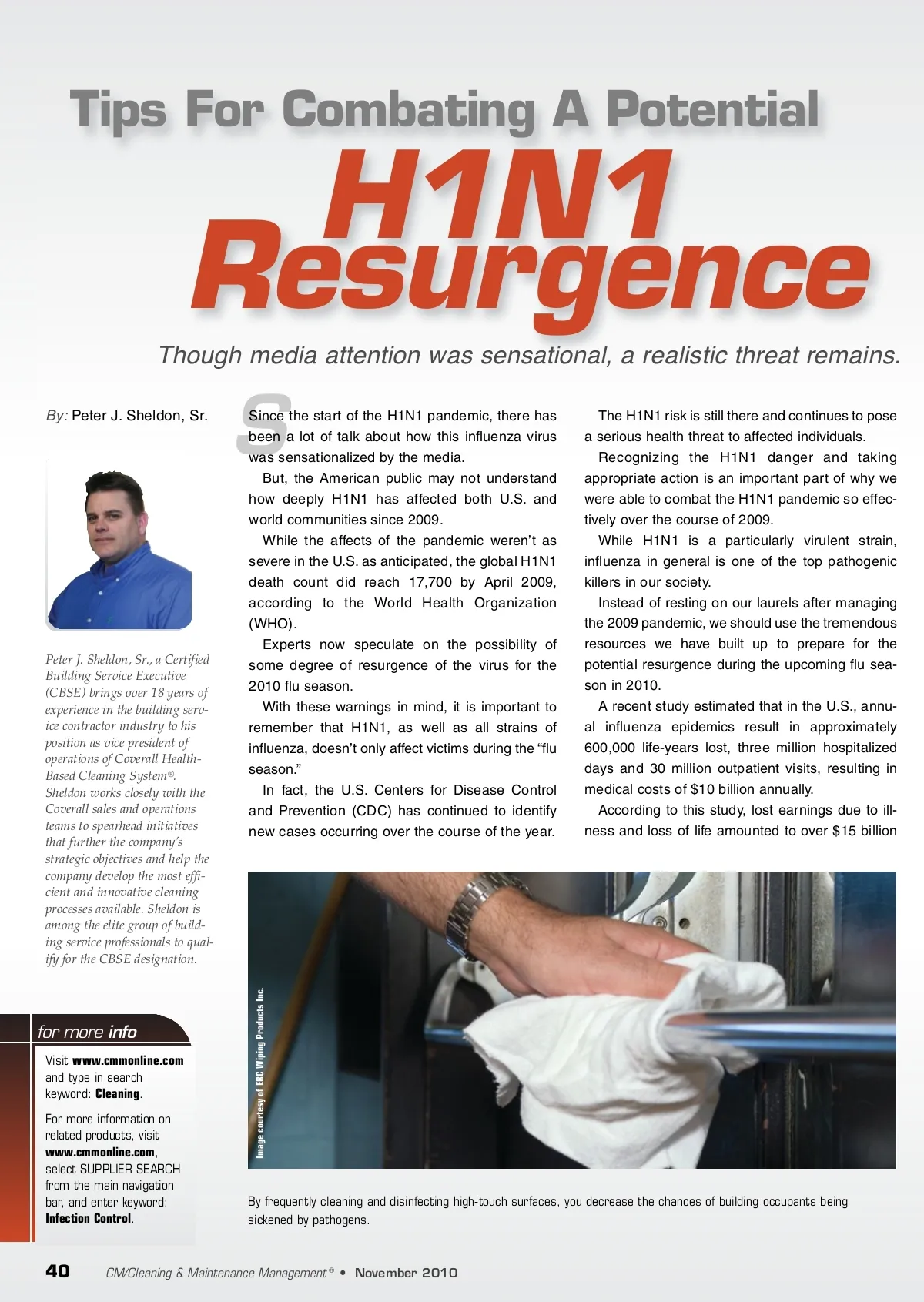
annually and the total economic burden of annual influenza epidemics amounts to over $80 billion. Also, in the U.S., the flu season usually accounts for 200,000 hospitalizations and 41,000 deaths. Because the mortality rate of the H1N1, or “swine flu,” is lower than common flu strains, this number was actually lower in 2009. Taking steps to protect against the spread of the flu will also help prevent the spread of other dangerous pathogens that are readily transmittable in our indoor environments. Pathogens such as norovirus, methicillin-resistant Staphylococcus aureus (MRSA), Clostridium difficile ( C. diff ), Escherichia coli ( E. coli ), Salmonella and Shigella are present in our everyday lives, and we can reduce the risks of becoming infected by practicing good hygiene. Because cold and flu viruses can survive on surfaces for up to 72 hours, one of the most crucial strategies for preventing the spread of the flu is proper surface disinfection. Disinfection is important in reducing harmful germs, but it must be performed on an ongoing basis. In the workplace, workstations, desks and break rooms — areas where employ-ees share equipment, phones or eating surfaces — are key areas for germ contam-ination and transmission. Commercial facilities of all types should set a regular aseptic cleaning schedule or preventative treatment cycle for their facility. In addition to regular hygienic cleaning, critical control points — also referred to as high-touch contact points — are critical areas of focus during daily cleaning procedures. Facility cleaning should focus on areas of higher touch frequency, including doorknobs, keyboards, light switches and phones. These areas should be cleaned daily and intermittently swiped with disinfectant wipes to control germ buildup and trans-mission between cleanings. Hand hygiene programs are also critical components in preventing influenza out-breaks. Implementing a hand sanitization pro-gram in your facility can help reduce the role skin contact plays in spreading germs. A program of this kind could be as simple as installing hand sanitizer dispensers in certain areas of the building or it could be part of a larger educational campaign that uses e-mail, posters and even hand hygiene classes to keep hand cleanliness at the front of everyone’s mind. The combination of surface disinfection and hand hygiene creates a hygienic fire-wall that has been proven to be effective in reducing the risk of transmission of danger-ous germs like the flu. Finally, employing hygienic cleaning strategies is the most effective and measur-able way to ensure you are doing every-thing within your power to help reduce the risk of the spread of influenza germs. This kind of cleaning protocol makes use of proper disinfectants, up-to-date soil and matter removal cleaning technology and techniques that heavily reduce the role cross-contamination can play in cleaning process. CM Circle Product Information no. 220 on page 32 www.cmmonline.com 41
CMM – Archives Nov 2010: 41