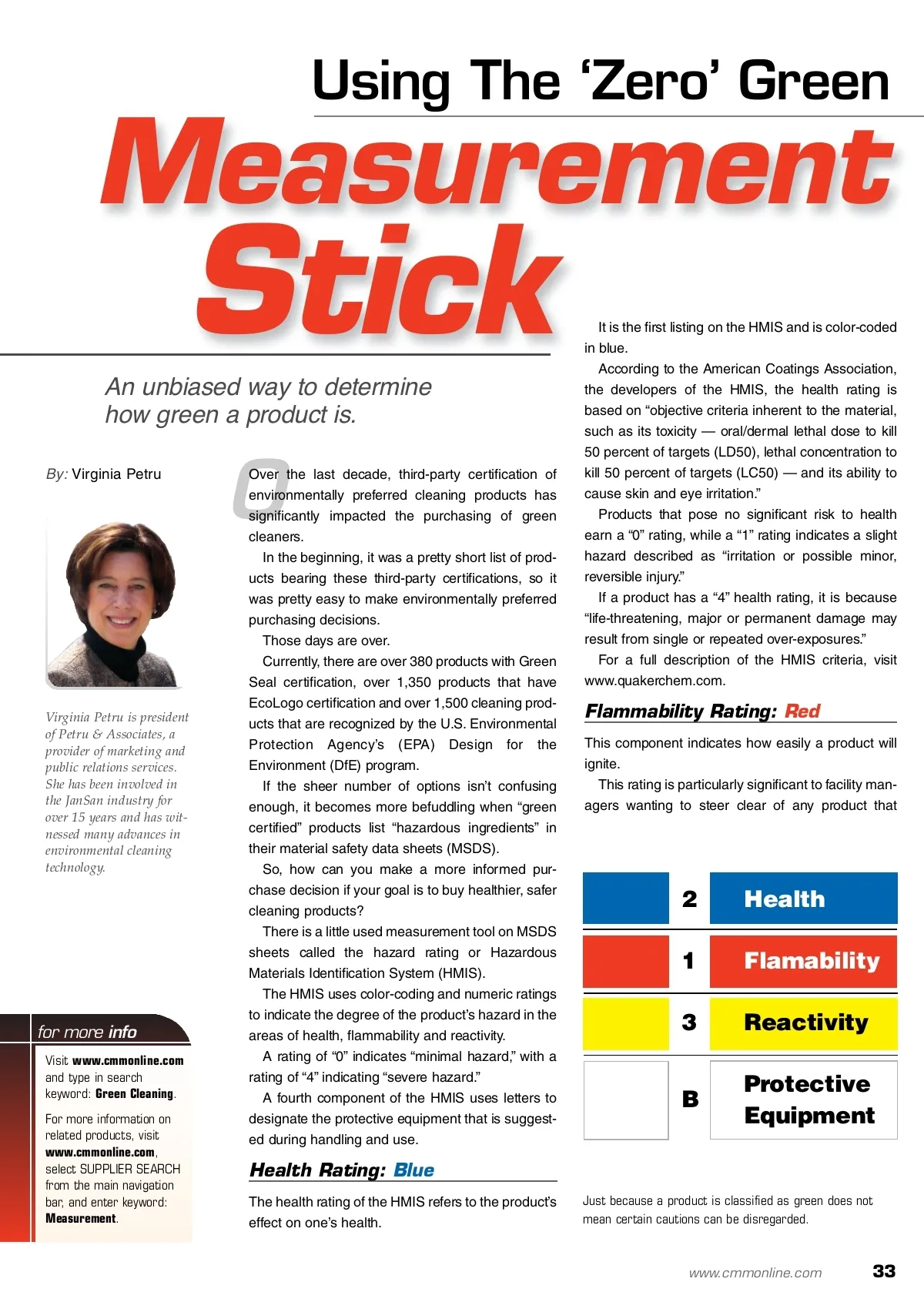
Using The ‘Zero’ Green Measurement Stick O An unbiased way to determine how green a product is. By: Virginia Petru Over the last decade, third-party certification of environmentally preferred cleaning products has significantly impacted the purchasing of green cleaners. In the beginning, it was a pretty short list of prod-ucts bearing these third-party certifications, so it was pretty easy to make environmentally preferred purchasing decisions. Those days are over. Currently, there are over 380 products with Green Seal certification, over 1,350 products that have EcoLogo certification and over 1,500 cleaning prod-ucts that are recognized by the U.S. Environmental Protection Agency’s (EPA) Design for the Environment (DfE) program. If the sheer number of options isn’t confusing enough, it becomes more befuddling when “green certified” products list “hazardous ingredients” in their material safety data sheets (MSDS). So, how can you make a more informed pur-chase decision if your goal is to buy healthier, safer cleaning products? There is a little used measurement tool on MSDS sheets called the hazard rating or Hazardous Materials Identification System (HMIS). The HMIS uses color-coding and numeric ratings to indicate the degree of the product’s hazard in the areas of health, flammability and reactivity. A rating of “0” indicates “minimal hazard,” with a rating of “4” indicating “severe hazard.” A fourth component of the HMIS uses letters to designate the protective equipment that is suggest-ed during handling and use. It is the first listing on the HMIS and is color-coded in blue. According to the American Coatings Association, the developers of the HMIS, the health rating is based on “objective criteria inherent to the material, such as its toxicity — oral/dermal lethal dose to kill 50 percent of targets (LD50), lethal concentration to kill 50 percent of targets (LC50) — and its ability to cause skin and eye irritation.” Products that pose no significant risk to health earn a “0” rating, while a “1” rating indicates a slight hazard described as “irritation or possible minor, reversible injury.” If a product has a “4” health rating, it is because “life-threatening, major or permanent damage may result from single or repeated over-exposures.” For a full description of the HMIS criteria, visit www.quakerchem.com. Virginia Petru is president of Petru & Associates, a provider of marketing and public relations services. She has been involved in the JanSan industry for over 15 years and has wit-nessed many advances in environmental cleaning technology. Flammability Rating: Red This component indicates how easily a product will ignite. This rating is particularly significant to facility man-agers wanting to steer clear of any product that 2 1 3 B Health Flamability Reactivity Protective Equipment for more info Visit www.cmmonline.com and type in search keyword: Green Cleaning . For more information on related products, visit www.cmmonline.com , select SUPPLIER SEARCH from the main navigation bar, and enter keyword: Measurement . Health Rating: Blue The health rating of the HMIS refers to the product’s effect on one’s health. Just because a product is classified as green does not mean certain cautions can be disregarded. www.cmmonline.com 33
CMM – Archives Jan 2011: 33