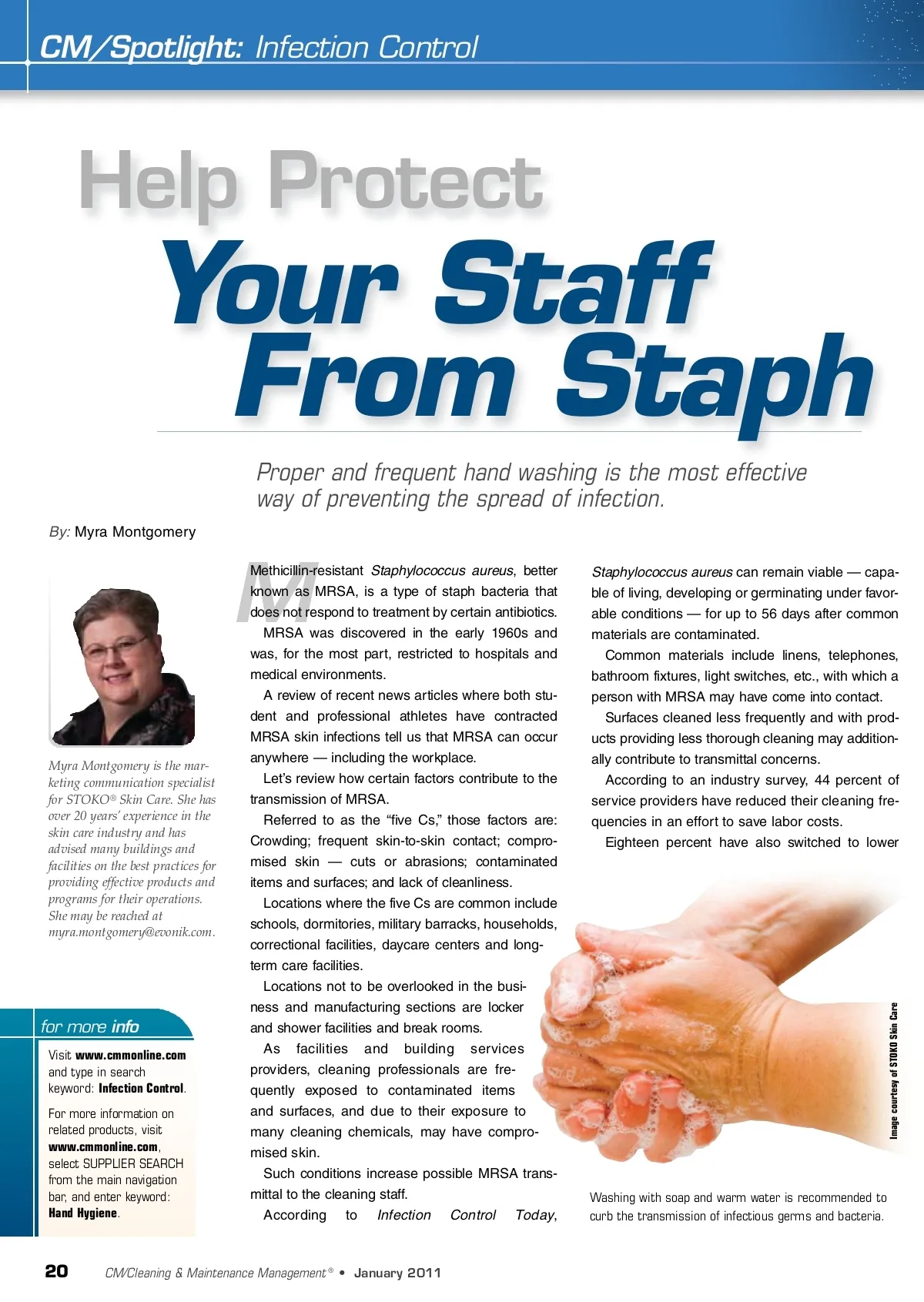
CM/Spotlight: Infection Control Help Protect Your Staff From Staph Proper and frequent hand washing is the most effective way of preventing the spread of infection. By: Myra Montgomery M Myra Montgomery is the mar-keting communication specialist for STOKO ® Skin Care. She has over 20 years’ experience in the skin care industry and has advised many buildings and facilities on the best practices for providing effective products and programs for their operations. She may be reached at [email protected]. for more info Visit www.cmmonline.com and type in search keyword: Infection Control . For more information on related products, visit www.cmmonline.com , select SUPPLIER SEARCH from the main navigation bar, and enter keyword: Hand Hygiene . Methicillin-resistant Staphylococcus aureus , better known as MRSA, is a type of staph bacteria that does not respond to treatment by certain antibiotics. MRSA was discovered in the early 1960s and was, for the most part, restricted to hospitals and medical environments. A review of recent news articles where both stu-dent and professional athletes have contracted MRSA skin infections tell us that MRSA can occur anywhere — including the workplace. Let’s review how certain factors contribute to the transmission of MRSA. Referred to as the “five Cs,” those factors are: Crowding; frequent skin-to-skin contact; compro-mised skin — cuts or abrasions; contaminated items and surfaces; and lack of cleanliness. Locations where the five Cs are common include schools, dormitories, military barracks, households, correctional facilities, daycare centers and long-term care facilities. Locations not to be overlooked in the busi-ness and manufacturing sections are locker and shower facilities and break rooms. As facilities and building services providers, cleaning professionals are fre-quently exposed to contaminated items and surfaces, and due to their exposure to many cleaning chemicals, may have compro-mised skin. Such conditions increase possible MRSA trans-mittal to the cleaning staff. According to Infection Control Today , Staphylococcus aureus can remain viable — capa-ble of living, developing or germinating under favor-able conditions — for up to 56 days after common materials are contaminated. Common materials include linens, telephones, bathroom fixtures, light switches, etc., with which a person with MRSA may have come into contact. Surfaces cleaned less frequently and with prod-ucts providing less thorough cleaning may addition-ally contribute to transmittal concerns. According to an industry survey, 44 percent of service providers have reduced their cleaning fre-quencies in an effort to save labor costs. Eighteen percent have also switched to lower Washing with soap and warm water is recommended to curb the transmission of infectious germs and bacteria. 20 CM/Cleaning & Maintenance Management ® • January 2011 Image courtesy of STOKO Skin Care
CMM – Archives Jan 2011: 20