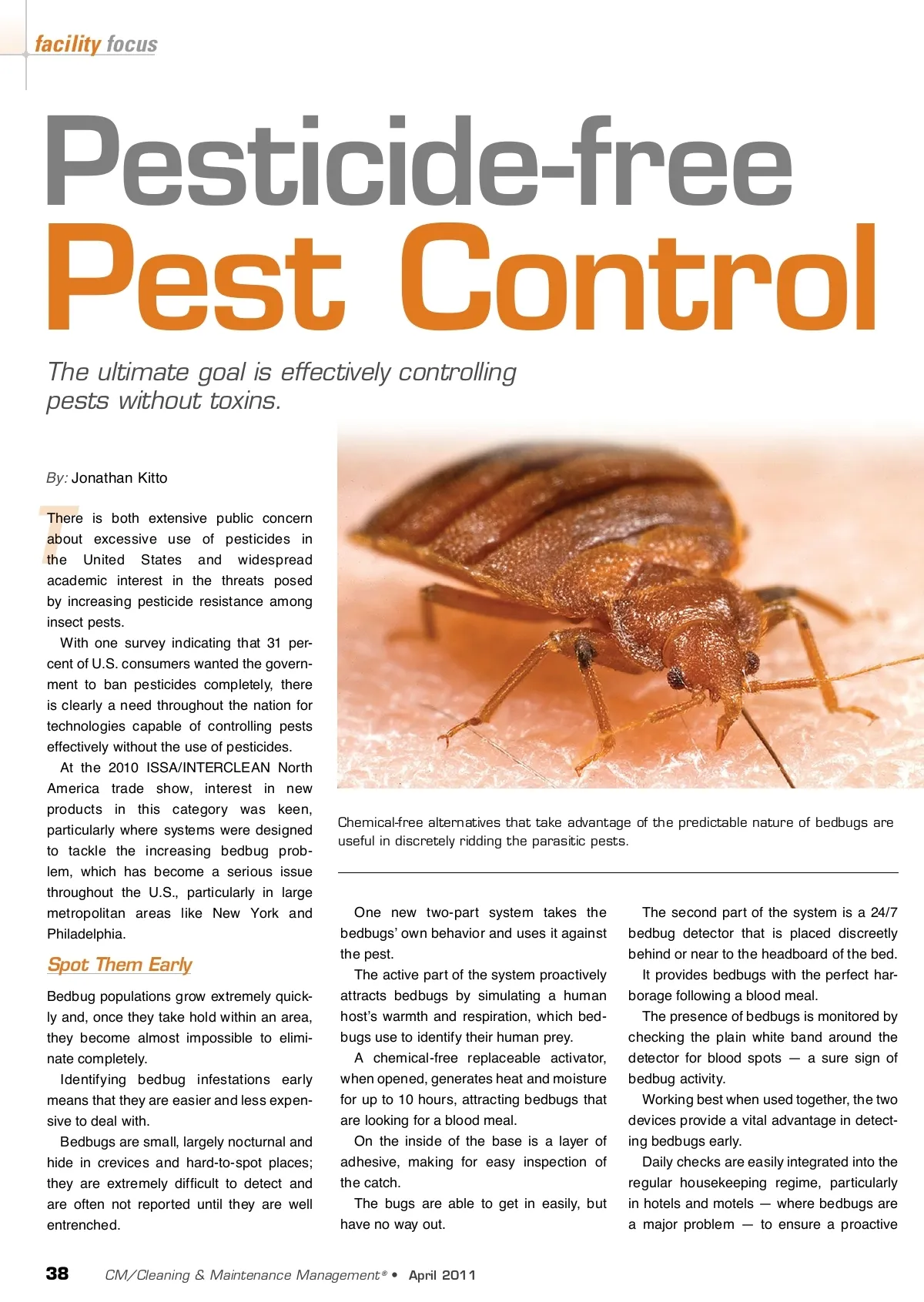
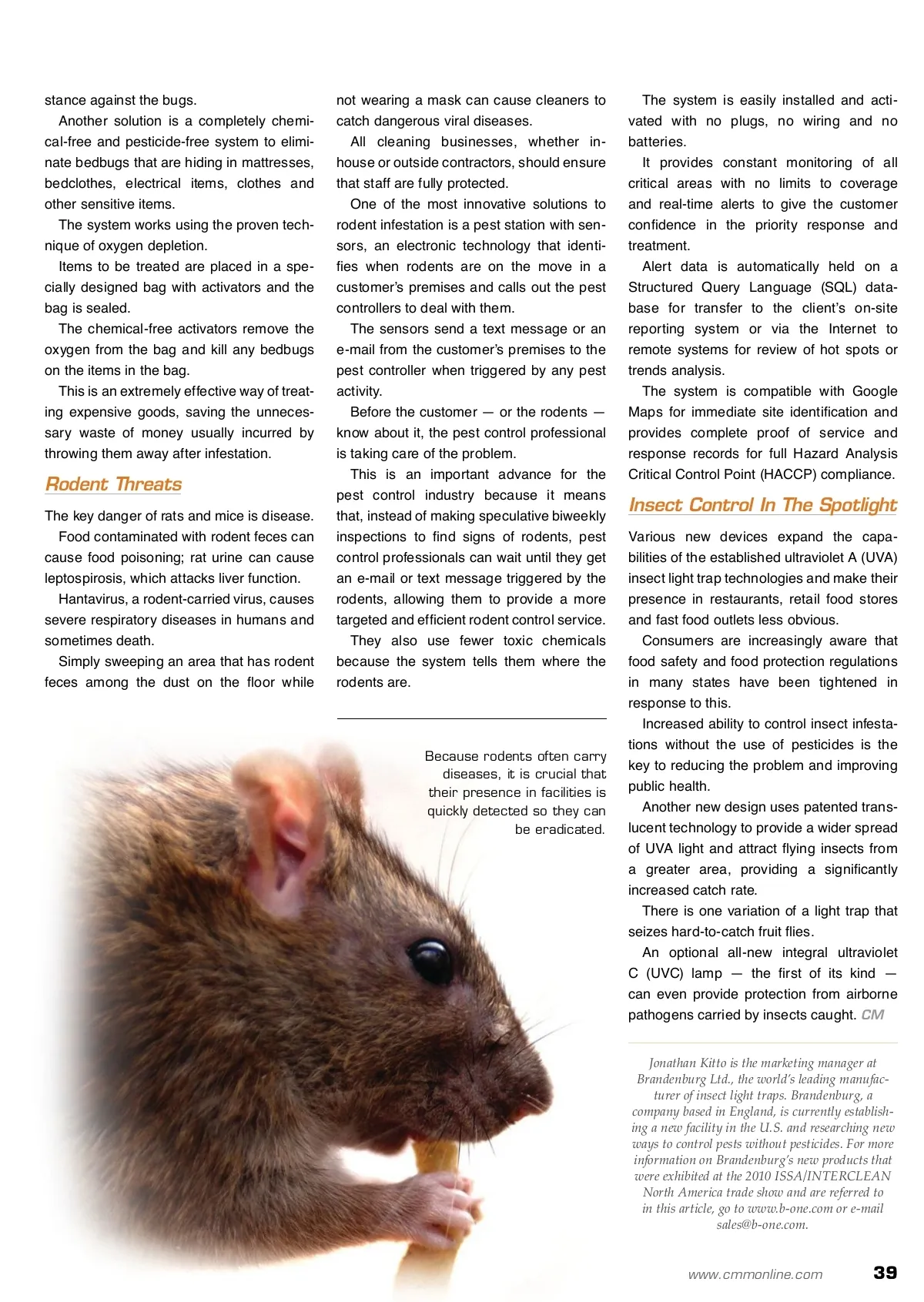
facility focus Pesticide-free The ultimate goal is effectively controlling pests without toxins. By: Jonathan Kitto PestControl T There is both extensive public concern about excessive use of pesticides in the United States and widespread academic interest in the threats posed by increasing pesticide resistance among insect pests. With one survey indicating that 31 per-cent of U.S. consumers wanted the govern-ment to ban pesticides completely, there is clearly a need throughout the nation for technologies capable of controlling pests effectively without the use of pesticides. At the 2010 ISSA/INTERCLEAN North America trade show, interest in new products in this category was keen, particularly where systems were designed to tackle the increasing bedbug prob-lem, which has become a serious issue throughout the U.S., particularly in large metropolitan areas like New York and Philadelphia. Chemical-free alternatives that take advantage of the predictable nature of bedbugs are useful in discretely ridding the parasitic pests. Spot Them Early Bedbug populations grow extremely quick-ly and, once they take hold within an area, they become almost impossible to elimi-nate completely. Identifying bedbug infestations early means that they are easier and less expen-sive to deal with. Bedbugs are small, largely nocturnal and hide in crevices and hard-to-spot places; they are extremely difficult to detect and are often not reported until they are well entrenched. One new two-part system takes the bedbugs’ own behavior and uses it against the pest. The active part of the system proactively attracts bedbugs by simulating a human host’s warmth and respiration, which bed-bugs use to identify their human prey. A chemical-free replaceable activator, when opened, generates heat and moisture for up to 10 hours, attracting bedbugs that are looking for a blood meal. On the inside of the base is a layer of adhesive, making for easy inspection of the catch. The bugs are able to get in easily, but have no way out. The second part of the system is a 24/7 bedbug detector that is placed discreetly behind or near to the headboard of the bed. It provides bedbugs with the perfect har-borage following a blood meal. The presence of bedbugs is monitored by checking the plain white band around the detector for blood spots — a sure sign of bedbug activity. Working best when used together, the two devices provide a vital advantage in detect-ing bedbugs early. Daily checks are easily integrated into the regular housekeeping regime, particularly in hotels and motels — where bedbugs are a major problem — to ensure a proactive 38 CM/Cleaning & Maintenance Management ® • April2011
CMM – Archives Apr 2011: 38