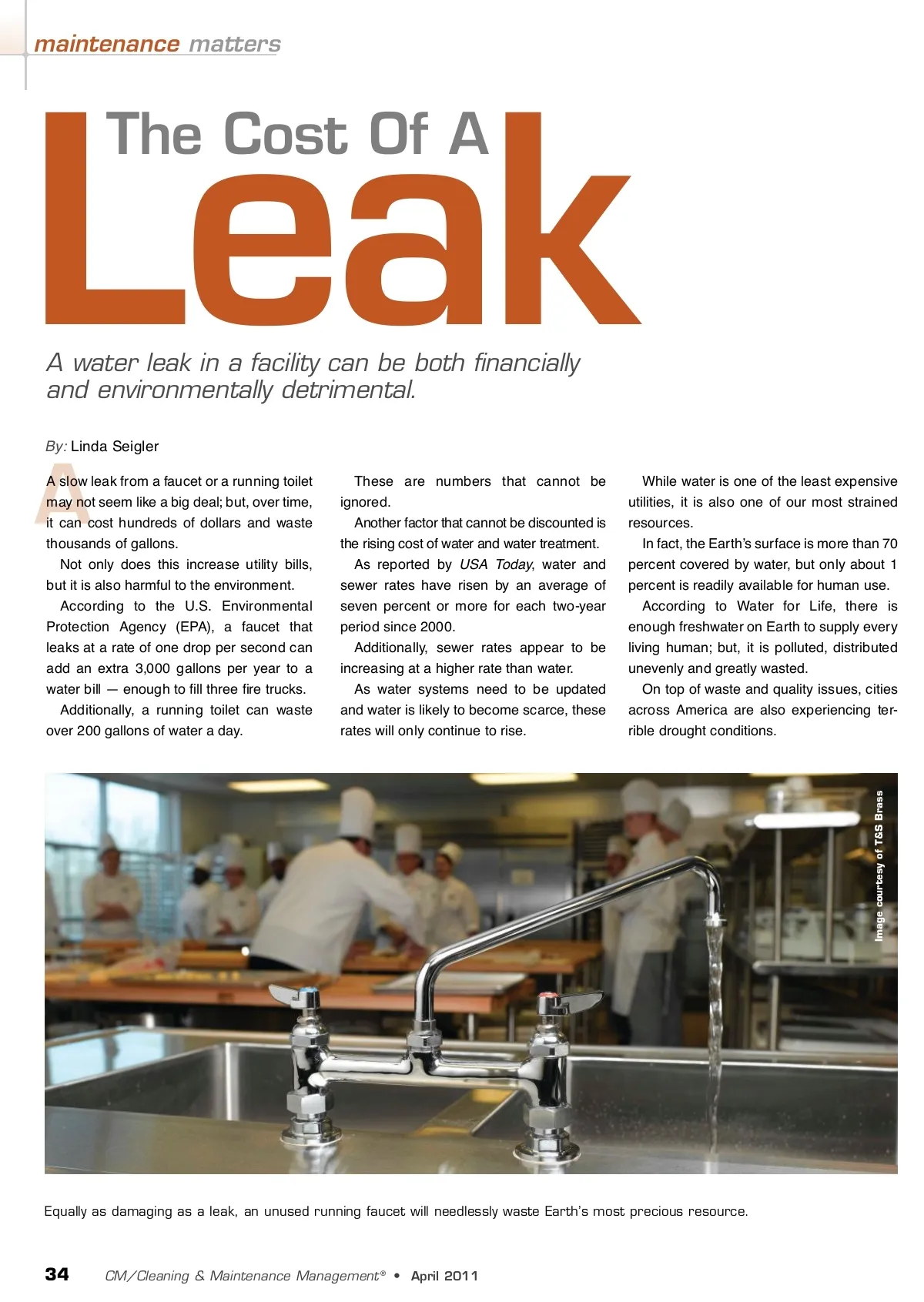
maintenance matters Leak The Cost Of A A water leak in a facility can be both financially and environmentally detrimental. By: Linda Seigler A A slow leak from a faucet or a running toilet may not seem like a big deal; but, over time, it can cost hundreds of dollars and waste thousands of gallons. Not only does this increase utility bills, but it is also harmful to the environment. According to the U.S. Environmental Protection Agency (EPA), a faucet that leaks at a rate of one drop per second can add an extra 3,000 gallons per year to a water bill — enough to fill three fire trucks. Additionally, a running toilet can waste over 200 gallons of water a day. These are numbers that cannot be ignored. Another factor that cannot be discounted is the rising cost of water and water treatment. As reported by USA Today , water and sewer rates have risen by an average of seven percent or more for each two-year period since 2000. Additionally, sewer rates appear to be increasing at a higher rate than water. As water systems need to be updated and water is likely to become scarce, these rates will only continue to rise. While water is one of the least expensive utilities, it is also one of our most strained resources. In fact, the Earth’s surface is more than 70 percent covered by water, but only about 1 percent is readily available for human use. According to Water for Life, there is enough freshwater on Earth to supply every living human; but, it is polluted, distributed unevenly and greatly wasted. On top of waste and quality issues, cities across America are also experiencing ter-rible drought conditions. Equally as damaging as a leak, an unused running faucet will needlessly waste Earth’s most precious resource. 34 CM/Cleaning & Maintenance Management ® • April 2011 Image courtesy of T&S Brass
CMM – Archives Apr 2011: 34