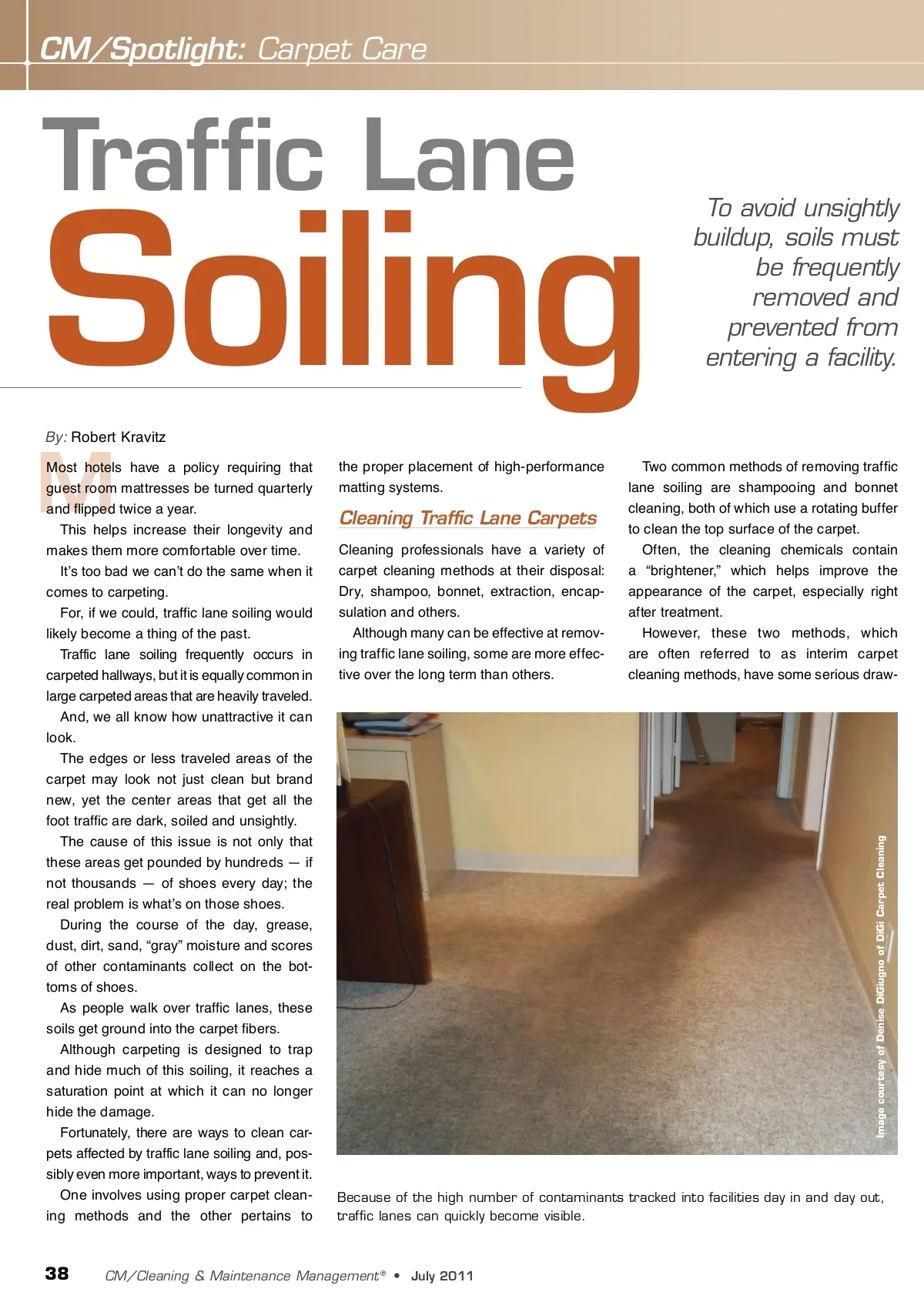
CM/Spotlight: Carpet Care Traffic Lane By: Robert Kravitz Soiling M Most hotels have a policy requiring that guest room mattresses be turned quarterly and flipped twice a year. This helps increase their longevity and makes them more comfortable over time. It’s too bad we can’t do the same when it comes to carpeting. For, if we could, traffic lane soiling would likely become a thing of the past. Traffic lane soiling frequently occurs in carpeted hallways, but it is equally common in large carpeted areas that are heavily traveled. And, we all know how unattractive it can look. The edges or less traveled areas of the carpet may look not just clean but brand new, yet the center areas that get all the foot traffic are dark, soiled and unsightly. The cause of this issue is not only that these areas get pounded by hundreds — if not thousands — of shoes every day; the real problem is what’s on those shoes. During the course of the day, grease, dust, dirt, sand, “gray” moisture and scores of other contaminants collect on the bot-toms of shoes. As people walk over traffic lanes, these soils get ground into the carpet fibers. Although carpeting is designed to trap and hide much of this soiling, it reaches a saturation point at which it can no longer hide the damage. Fortunately, there are ways to clean car-pets affected by traffic lane soiling and, pos-sibly even more important, ways to prevent it. One involves using proper carpet clean-ing methods and the other pertains to the proper placement of high-performance matting systems. To avoid unsightly buildup, soils must be frequently removed and prevented from entering a facility. Cleaning Traffic Lane Carpets Cleaning professionals have a variety of carpet cleaning methods at their disposal: Dry, shampoo, bonnet, extraction, encap-sulation and others. Although many can be effective at remov-ing traffic lane soiling, some are more effec-tive over the long term than others. Two common methods of removing traffic lane soiling are shampooing and bonnet cleaning, both of which use a rotating buffer to clean the top surface of the carpet. Often, the cleaning chemicals contain a “brightener,” which helps improve the appearance of the carpet, especially right after treatment. However, these two methods, which are often referred to as interim carpet cleaning methods, have some serious draw-Because of the high number of contaminants tracked into facilities day in and day out, traffic lanes can quickly become visible. 38 CM/Cleaning & Maintenance Management ® • July 2011 Image courtesy of Denise DiGiugno of DiGi Carpet Cleaning
CMM – Archives Jul 2011: 38