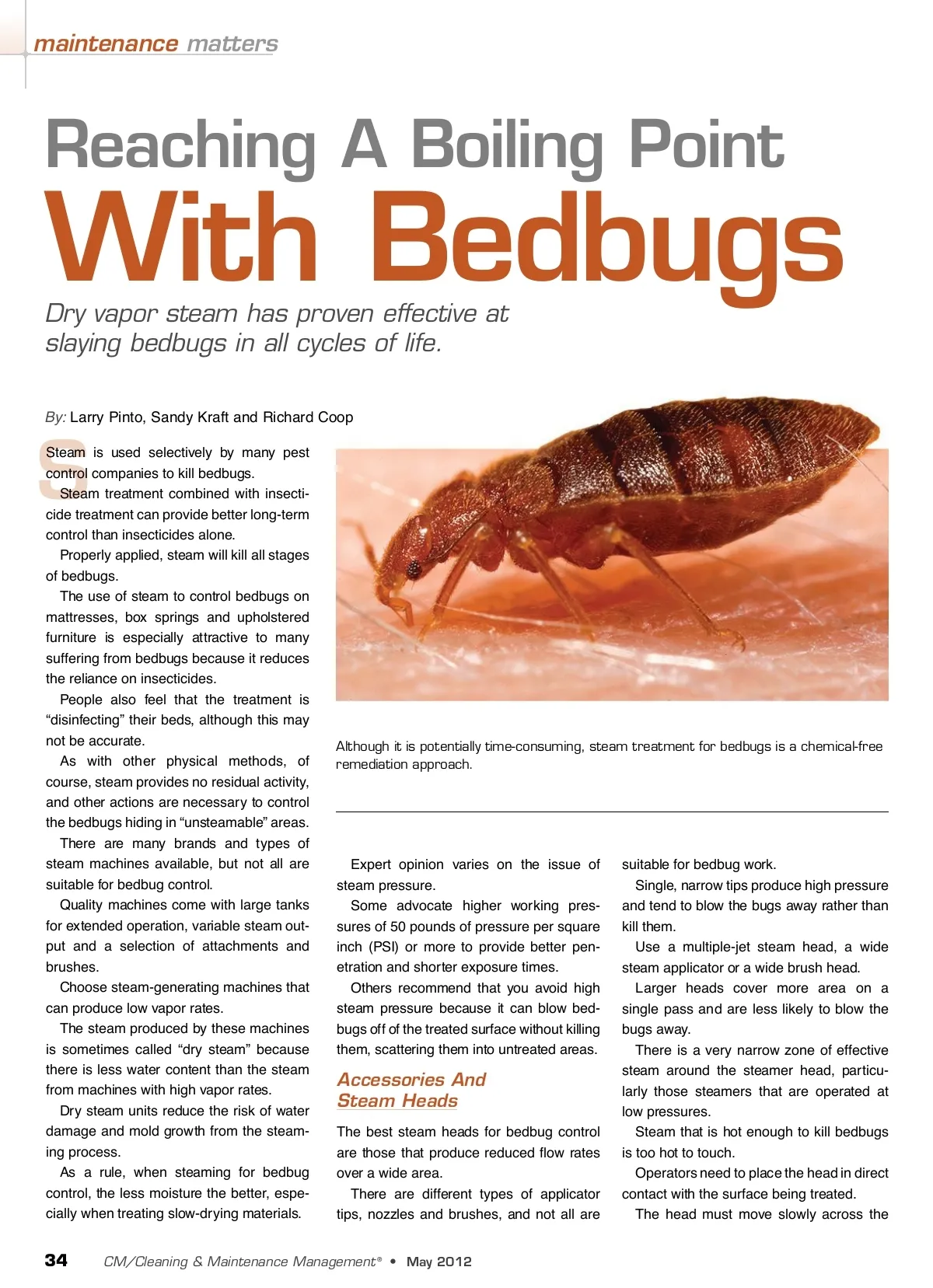
treatment area to be effective, something in the neighborhood of one foot every 10 to 15 seconds. The only way to increase the speed of treatment is to increase the effective tem-perature in the target area. Doing so, however, increases the risk of heat damage. Some experts recommend wrapping the steamer head in a small towel. According to proponents of this meth-od, the increased heat generated by the towel-wrapped head permits the operator to move the head more quickly along the treat-ment surface while still killing the bedbugs and eggs. Whether or not the steam machine opera-tor should use a brush-equipped steamer head is subject to debate. Some say no because the bristles can fling eggs and bugs away from the treat-ment zone; others say yes because the brush opens up the nap or seam of the fabric and cleans out cracks and crevices to improve kill, while mechanically killing the bugs as well. Steam treatment will kill bedbugs in any site that the steam can reach. The two main limitations are the potential heat or moisture damage to treated items and the labor and time it takes to apply the steam effectively. Precautions When Using Steamers Steam machines differ from one to another. Operators should carefully read the instruc-tions to ensure peak efficiency and safety. Electric shock is a safety issue, as steam contains enough water to conduct electricity as it condenses. Do not steam electrical outlets, switches and other electrical devices without first shutting off the electricity. Certain materials may be damaged or colors faded by the heat and moisture gen-erated during steam treatment. First steam an inconspicuous area of the following items or materials: ■ Upholstered couches and chairs, tex-tiles and anything made of leather, acrylic, velvet or linen ■ Painted or finished surfaces and waxed furniture ■ Glossy plastic, which may be dulled by steam ■ Wallpaper and other glued wall cover-ings. Always have a microfiber cloth or a terry cloth towel or paper towel ready for removal of moisture and residue, remembering that white cotton towels work best. Be sure that steamed materials are com-pletely dried. CM Larry Pinto and Sandy Kraft are entomologists at Pinto & Associates Inc. and have consulted on urban pest problems for over 25 years. Between them, they have written dozens of books and manuals and hundreds of articles about pest control and have published Techletter for pest control technicians since 1985. They can be reached at Pinto_Associates@ Comcast.net or through links at www.Techletter. com. Richard Cooper is an entomologist, the techni-cal director of Cooper Pest Solutions of New Jersey and one of the pest control industry’s leading experts on bedbugs. He gives numerous talks on bedbugs around the country, has authored chapters in the Mallis Handbook of Pest Control and was awarded the Pest Control Technology Leadership Award. www.cmmonline.com 35
CMM – Archives May 2012: 35