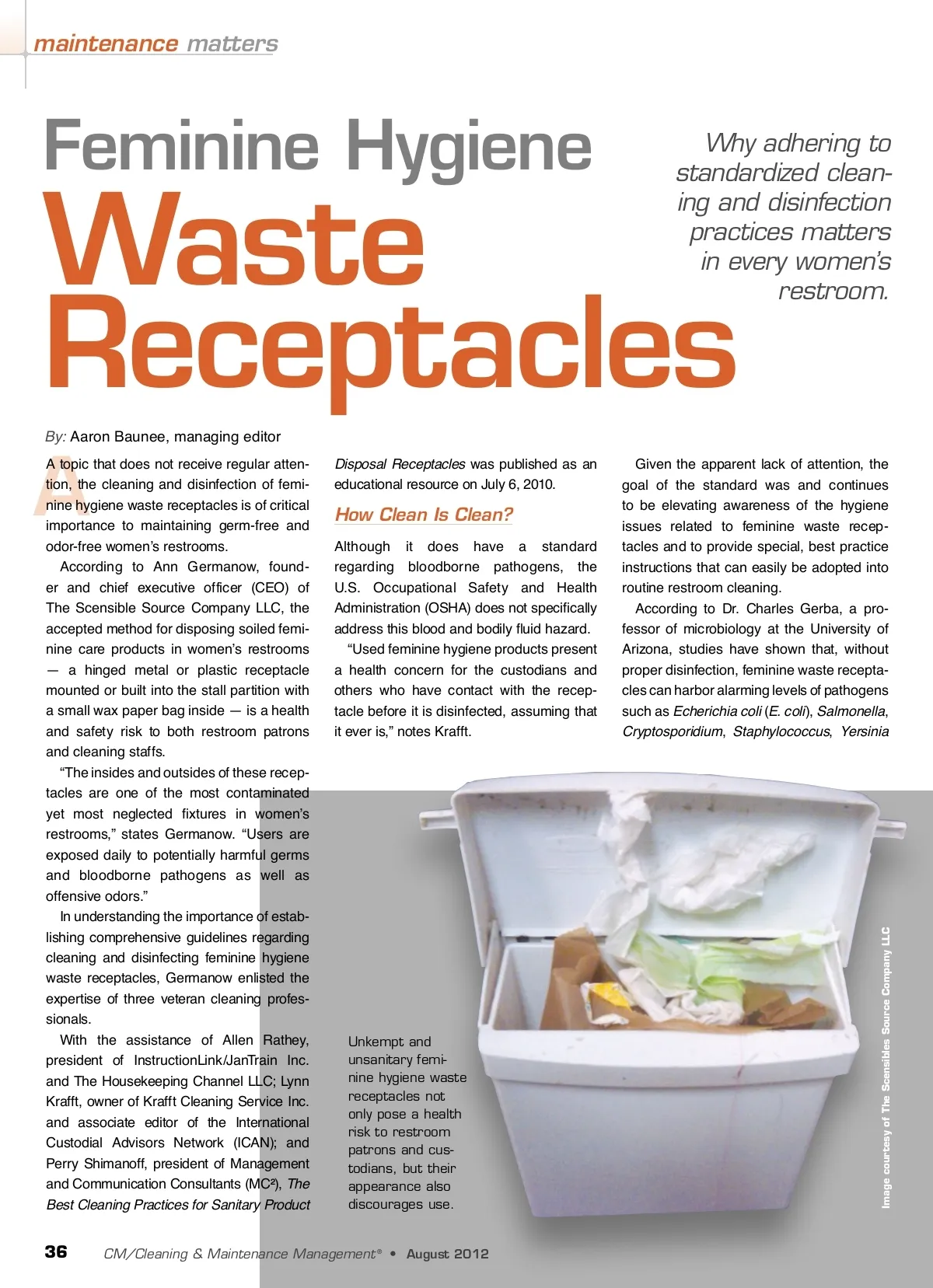
maintenance matters Feminine Hygiene Waste Receptacles By: Aaron Baunee, managing editor Why adhering to standardized clean-ing and disinfection practices matters in every women’s restroom. A A topic that does not receive regular atten-tion, the cleaning and disinfection of femi-nine hygiene waste receptacles is of critical importance to maintaining germ-free and odor-free women’s restrooms. According to Ann Germanow, found-er and chief executive officer (CEO) of The Scensible Source Company LLC, the accepted method for disposing soiled femi-nine care products in women’s restrooms — a hinged metal or plastic receptacle mounted or built into the stall partition with a small wax paper bag inside — is a health and safety risk to both restroom patrons and cleaning staffs. “The insides and outsides of these recep-tacles are one of the most contaminated yet most neglected fixtures in women’s restrooms,” states Germanow. “Users are exposed daily to potentially harmful germs and bloodborne pathogens as well as offensive odors.” In understanding the importance of estab-lishing comprehensive guidelines regarding cleaning and disinfecting feminine hygiene waste receptacles, Germanow enlisted the expertise of three veteran cleaning profes-sionals. With the assistance of Allen Rathey, president of InstructionLink/JanTrain Inc. and The Housekeeping Channel LLC; Lynn Krafft, owner of Krafft Cleaning Service Inc. and associate editor of the International Custodial Advisors Network (ICAN); and Perry Shimanoff, president of Management and Communication Consultants (MC²), The Best Cleaning Practices for Sanitary Product Disposal Receptacles was published as an educational resource on July 6, 2010. How Clean Is Clean? Although it does have a standard regarding bloodborne pathogens, the U.S. Occupational Safety and Health Administration (OSHA) does not specifically address this blood and bodily fluid hazard. “Used feminine hygiene products present a health concern for the custodians and others who have contact with the recep-tacle before it is disinfected, assuming that it ever is,” notes Krafft. Given the apparent lack of attention, the goal of the standard was and continues to be elevating awareness of the hygiene issues related to feminine waste recep-tacles and to provide special, best practice instructions that can easily be adopted into routine restroom cleaning. According to Dr. Charles Gerba, a pro-fessor of microbiology at the University of Arizona, studies have shown that, without proper disinfection, feminine waste recepta-cles can harbor alarming levels of pathogens such as Echerichia coli ( E. coli ), Salmonella , Cryptosporidium , Staphylococcus , Yersinia Unkempt and unsanitary femi-nine hygiene waste receptacles not only pose a health risk to restroom patrons and cus-todians, but their appearance also discourages use. 36 CM/Cleaning & Maintenance Management ® • August 2012 Image courtesy of The Scensibles Source Company LLC
CMM – Archives August 2012: 36