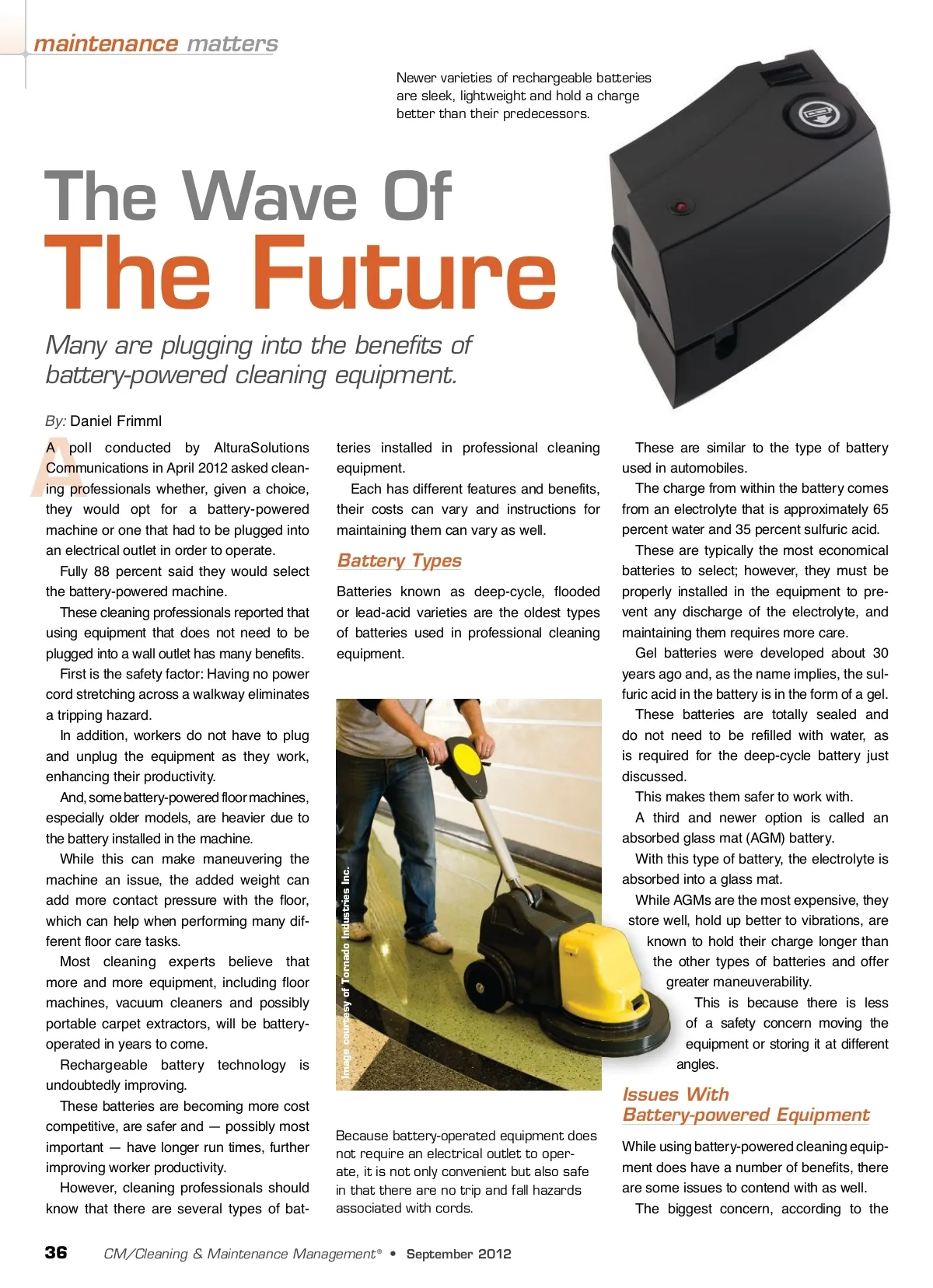
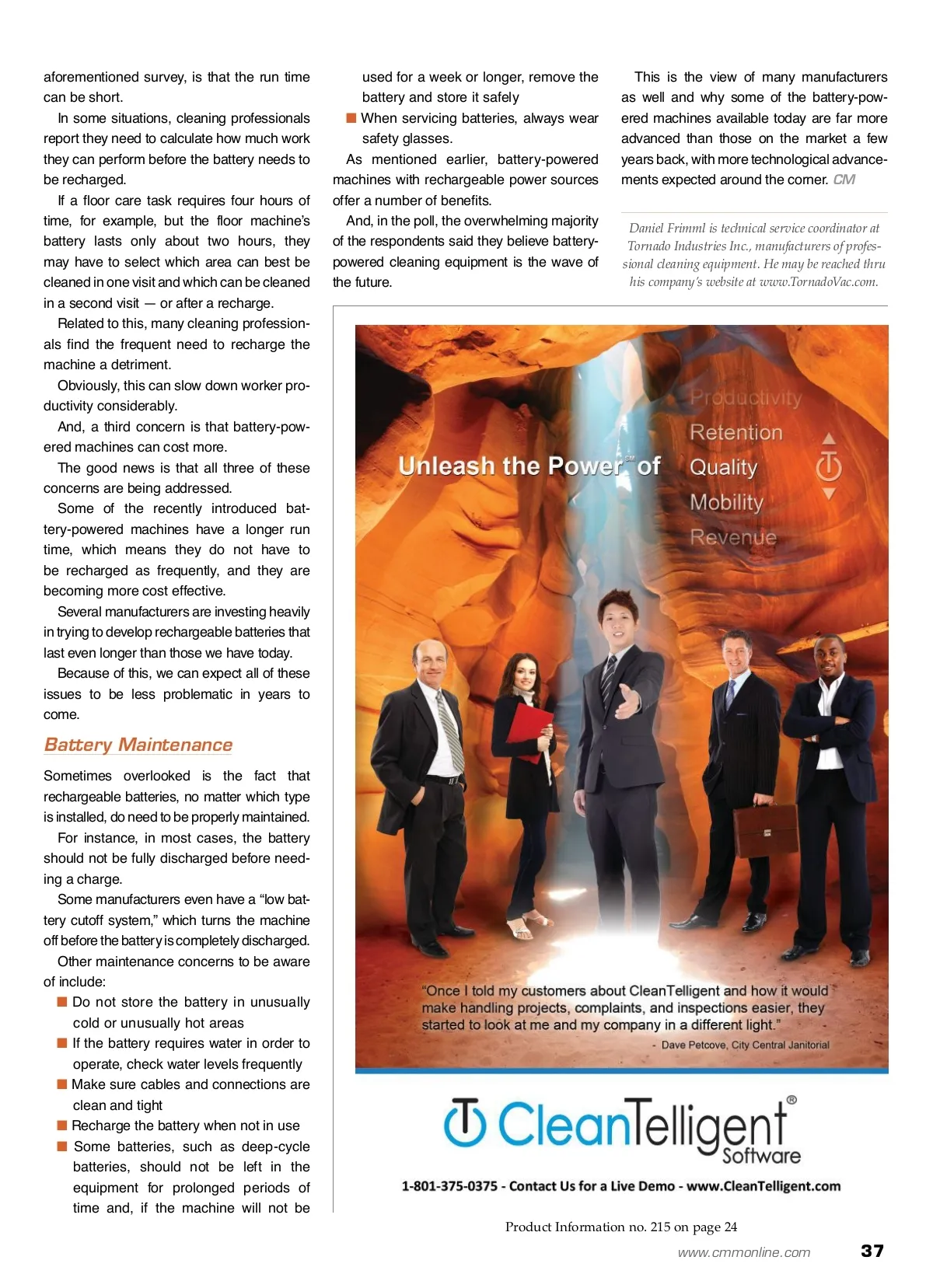
maintenance matters Newer varieties of rechargeable batteries are sleek, lightweight and hold a charge better than their predecessors. The Wave Of The Future Many are plugging into the benefits of battery-powered cleaning equipment. By: Daniel Frimml A A poll conducted by AlturaSolutions Communications in April 2012 asked clean-ing professionals whether, given a choice, they would opt for a battery-powered machine or one that had to be plugged into an electrical outlet in order to operate. Fully 88 percent said they would select the battery-powered machine. These cleaning professionals reported that using equipment that does not need to be plugged into a wall outlet has many benefits. First is the safety factor: Having no power cord stretching across a walkway eliminates a tripping hazard. In addition, workers do not have to plug and unplug the equipment as they work, enhancing their productivity. And, some battery-powered floor machines, especially older models, are heavier due to the battery installed in the machine. While this can make maneuvering the machine an issue, the added weight can add more contact pressure with the floor, which can help when performing many dif-ferent floor care tasks. Most cleaning experts believe that more and more equipment, including floor machines, vacuum cleaners and possibly portable carpet extractors, will be battery-operated in years to come. Rechargeable battery technology is undoubtedly improving. These batteries are becoming more cost competitive, are safer and — possibly most important — have longer run times, further improving worker productivity. However, cleaning professionals should know that there are several types of bat-teries installed in professional cleaning equipment. Each has different features and benefits, their costs can vary and instructions for maintaining them can vary as well. Battery Types Batteries known as deep-cycle, flooded or lead-acid varieties are the oldest types of batteries used in professional cleaning equipment. Image courtesy of Tornado Industries Inc. These are similar to the type of battery used in automobiles. The charge from within the battery comes from an electrolyte that is approximately 65 percent water and 35 percent sulfuric acid. These are typically the most economical batteries to select; however, they must be properly installed in the equipment to pre-vent any discharge of the electrolyte, and maintaining them requires more care. Gel batteries were developed about 30 years ago and, as the name implies, the sul-furic acid in the battery is in the form of a gel. These batteries are totally sealed and do not need to be refilled with water, as is required for the deep-cycle battery just discussed. This makes them safer to work with. A third and newer option is called an absorbed glass mat (AGM) battery. With this type of battery, the electrolyte is absorbed into a glass mat. While AGMs are the most expensive, they store well, hold up better to vibrations, are known to hold their charge longer than the other types of batteries and offer greater maneuverability. This is because there is less of a safety concern moving the equipment or storing it at different angles. Issues With Battery-powered Equipment Because battery-operated equipment does not require an electrical outlet to oper-ate, it is not only convenient but also safe in that there are no trip and fall hazards associated with cords. While using battery-powered cleaning equip-ment does have a number of benefits, there are some issues to contend with as well. The biggest concern, according to the 36 CM/Cleaning & Maintenance Management ® • September 2012
CMM – Archives Sept 2012: 36