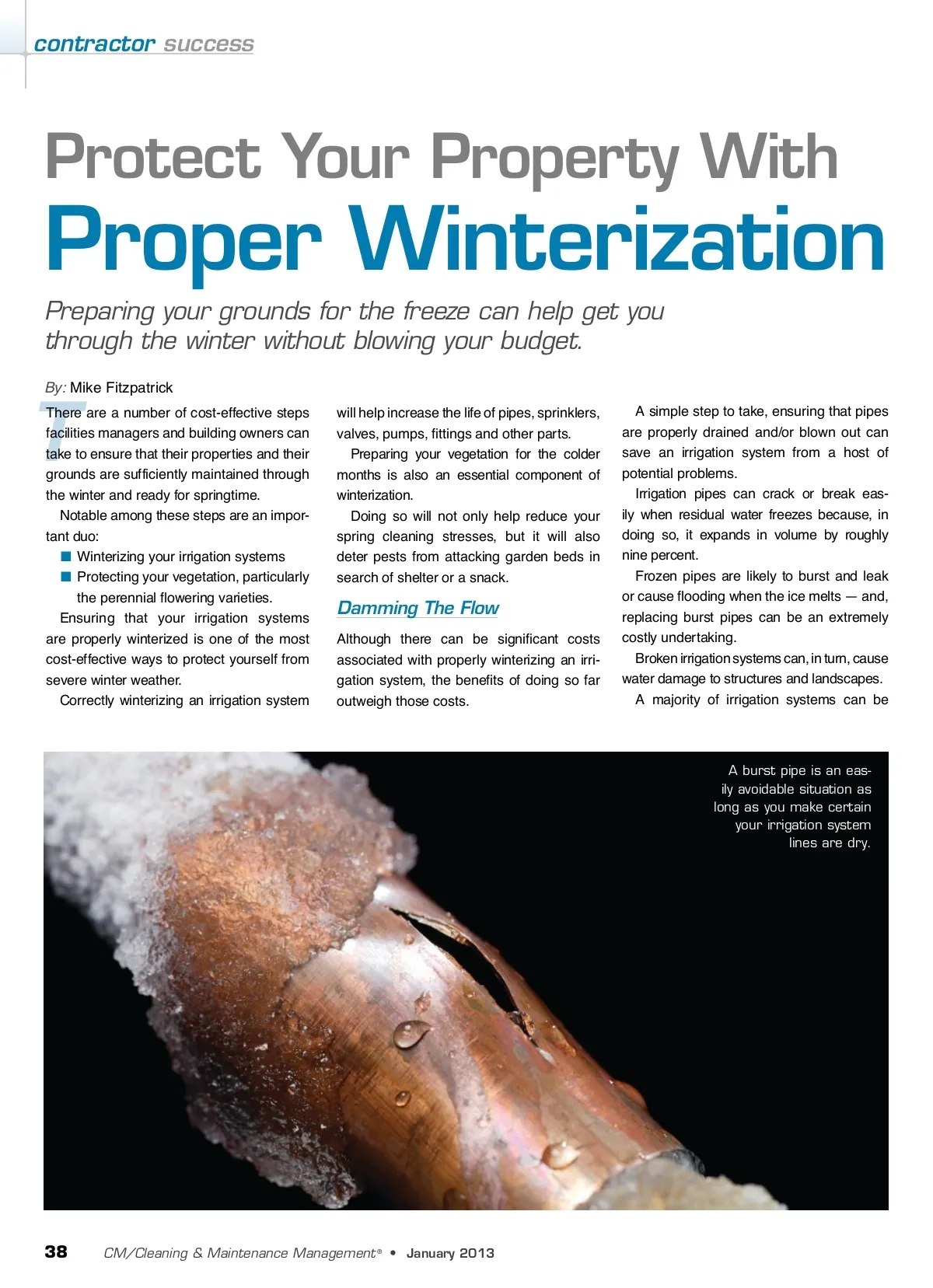
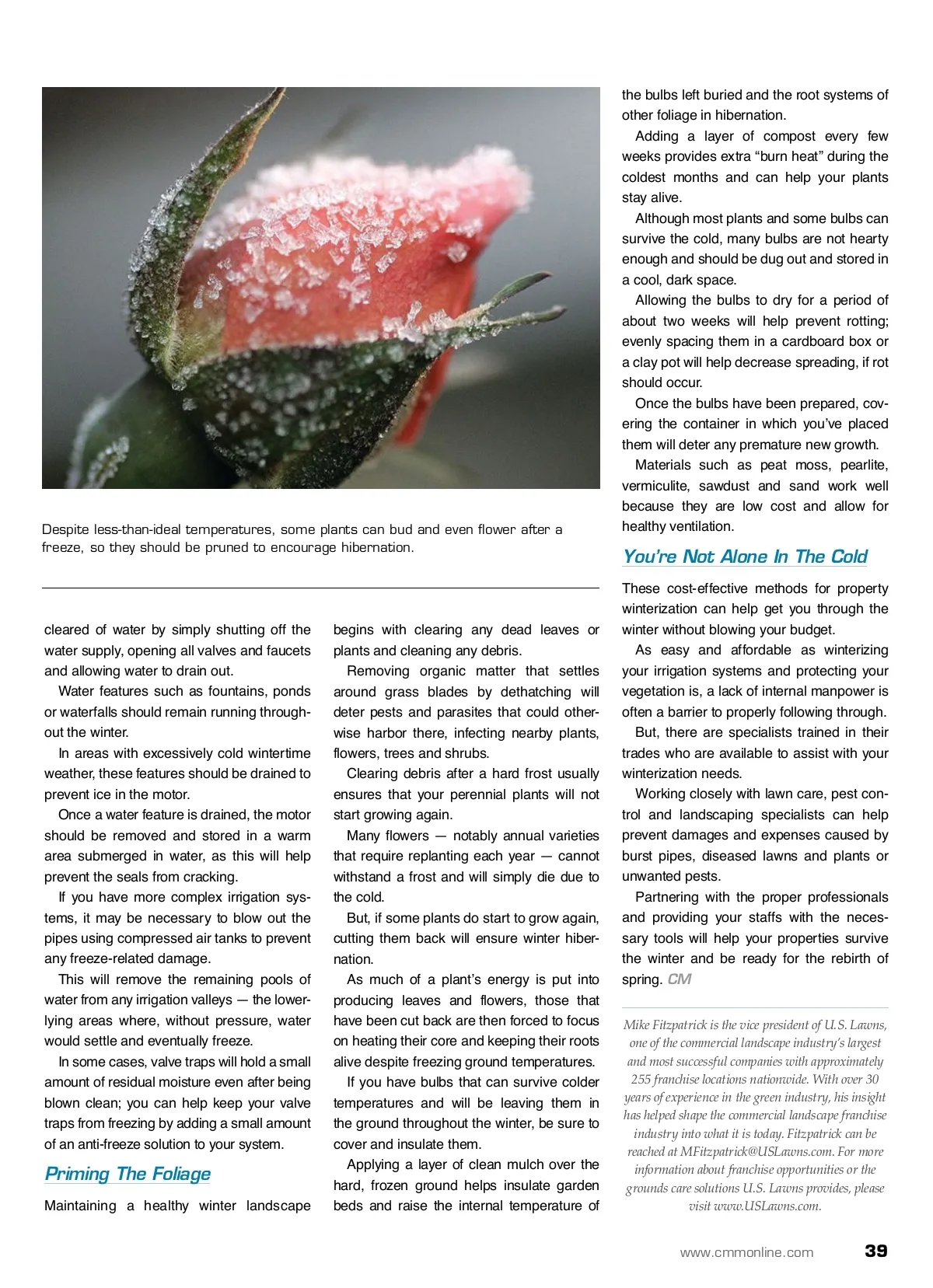
Despite less-than-ideal temperatures, some plants can bud and even flower after a freeze, so they should be pruned to encourage hibernation. the bulbs left buried and the root systems of other foliage in hibernation. Adding a layer of compost every few weeks provides extra “burn heat” during the coldest months and can help your plants stay alive. Although most plants and some bulbs can survive the cold, many bulbs are not hearty enough and should be dug out and stored in a cool, dark space. Allowing the bulbs to dry for a period of about two weeks will help prevent rotting; evenly spacing them in a cardboard box or a clay pot will help decrease spreading, if rot should occur. Once the bulbs have been prepared, cov-ering the container in which you’ve placed them will deter any premature new growth. Materials such as peat moss, pearlite, vermiculite, sawdust and sand work well because they are low cost and allow for healthy ventilation. You’re Not Alone In The Cold These cost-effective methods for property winterization can help get you through the winter without blowing your budget. As easy and affordable as winterizing your irrigation systems and protecting your vegetation is, a lack of internal manpower is often a barrier to properly following through. But, there are specialists trained in their trades who are available to assist with your winterization needs. Working closely with lawn care, pest con-trol and landscaping specialists can help prevent damages and expenses caused by burst pipes, diseased lawns and plants or unwanted pests. Partnering with the proper professionals and providing your staffs with the neces-sary tools will help your properties survive the winter and be ready for the rebirth of spring. CM Mike Fitzpatrick is the vice president of U.S. Lawns, one of the commercial landscape industry’s largest and most successful companies with approximately 255 franchise locations nationwide. With over 30 years of experience in the green industry, his insight has helped shape the commercial landscape franchise industry into what it is today. Fitzpatrick can be reached at [email protected]. For more information about franchise opportunities or the grounds care solutions U.S. Lawns provides, please visit www.USLawns.com. cleared of water by simply shutting off the water supply, opening all valves and faucets and allowing water to drain out. Water features such as fountains, ponds or waterfalls should remain running through-out the winter. In areas with excessively cold wintertime weather, these features should be drained to prevent ice in the motor. Once a water feature is drained, the motor should be removed and stored in a warm area submerged in water, as this will help prevent the seals from cracking. If you have more complex irrigation sys-tems, it may be necessary to blow out the pipes using compressed air tanks to prevent any freeze-related damage. This will remove the remaining pools of water from any irrigation valleys — the lower-lying areas where, without pressure, water would settle and eventually freeze. In some cases, valve traps will hold a small amount of residual moisture even after being blown clean; you can help keep your valve traps from freezing by adding a small amount of an anti-freeze solution to your system. Priming The Foliage Maintaining a healthy winter landscape begins with clearing any dead leaves or plants and cleaning any debris. Removing organic matter that settles around grass blades by dethatching will deter pests and parasites that could other-wise harbor there, infecting nearby plants, flowers, trees and shrubs. Clearing debris after a hard frost usually ensures that your perennial plants will not start growing again. Many flowers — notably annual varieties that require replanting each year — cannot withstand a frost and will simply die due to the cold. But, if some plants do start to grow again, cutting them back will ensure winter hiber-nation. As much of a plant’s energy is put into producing leaves and flowers, those that have been cut back are then forced to focus on heating their core and keeping their roots alive despite freezing ground temperatures. If you have bulbs that can survive colder temperatures and will be leaving them in the ground throughout the winter, be sure to cover and insulate them. Applying a layer of clean mulch over the hard, frozen ground helps insulate garden beds and raise the internal temperature of www.cmmonline.com 39
CMM – Archives Jan 2013: 39