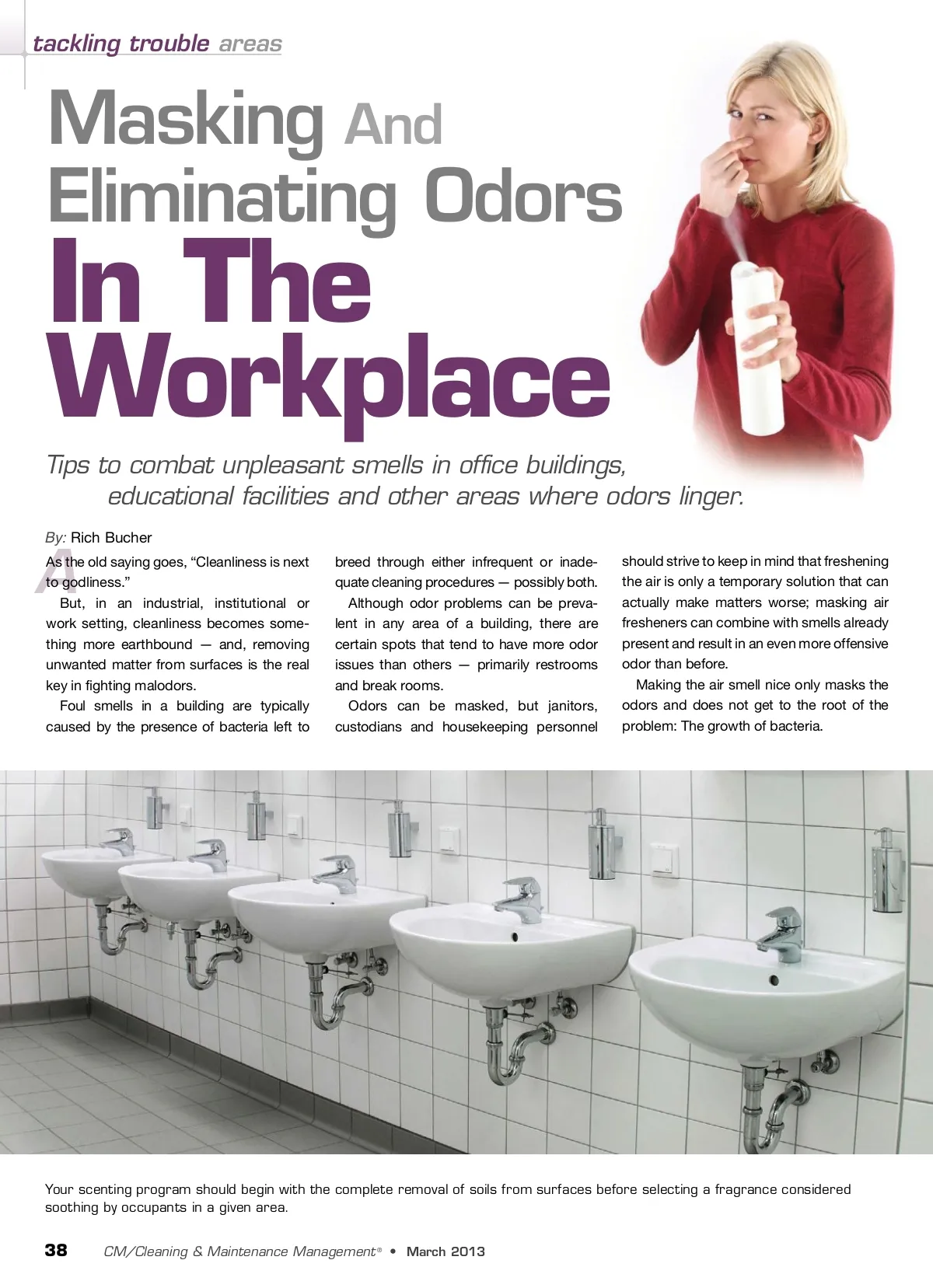
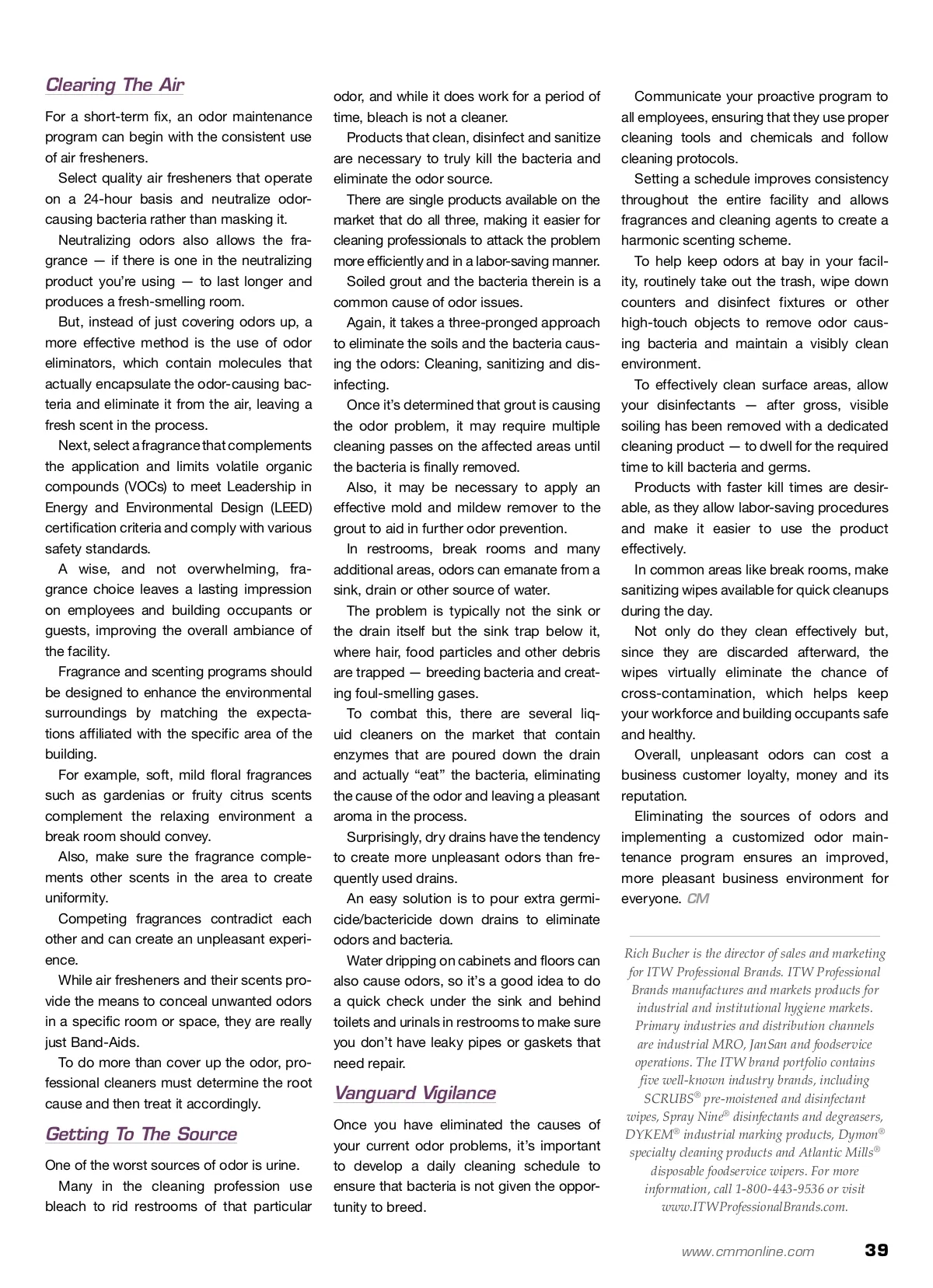
Clearing The Air For a short-term fix, an odor maintenance program can begin with the consistent use of air fresheners. Select quality air fresheners that operate on a 24-hour basis and neutralize odor-causing bacteria rather than masking it. Neutralizing odors also allows the fra-grance — if there is one in the neutralizing product you’re using — to last longer and produces a fresh-smelling room. But, instead of just covering odors up, a more effective method is the use of odor eliminators, which contain molecules that actually encapsulate the odor-causing bac-teria and eliminate it from the air, leaving a fresh scent in the process. Next, select a fragrance that complements the application and limits volatile organic compounds (VOCs) to meet Leadership in Energy and Environmental Design (LEED) certification criteria and comply with various safety standards. A wise, and not overwhelming, fra-grance choice leaves a lasting impression on employees and building occupants or guests, improving the overall ambiance of the facility. Fragrance and scenting programs should be designed to enhance the environmental surroundings by matching the expecta-tions affiliated with the specific area of the building. For example, soft, mild floral fragrances such as gardenias or fruity citrus scents complement the relaxing environment a break room should convey. Also, make sure the fragrance comple-ments other scents in the area to create uniformity. Competing fragrances contradict each other and can create an unpleasant experi-ence. While air fresheners and their scents pro-vide the means to conceal unwanted odors in a specific room or space, they are really just Band-Aids. To do more than cover up the odor, pro-fessional cleaners must determine the root cause and then treat it accordingly. odor, and while it does work for a period of time, bleach is not a cleaner. Products that clean, disinfect and sanitize are necessary to truly kill the bacteria and eliminate the odor source. There are single products available on the market that do all three, making it easier for cleaning professionals to attack the problem more efficiently and in a labor-saving manner. Soiled grout and the bacteria therein is a common cause of odor issues. Again, it takes a three-pronged approach to eliminate the soils and the bacteria caus-ing the odors: Cleaning, sanitizing and dis-infecting. Once it’s determined that grout is causing the odor problem, it may require multiple cleaning passes on the affected areas until the bacteria is finally removed. Also, it may be necessary to apply an effective mold and mildew remover to the grout to aid in further odor prevention. In restrooms, break rooms and many additional areas, odors can emanate from a sink, drain or other source of water. The problem is typically not the sink or the drain itself but the sink trap below it, where hair, food particles and other debris are trapped — breeding bacteria and creat-ing foul-smelling gases. To combat this, there are several liq-uid cleaners on the market that contain enzymes that are poured down the drain and actually “eat” the bacteria, eliminating the cause of the odor and leaving a pleasant aroma in the process. Surprisingly, dry drains have the tendency to create more unpleasant odors than fre-quently used drains. An easy solution is to pour extra germi-cide/bactericide down drains to eliminate odors and bacteria. Water dripping on cabinets and floors can also cause odors, so it’s a good idea to do a quick check under the sink and behind toilets and urinals in restrooms to make sure you don’t have leaky pipes or gaskets that need repair. Communicate your proactive program to all employees, ensuring that they use proper cleaning tools and chemicals and follow cleaning protocols. Setting a schedule improves consistency throughout the entire facility and allows fragrances and cleaning agents to create a harmonic scenting scheme. To help keep odors at bay in your facil-ity, routinely take out the trash, wipe down counters and disinfect fixtures or other high-touch objects to remove odor caus-ing bacteria and maintain a visibly clean environment. To effectively clean surface areas, allow your disinfectants — after gross, visible soiling has been removed with a dedicated cleaning product — to dwell for the required time to kill bacteria and germs. Products with faster kill times are desir-able, as they allow labor-saving procedures and make it easier to use the product effectively. In common areas like break rooms, make sanitizing wipes available for quick cleanups during the day. Not only do they clean effectively but, since they are discarded afterward, the wipes virtually eliminate the chance of cross-contamination, which helps keep your workforce and building occupants safe and healthy. Overall, unpleasant odors can cost a business customer loyalty, money and its reputation. Eliminating the sources of odors and implementing a customized odor main-tenance program ensures an improved, more pleasant business environment for everyone. CM Vanguard Vigilance Once you have eliminated the causes of your current odor problems, it’s important to develop a daily cleaning schedule to ensure that bacteria is not given the oppor-tunity to breed. Getting To The Source One of the worst sources of odor is urine. Many in the cleaning profession use bleach to rid restrooms of that particular Rich Bucher is the director of sales and marketing for ITW Professional Brands. ITW Professional Brands manufactures and markets products for industrial and institutional hygiene markets. Primary industries and distribution channels are industrial MRO, JanSan and foodservice operations. The ITW brand portfolio contains five well-known industry brands, including SCRUBS ® pre-moistened and disinfectant wipes, Spray Nine ® disinfectants and degreasers, DYKEM ® industrial marking products, Dymon ® specialty cleaning products and Atlantic Mills ® disposable foodservice wipers. For more information, call 1-800-443-9536 or visit www.ITWProfessionalBrands.com. www.cmmonline.com 39
CMM – Archives Mar 2013: 39