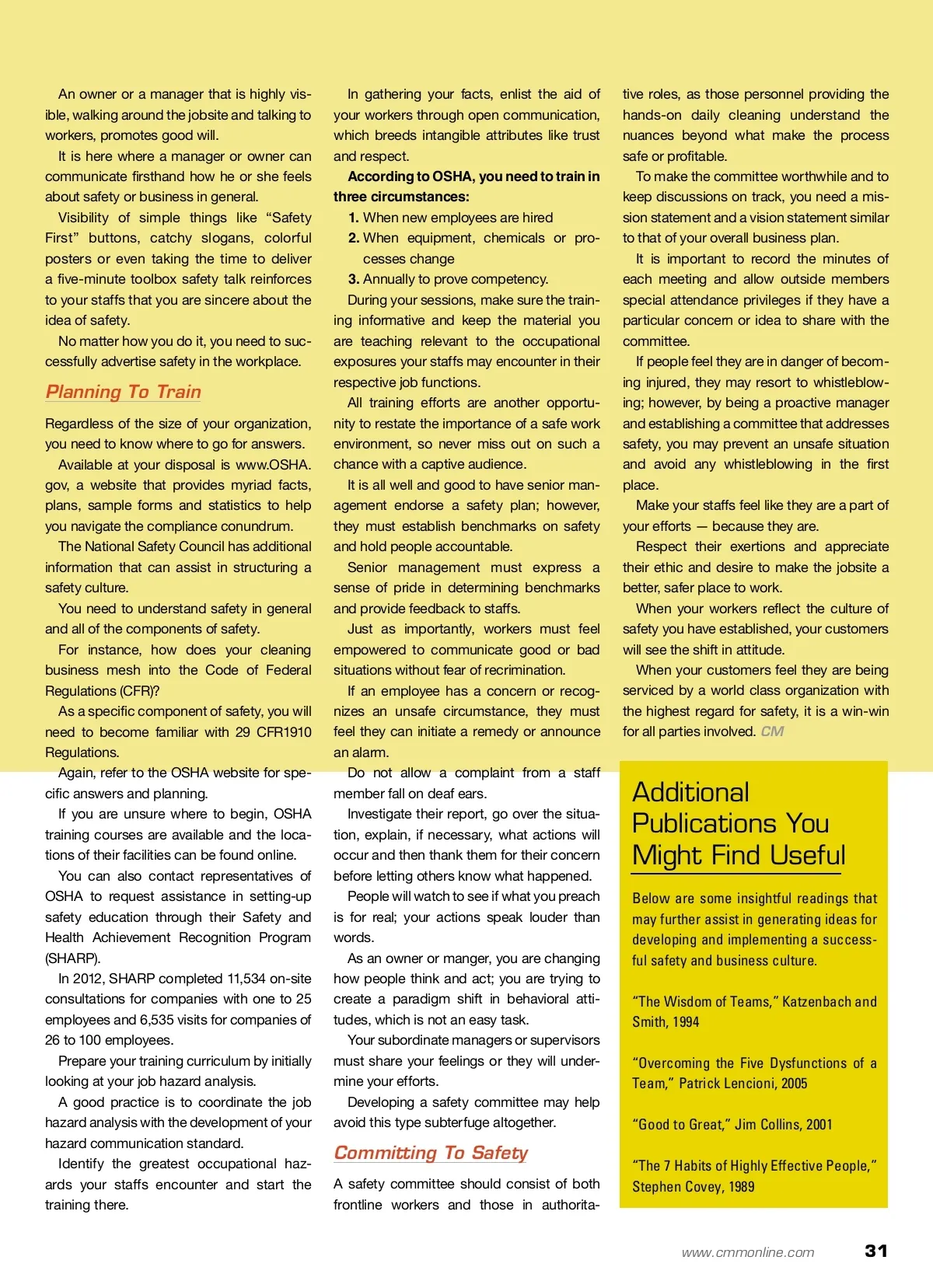
Circumspectly Creating A Culture Of Safety Even more important than the who, what, where and when, education on the why of safety training can make or break your efforts. By: John Poole, Jr. Y John Poole, Jr. is a Master Registered Executive Housekeeper (REH) with IEHA, a Registered Building Services Manager (RBSM) with the Building Services Contractor Association International (BSCAI) and a Cleaning Industry Management Standard (CIMS) Assessor with ISSA. He is also an Authorized OSHA Outreach Safety Trainer. Poole has experience as a project manager in Class-A office buildings and is the former the superinten-dent of custodial services for the Georgia Building Authority. Poole is currently available for consulting and training through his busi-ness, John M. Poole Company, in Atlanta. He can be contacted at [email protected]. You have likely heard statements similar to this: “Training — how are we going to train when we have to clean the building? What time do we need to allocate, and do we even have a budget for safety training expenses?” And, if your training efforts have ever been met with resistance, this might sound familiar: “Let’s clean first; we can train later. We can’t afford to pay staffs overtime to be trained. Safety can wait. Just distribute the forms and have the cleaners sign-off that they’ve been trained. How often do we have to train anyways? We just trained everybody last year.” Regardless of the excuses or rebuttals, the long and short of it is that we must train for safety. Businesses today cannot afford to ignore safety; they must recognize the true benefit of safety train-ing and in establishing a culture of safety. The potential increase in the morale of cleaning staffs and the overall process improvement from safety training has been proven beneficial. More importantly, non-compliance to safety regulations — being served a Severe Violation or a Willful Violation from the U.S. Occupational Safety and Health Administration (OSHA) — can carry significant fees. But, before any training is delivered, three crucial questions need to be addressed: 1. What needs to be done to establish a safety program? 2. How do we implement a safety program? 3. How do we create a sustainable safety pro-gram? First, senior management must endorse and embrace every aspect of a safety initiative and man-date that a safety program be implemented without compromise. Firmly publish statements regarding safety, the active endorsement of safe operations and, ulti-mately, the enforcement of a disciplined human resources structure. The attitude of safety must flow from the top down through the organization. If senior management is behind a program, the chances of it being successful increase greatly. In understanding that all staffs acknowledge senior management’s commitment to a safety pro-gram, the transformation of mindset and the ideas of change will have a better chance of survival. A phony approach will be obvious to your people; be real in selling and implementing the idea of safety. Communicate your thoughts and surround your-self with staff members that share your same phi-losophy, as they will assist in the development of employee buy-in. for more info Visit www.cmmonline.com and type in search keyword: Training . For more information on related products, visit www.cmmonline.com , select SUPPLIER SEARCH from the main navigation bar, and enter keyword: Safety . Safety training not only helps safeguard your workers, your building and its occupants, but it also keeps you within the confines of the law. 30 CM/Cleaning & Maintenance Management ® • March 2013
CMM – Archives Mar 2013: 30