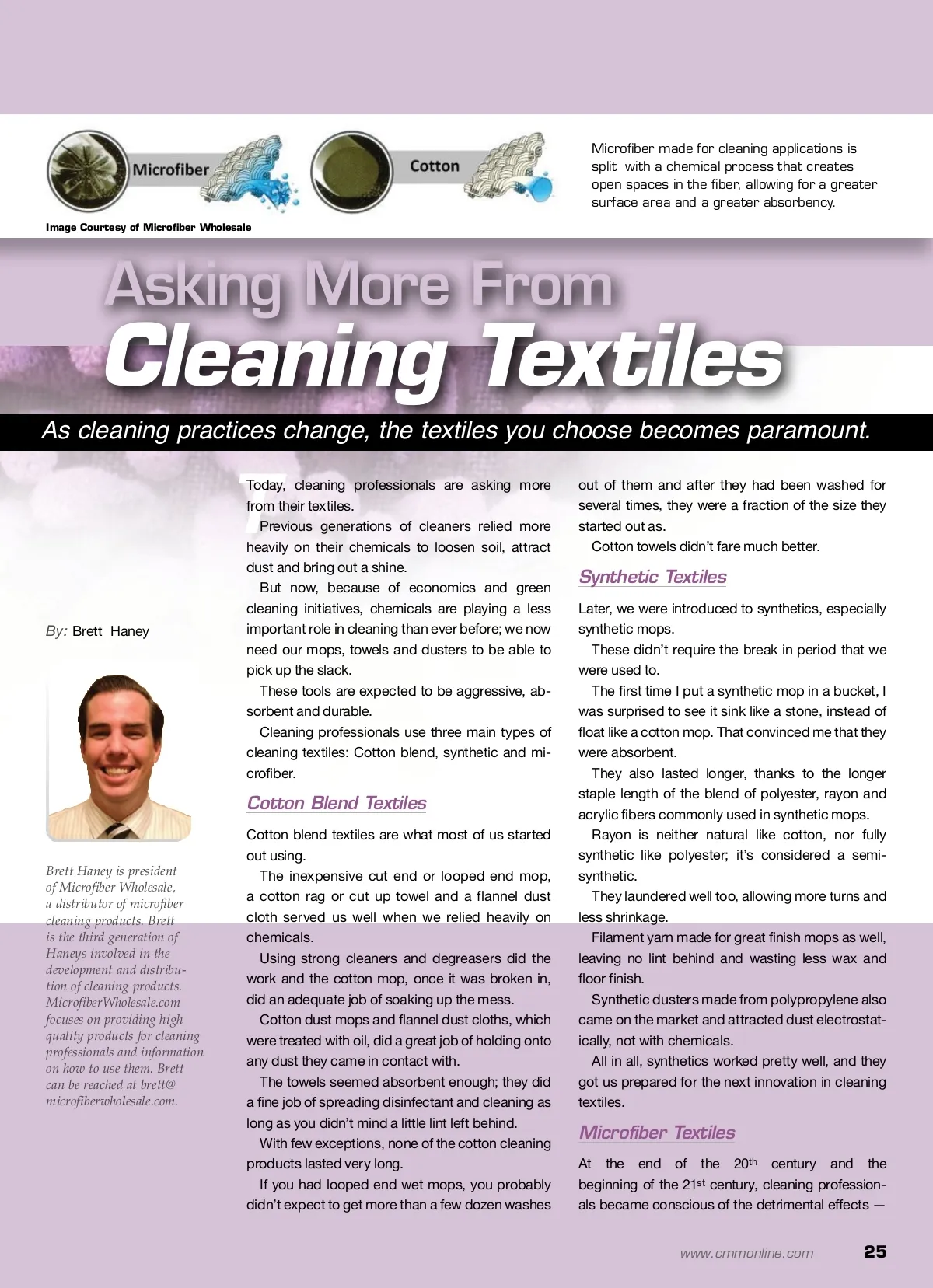
Microfiber made for cleaning applications is split with a chemical process that creates open spaces in the fiber, allowing for a greater surface area and a greater absorbency. Image Courtesy of Microfiber Wholesale Asking More From Cleaning Textiles As cleaning practices change, the textiles you choose becomes paramount. T By: Brett Haney Today, cleaning professionals are asking more from their textiles. Previous generations of cleaners relied more heavily on their chemicals to loosen soil, attract dust and bring out a shine. But now, because of economics and green cleaning initiatives, chemicals are playing a less important role in cleaning than ever before; we now need our mops, towels and dusters to be able to pick up the slack. These tools are expected to be aggressive, ab-sorbent and durable. Cleaning professionals use three main types of cleaning textiles: Cotton blend, synthetic and mi-crofiber. out of them and after they had been washed for several times, they were a fraction of the size they started out as. Cotton towels didn’t fare much better. Synthetic Textiles Later, we were introduced to synthetics, especially synthetic mops. These didn’t require the break in period that we were used to. The first time I put a synthetic mop in a bucket, I was surprised to see it sink like a stone, instead of float like a cotton mop. That convinced me that they were absorbent. They also lasted longer, thanks to the longer staple length of the blend of polyester, rayon and acrylic fibers commonly used in synthetic mops. Rayon is neither natural like cotton, nor fully synthetic like polyester; it’s considered a semi-synthetic. They laundered well too, allowing more turns and less shrinkage. Filament yarn made for great finish mops as well, leaving no lint behind and wasting less wax and floor finish. Synthetic dusters made from polypropylene also came on the market and attracted dust electrostat-ically, not with chemicals. All in all, synthetics worked pretty well, and they got us prepared for the next innovation in cleaning textiles. Cotton Blend Textiles Cotton blend textiles are what most of us started out using. The inexpensive cut end or looped end mop, a cotton rag or cut up towel and a flannel dust cloth served us well when we relied heavily on chemicals. Using strong cleaners and degreasers did the work and the cotton mop, once it was broken in, did an adequate job of soaking up the mess. Cotton dust mops and flannel dust cloths, which were treated with oil, did a great job of holding onto any dust they came in contact with. The towels seemed absorbent enough; they did a fine job of spreading disinfectant and cleaning as long as you didn’t mind a little lint left behind. With few exceptions, none of the cotton cleaning products lasted very long. If you had looped end wet mops, you probably didn’t expect to get more than a few dozen washes Brett Haney is president of Microfiber Wholesale, a distributor of microfiber cleaning products. Brett is the third generation of Haneys involved in the development and distribu-tion of cleaning products. MicrofiberWholesale.com focuses on providing high quality products for cleaning professionals and information on how to use them. Brett can be reached at brett@ microfiberwholesale.com. Microfiber Textiles At the end of the 20 th century and the beginning of the 21 st century, cleaning profession-als became conscious of the detrimental effects — www.cmmonline.com 25
CMM – Archives May 2013: 25