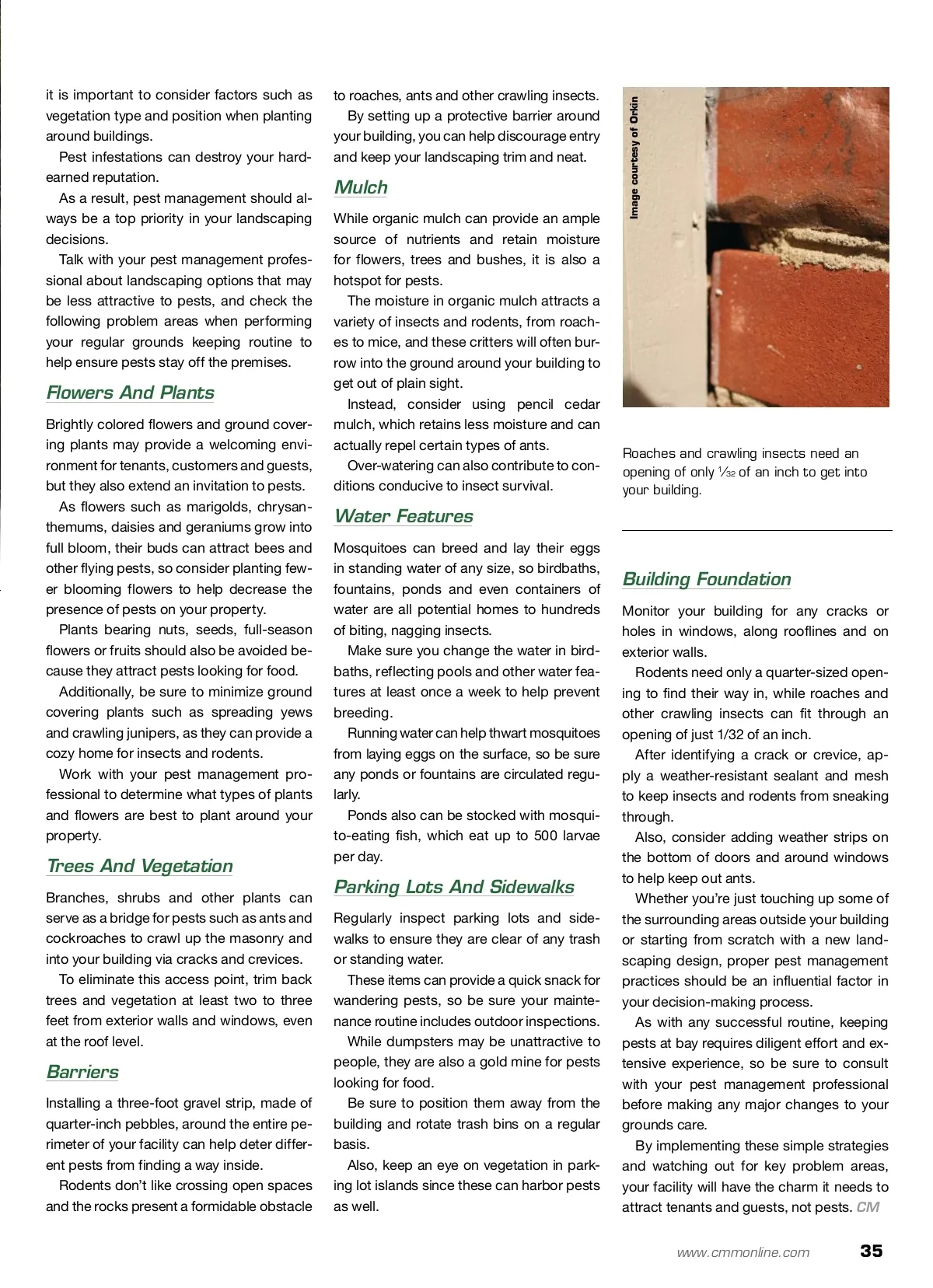
it is important to consider factors such as vegetation type and position when planting around buildings. Pest infestations can destroy your hard-earned reputation. As a result, pest management should al-ways be a top priority in your landscaping decisions. Talk with your pest management profes-sional about landscaping options that may be less attractive to pests, and check the following problem areas when performing your regular grounds keeping routine to help ensure pests stay off the premises. Mulch While organic mulch can provide an ample source of nutrients and retain moisture for flowers, trees and bushes, it is also a hotspot for pests. The moisture in organic mulch attracts a variety of insects and rodents, from roach-es to mice, and these critters will often bur-row into the ground around your building to get out of plain sight. Instead, consider using pencil cedar mulch, which retains less moisture and can actually repel certain types of ants. Over-watering can also contribute to con-ditions conducive to insect survival. Flowers And Plants Brightly colored flowers and ground cover-ing plants may provide a welcoming envi-ronment for tenants, customers and guests, but they also extend an invitation to pests. As flowers such as marigolds, chrysan-themums, daisies and geraniums grow into full bloom, their buds can attract bees and other flying pests, so consider planting few-er blooming flowers to help decrease the presence of pests on your property. Plants bearing nuts, seeds, full-season flowers or fruits should also be avoided be-cause they attract pests looking for food. Additionally, be sure to minimize ground covering plants such as spreading yews and crawling junipers, as they can provide a cozy home for insects and rodents. Work with your pest management pro-fessional to determine what types of plants and flowers are best to plant around your property. Roaches and crawling insects need an opening of only 1 ⁄ 32 of an inch to get into your building. Water Features Mosquitoes can breed and lay their eggs in standing water of any size, so birdbaths, fountains, ponds and even containers of water are all potential homes to hundreds of biting, nagging insects. Make sure you change the water in bird-baths, reflecting pools and other water fea-tures at least once a week to help prevent breeding. Running water can help thwart mosquitoes from laying eggs on the surface, so be sure any ponds or fountains are circulated regu-larly. Ponds also can be stocked with mosqui-to-eating fish, which eat up to 500 larvae per day. Building Foundation Monitor your building for any cracks or holes in windows, along rooflines and on exterior walls. Rodents need only a quarter-sized open-ing to find their way in, while roaches and other crawling insects can fit through an opening of just 1/32 of an inch. After identifying a crack or crevice, ap-ply a weather-resistant sealant and mesh to keep insects and rodents from sneaking through. Also, consider adding weather strips on the bottom of doors and around windows to help keep out ants. Whether you’re just touching up some of the surrounding areas outside your building or starting from scratch with a new land-scaping design, proper pest management practices should be an influential factor in your decision-making process. As with any successful routine, keeping pests at bay requires diligent effort and ex-tensive experience, so be sure to consult with your pest management professional before making any major changes to your grounds care. By implementing these simple strategies and watching out for key problem areas, your facility will have the charm it needs to attract tenants and guests, not pests. CM www.cmmonline.com Trees And Vegetation Branches, shrubs and other plants can serve as a bridge for pests such as ants and cockroaches to crawl up the masonry and into your building via cracks and crevices. To eliminate this access point, trim back trees and vegetation at least two to three feet from exterior walls and windows, even at the roof level. Parking Lots And Sidewalks Regularly inspect parking lots and side-walks to ensure they are clear of any trash or standing water. These items can provide a quick snack for wandering pests, so be sure your mainte-nance routine includes outdoor inspections. While dumpsters may be unattractive to people, they are also a gold mine for pests looking for food. Be sure to position them away from the building and rotate trash bins on a regular basis. Also, keep an eye on vegetation in park-ing lot islands since these can harbor pests as well. Barriers Installing a three-foot gravel strip, made of quarter-inch pebbles, around the entire pe-rimeter of your facility can help deter differ-ent pests from finding a way inside. Rodents don’t like crossing open spaces and the rocks present a formidable obstacle Image courtesy of Orkin to roaches, ants and other crawling insects. By setting up a protective barrier around your building, you can help discourage entry and keep your landscaping trim and neat. 35
CMM – Archives July 2013: 35