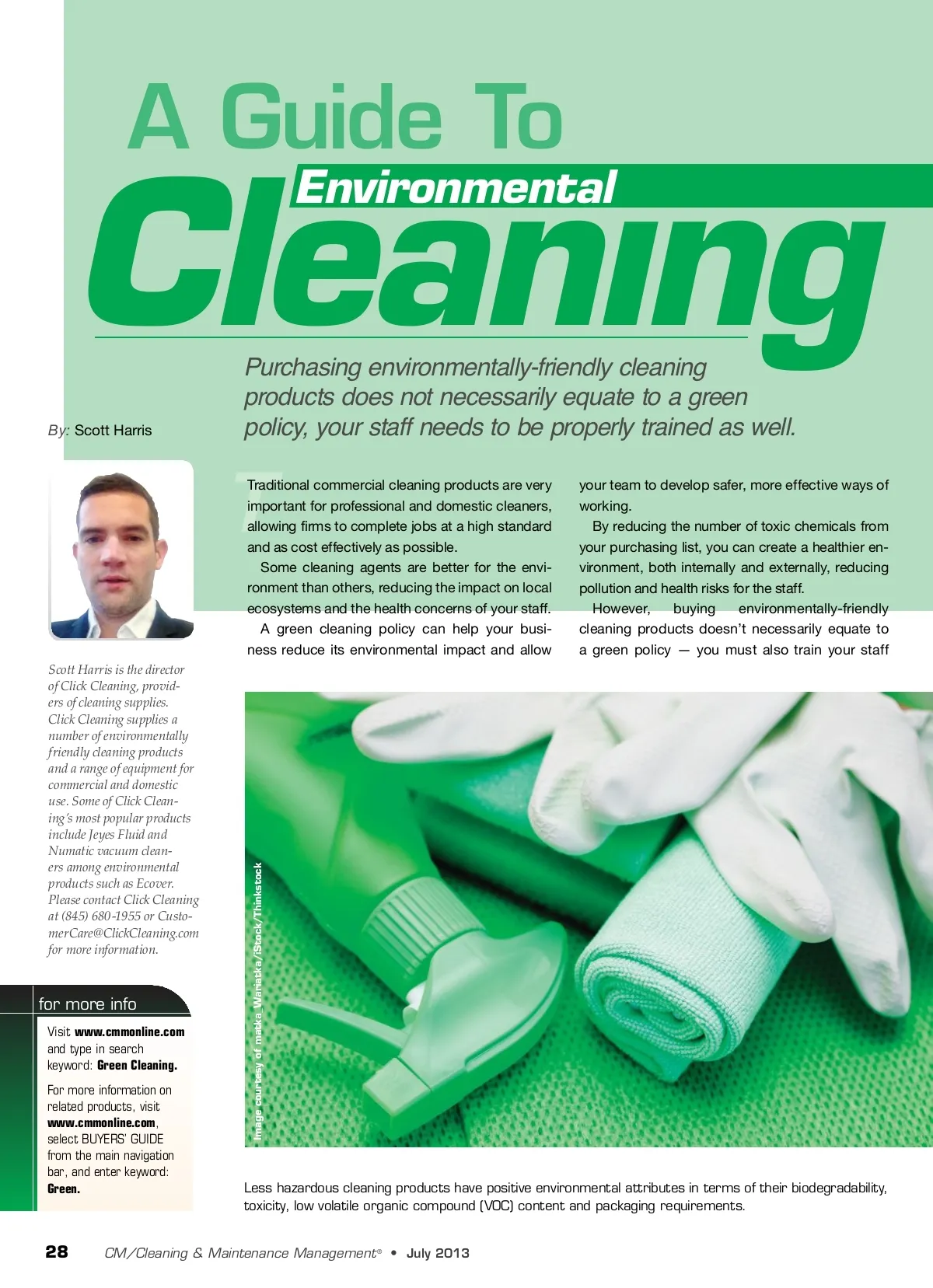
to carry out cleaning jobs effectively, mini-mizing wastage and misuse and ensuring that environmental benefits occur in the longer term. processes and purchasing strategies, you can ensure that the products you use are en-vironmentally friendly and will not negatively impact the health of your staff. The Benefits Of Using Green Products Some conventional cleaning products can include volatile agents which may be dam-aging when released into the atmosphere or rinsed down the drain into water systems. Less hazardous cleaning products have positive environmental attributes in terms of their biodegradability, toxicity, low volatile organic compound (VOC) content and pack-aging requirements. This improves indoor air quality, reduces water and air pollution and ensures the ef-fectiveness of cleaning in removing contami-nants from the building’s interior. Some cleaning ingredients can also cause skin and respiratory irritation or chemical burns if not handled with care. By developing environmentally-friendly Less Environmentally-Friendly Ingredients When buying cleaning products, check the bottle ingredients and try to reduce the use of the following compounds and use more environmentally-friendly alternatives, where possible: ■ Alkylphenol ethoxylates (APEs) are added to some laundry detergents, disinfectants and citrus cleaners/ degreasers; these compounds can be difficult to break down and can harm the reproductive processes of fish and other water species. ■ “Danger,” “Poison” and “Corrosive” cleaners should be minimized as they are likely to be poor for the environ-ment and can cause health problems if mismanaged. ■ Ozone-depleting compounds as listed in the Clean Air Act regulations or regu-lated hazardous materials. ■ Petroleum-based cleaning products can increase our dependence on imported oil. However, a non-toxic petroleum degreaser is better for the environment than a toxic and polluting phosphate detergent, for example. ■ Chlorine bleach and ammonia , or other corrosive or irritating substances typi-cally found in drain cleaners, oven cleaners and acidic toilet bowl cleaners can be irritating to eyes, nose, throat and lungs and should not be used by people with asthma or lung or heart problems. ■ Diethanolamine (DEA) and triethanol-amine (TEA) may contribute to cancer or hormone disruption. Avoid any sub-stances which could be human car-cinogens or reproductive toxicants, or specified by the National Toxicology Program, the International Agency FREE INFO: Reader Service 209 or CMMOnline.com/freeinfo www.cmmonline.com 29
CMM – Archives July 2013: 29