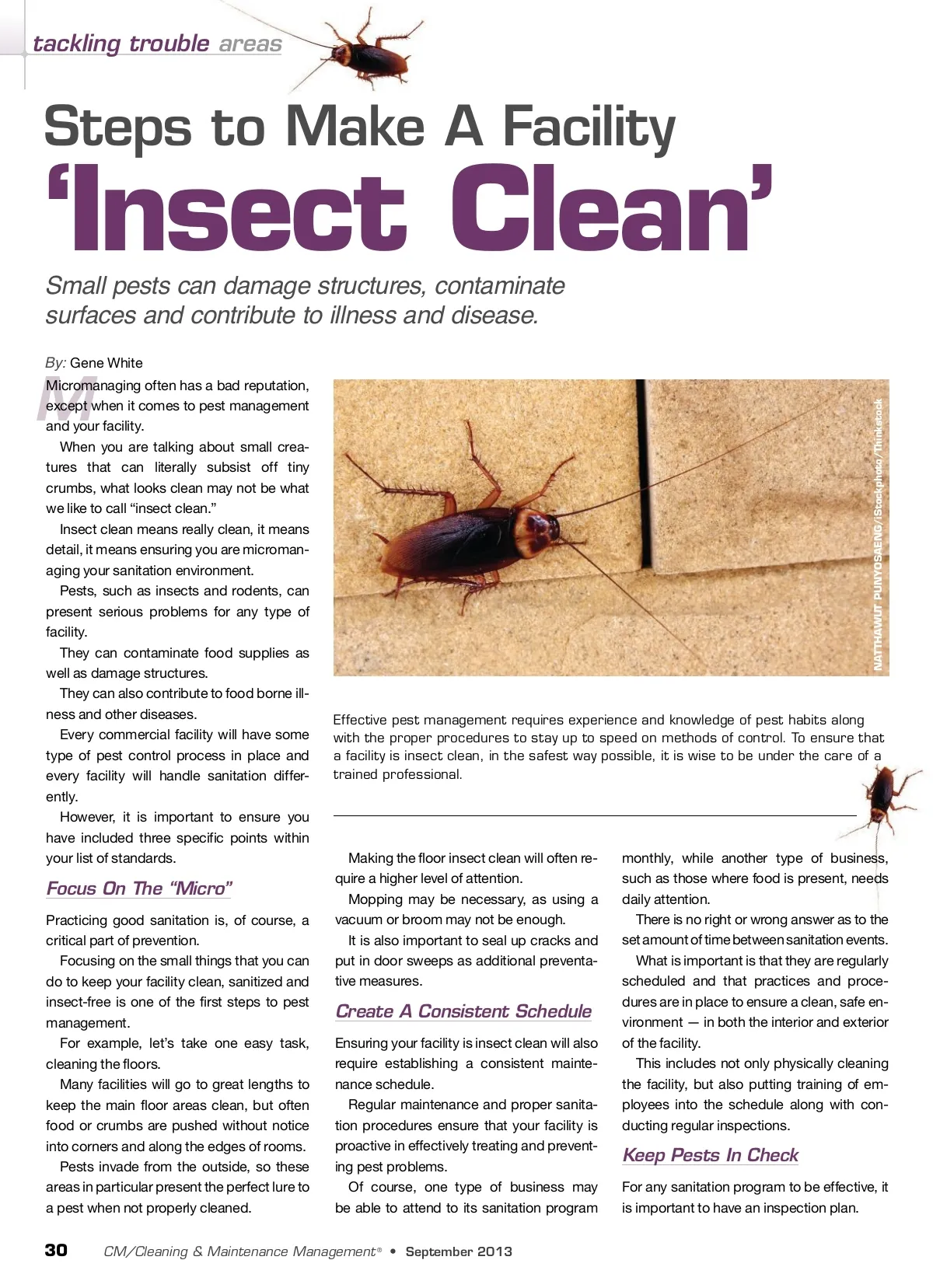
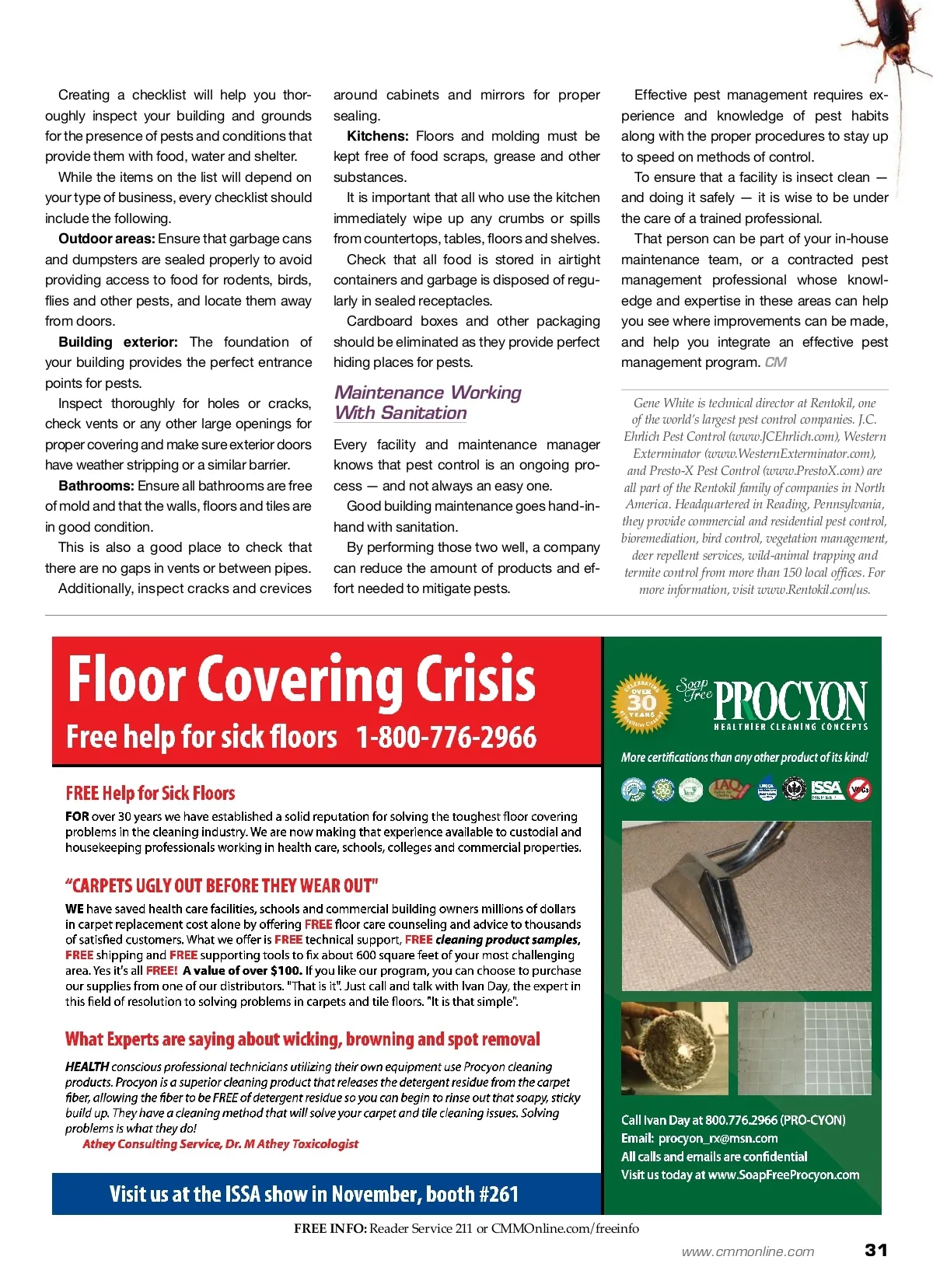
tackling trouble areas Steps to Make A Facility ‘Insect Clean’ Small pests can damage structures, contaminate surfaces and contribute to illness and disease. Micromanaging often has a bad reputation, except when it comes to pest management and your facility. When you are talking about small crea-tures that can literally subsist off tiny crumbs, what looks clean may not be what we like to call “insect clean.” Insect clean means really clean, it means detail, it means ensuring you are microman-aging your sanitation environment. Pests, such as insects and rodents, can present serious problems for any type of facility. They can contaminate food supplies as well as damage structures. They can also contribute to food borne ill-ness and other diseases. Every commercial facility will have some type of pest control process in place and every facility will handle sanitation differ-ently. However, it is important to ensure you have included three specific points within your list of standards. By: Gene White NATTHAWUT PUNYOSAENG/iStockphoto/Thinkstock M Effective pest management requires experience and knowledge of pest habits along with the proper procedures to stay up to speed on methods of control. To ensure that a facility is insect clean, in the safest way possible, it is wise to be under the care of a trained professional. Focus On The “Micro” Practicing good sanitation is, of course, a critical part of prevention. Focusing on the small things that you can do to keep your facility clean, sanitized and insect-free is one of the first steps to pest management. For example, let’s take one easy task, cleaning the floors. Many facilities will go to great lengths to keep the main floor areas clean, but often food or crumbs are pushed without notice into corners and along the edges of rooms. Pests invade from the outside, so these areas in particular present the perfect lure to a pest when not properly cleaned. Making the floor insect clean will often re-quire a higher level of attention. Mopping may be necessary, as using a vacuum or broom may not be enough. It is also important to seal up cracks and put in door sweeps as additional preventa-tive measures. Create A Consistent Schedule Ensuring your facility is insect clean will also require establishing a consistent mainte-nance schedule. Regular maintenance and proper sanita-tion procedures ensure that your facility is proactive in effectively treating and prevent-ing pest problems. Of course, one type of business may be able to attend to its sanitation program monthly, while another type of business, such as those where food is present, needs daily attention. There is no right or wrong answer as to the set amount of time between sanitation events. What is important is that they are regularly scheduled and that practices and proce-dures are in place to ensure a clean, safe en-vironment — in both the interior and exterior of the facility. This includes not only physically cleaning the facility, but also putting training of em-ployees into the schedule along with con-ducting regular inspections. Keep Pests In Check For any sanitation program to be effective, it is important to have an inspection plan. 30 CM/Cleaning & Maintenance Management ® • September 2013
CMM – Archives September 2013: 30