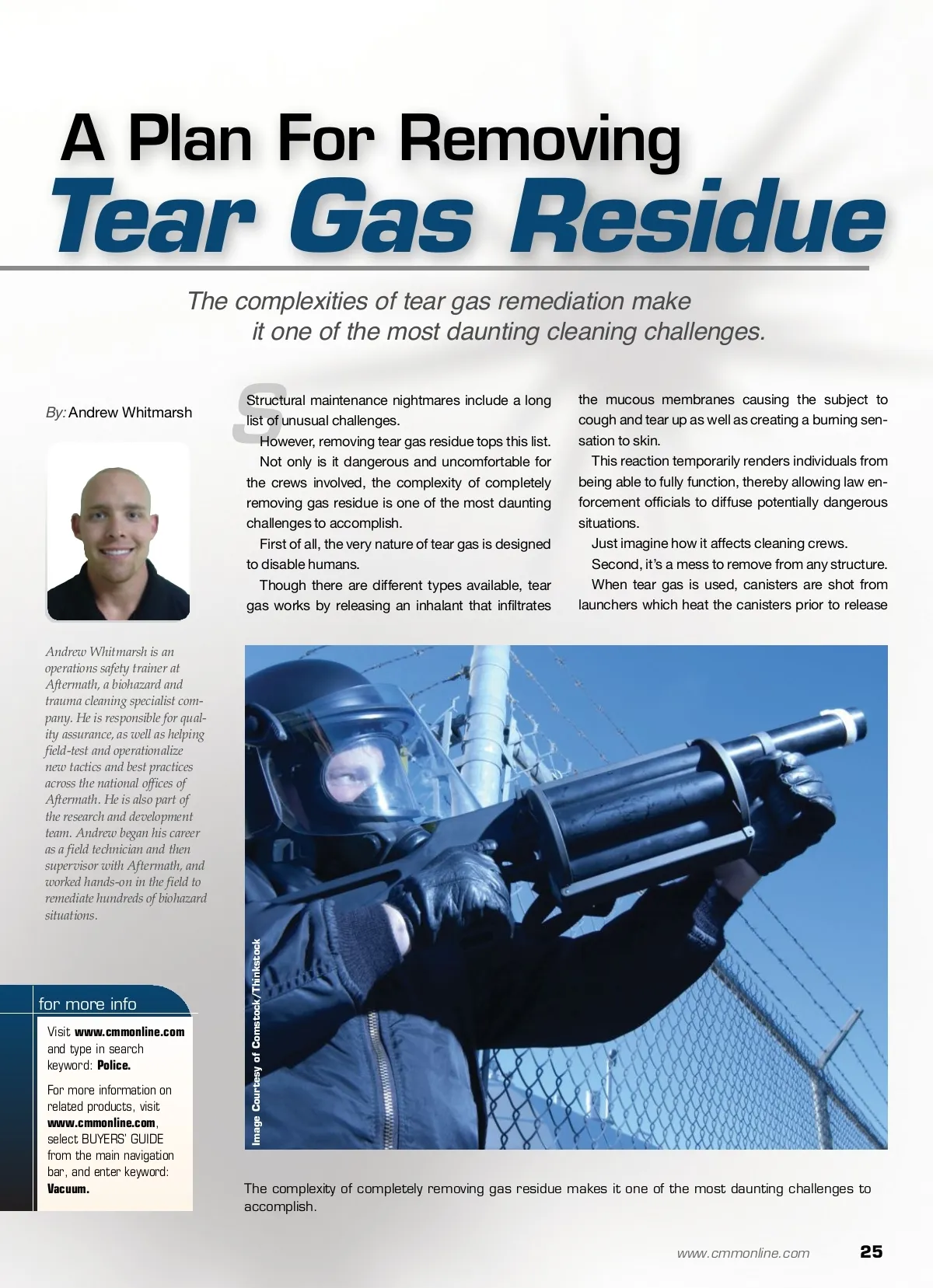
A Plan For Removing Tear Gas Residue The complexities of tear gas remediation make it one of the most daunting cleaning challenges. By: Andrew Whitmarsh S Structural maintenance nightmares include a long list of unusual challenges. However, removing tear gas residue tops this list. Not only is it dangerous and uncomfortable for the crews involved, the complexity of completely removing gas residue is one of the most daunting challenges to accomplish. First of all, the very nature of tear gas is designed to disable humans. Though there are different types available, tear gas works by releasing an inhalant that infiltrates the mucous membranes causing the subject to cough and tear up as well as creating a burning sen-sation to skin. This reaction temporarily renders individuals from being able to fully function, thereby allowing law en-forcement officials to diffuse potentially dangerous situations. Just imagine how it affects cleaning crews. Second, it’s a mess to remove from any structure. When tear gas is used, canisters are shot from launchers which heat the canisters prior to release Andrew Whitmarsh is an operations safety trainer at Aftermath, a biohazard and trauma cleaning specialist com-pany. He is responsible for qual-ity assurance, as well as helping field-test and operationalize new tactics and best practices across the national offices of Aftermath. He is also part of the research and development team. Andrew began his career as a field technician and then supervisor with Aftermath, and worked hands-on in the field to remediate hundreds of biohazard situations. Image Courtesy of Comstock/Thinkstock for more info Visit www.cmmonline.com and type in search keyword: Police. For more information on related products, visit www.cmmonline.com , select BUYERS’ GUIDE from the main navigation bar, and enter keyword: Vacuum. The complexity of completely removing gas residue makes it one of the most daunting challenges to accomplish. www.cmmonline.com 25
CMM – Archives September 2013: 25