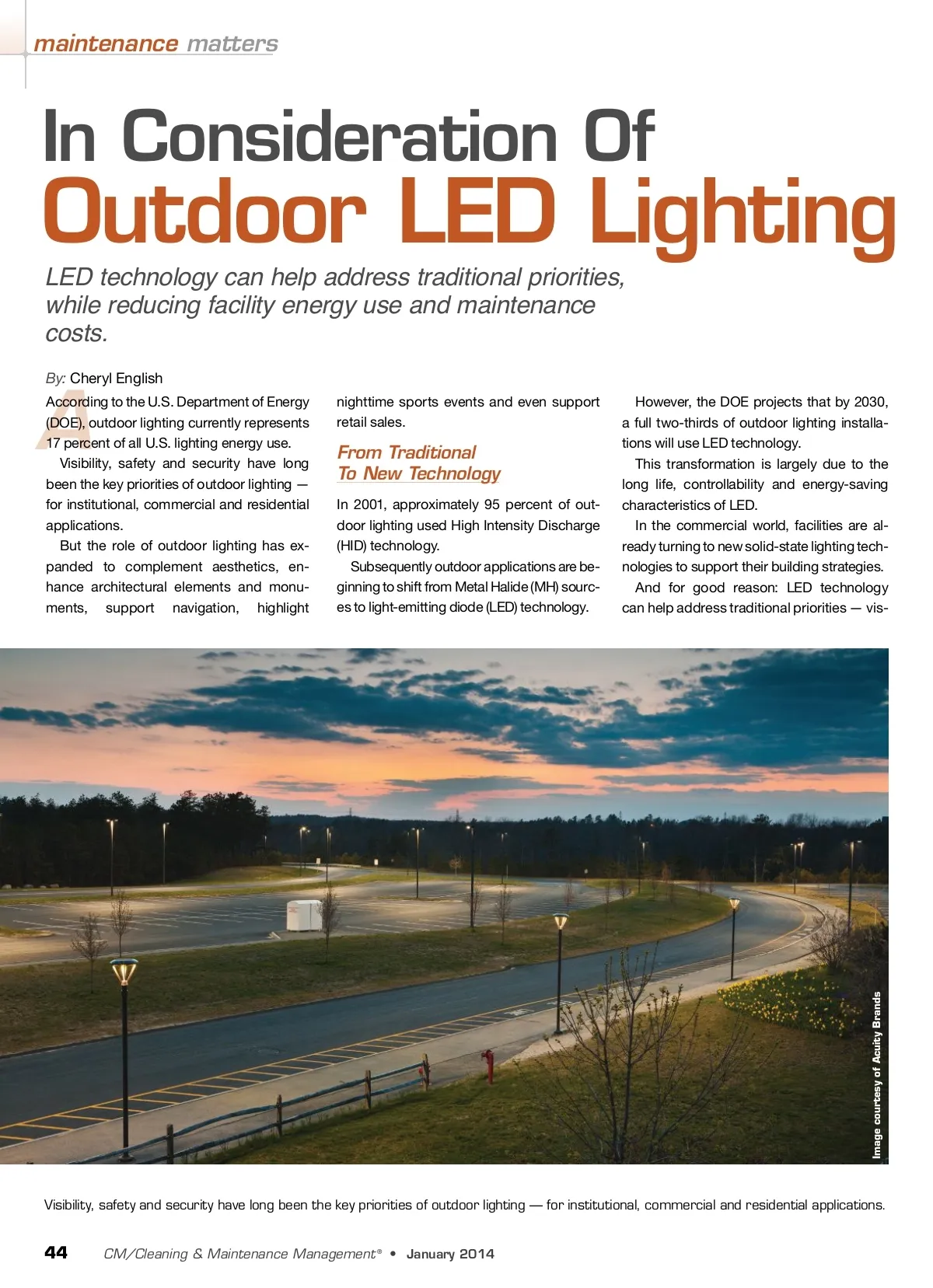
maintenance matters In Consideration Of LED technology can help address traditional priorities, while reducing facility energy use and maintenance costs. By: Cheryl English Outdoor LED Lighting A According to the U.S. Department of Energy (DOE), outdoor lighting currently represents 17 percent of all U.S. lighting energy use. Visibility, safety and security have long been the key priorities of outdoor lighting — for institutional, commercial and residential applications. But the role of outdoor lighting has ex-panded to complement aesthetics, en-hance architectural elements and monu-ments, support navigation, highlight nighttime sports events and even support retail sales. From Traditional To New Technology In 2001, approximately 95 percent of out-door lighting used High Intensity Discharge (HID) technology. Subsequently outdoor applications are be-ginning to shift from Metal Halide (MH) sourc-es to light-emitting diode (LED) technology. However, the DOE projects that by 2030, a full two-thirds of outdoor lighting installa-tions will use LED technology. This transformation is largely due to the long life, controllability and energy-saving characteristics of LED. In the commercial world, facilities are al-ready turning to new solid-state lighting tech-nologies to support their building strategies. And for good reason: LED technology can help address traditional priorities — vis-Visibility, safety and security have long been the key priorities of outdoor lighting — for institutional, commercial and residential applications. 44 CM/Cleaning & Maintenance Management ® • January 2014 Image courtesy of Acuity Brands
CMM – Archives January 2014: 44