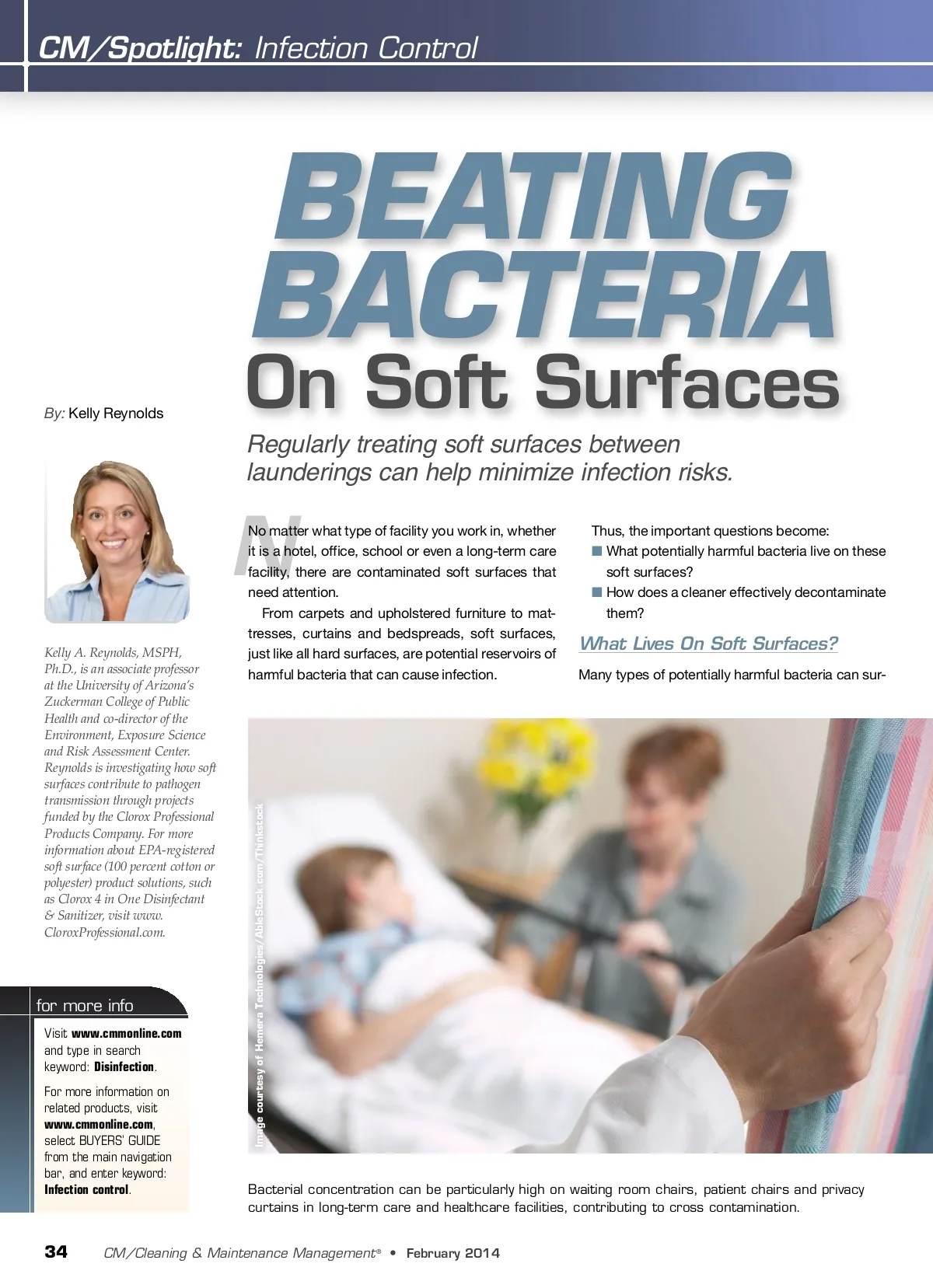
CM/Spotlight: Infection Control BEATING BACTERIA By: Kelly Reynolds On Soft Surfaces Regularly treating soft surfaces between launderings can help minimize infection risks. N Kelly A. Reynolds, MSPH, Ph.D., is an associate professor at the University of Arizona’s Zuckerman College of Public Health and co-director of the Environment, Exposure Science and Risk Assessment Center. Reynolds is investigating how soft surfaces contribute to pathogen transmission through projects funded by the Clorox Professional Products Company. For more information about EPA-registered soft surface (100 percent cotton or polyester) product solutions, such as Clorox 4 in One Disinfectant & Sanitizer, visit www. CloroxProfessional.com. No matter what type of facility you work in, whether it is a hotel, office, school or even a long-term care facility, there are contaminated soft surfaces that need attention. From carpets and upholstered furniture to mat-tresses, curtains and bedspreads, soft surfaces, just like all hard surfaces, are potential reservoirs of harmful bacteria that can cause infection. Thus, the important questions become: ■ What potentially harmful bacteria live on these soft surfaces? ■ How does a cleaner effectively decontaminate them? What Lives On Soft Surfaces? Many types of potentially harmful bacteria can sur-for more info Visit www.cmmonline.com and type in search keyword: Disinfection . For more information on related products, visit www.cmmonline.com , select BUYERS’ GUIDE from the main navigation bar, and enter keyword: Infection control . Bacterial concentration can be particularly high on waiting room chairs, patient chairs and privacy curtains in long-term care and healthcare facilities, contributing to cross contamination. 34 CM/Cleaning & Maintenance Management ® • February 2014 Image courtesy of Hemera Technologies/AbleStock.com/Thinkstock
CMM – Archives February 2014: 34