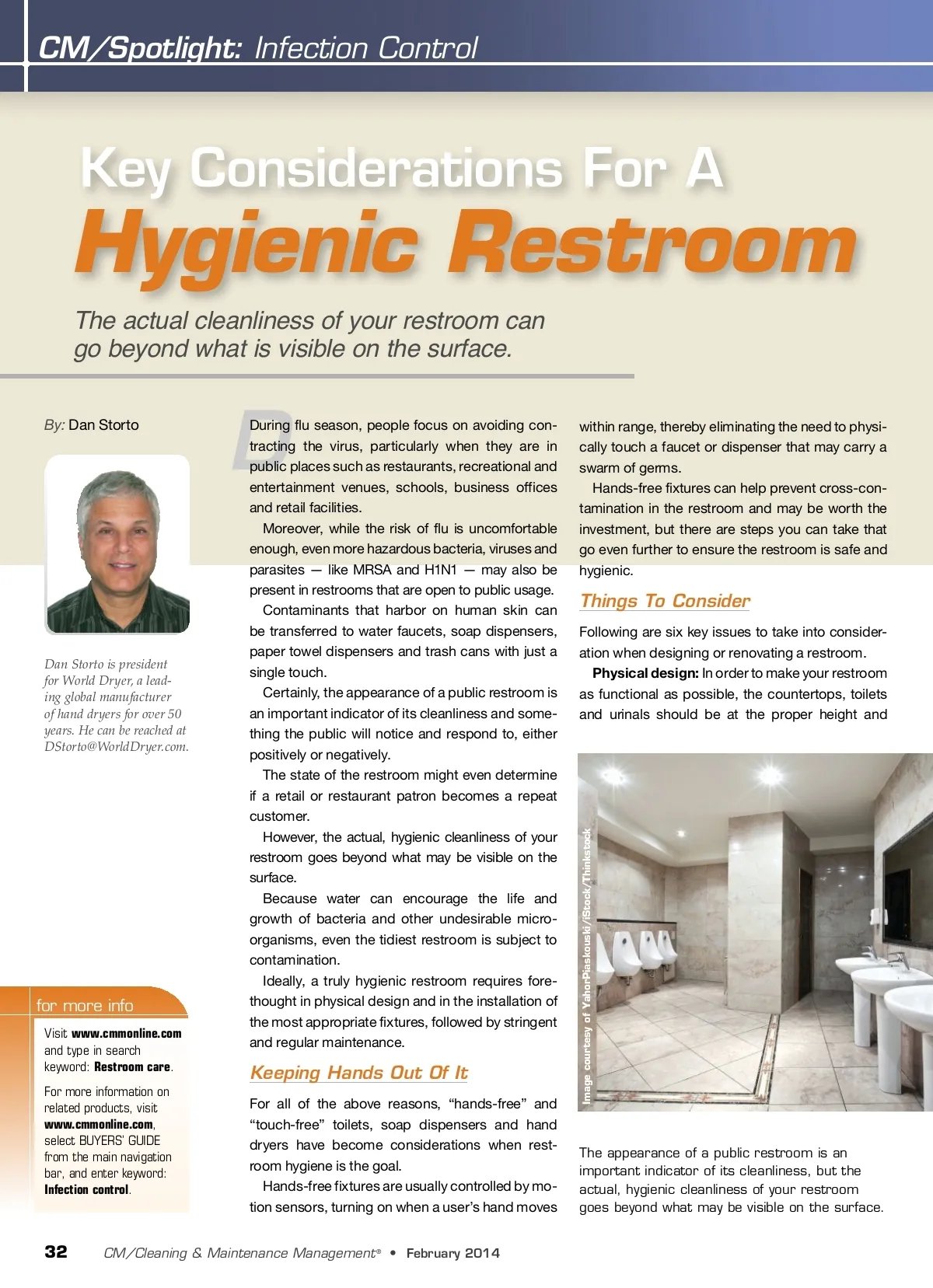
distance from the wall for the age of people who will be using them. For instance, for adult users, countertops should be 34 inches high; toilet seats 17 to 19 inches high; and urinals 17 inches high. Make sure hand dryers, soap dispensers, toilet paper dispensers and trash recepta-cles are placed where movement flow and logical usage dictate their optimal use. Fixtures : Again, are your faucets, soap dispensers, hand dryers and toilets hands-free to reduce cross-contamination? This may require the replacement of earlier equipment models and brands, but fixtures or devices equipped with motion sensors have the added benefit of offering energy-efficiency and the ability to reduce costs by only turning on when someone is using them. Retarding contamination : Some hand dryer manufacturers offer antimicrobial technology to shield against the build-up of bacteria on the device, making them 99 percent effective against potentially deadly bacteria such as E. coli and MRSA. The use of antimicrobial wall paint and flooring add additional protection against the spread of germs. Countertops, tile and grout and toilets are also available with an antimicrobial additive for a germ-free, mold-free restroom . ADA accessibility : Do your accessible restroom stalls provide enough space for a wheelchair to properly turn and adjust so patrons are able to use the facilities in the cleanest manner possible? Leave a clear floor space 60 inches in diameter in the stall, or create a T-shaped space 36 inches wide. Additionally, consider that parents with children often use accessible restroom stalls because they need to assist their young children, and they also require extra space. Remember to position in-stall trash re-ceptacles so they don’t interfere with a wheelchair’s or multiperson user’s maneu-verability. Trash receptacles : Used paper towels can overflow trash receptacles, and then likely will end up scattered onto the floor. This not only provides the potential for bacterial growth, it also gives the appear-ance of an untidy, unclean restroom. Automatic hand dryers help a restroom appear cleaner, and they also can reduce the need for maintenance. The motor life of some hand dryers is now two to three times longer than ever before, and this could mean 10 to 15 years of ser-vice. Soap dispensers : Similar to paper tow-els, soap on the countertop can offer a neg-ative perception of the cleanliness of a rest-room and discourage people from washing their hands. Consider using foam dispensers which drop soap drip-free into the hand from an automatic dispenser rather than liquid dis-pensers. Faced with a mess, many users will avoid the use of soap all together. Regular Maintenance Made Easier Few people look forward to cleaning rest-rooms, but this unavoidable task can be made easier and more efficient when the space is well designed and the installed fix-tures support easy and clean usage. Public restrooms with these upkeep is-sues will need to be cleaned often, adding to the cost of labor as well as increasing the risk of infection for your employees. No matter if your facility is a restaurant, recreational/entertainment center, school, office or retail location, the cleanliness of the publicly-accessible restroom is a con-cern for users, particularly in cold and flu season. Where there is water and bacteria, viruses and parasites tend to thrive — often unseen, but still a potential danger to the well-being of patrons and employees. By utilizing basic design principles and taking advantage of the new technologies available, hygiene can be dramatically im-proved for those who use the restroom as well as for those who maintain it. CM FREE INFO: Reader Service 209 or CMMOnline.com/freeinfo www.cmmonline.com 33
CMM – Archives February 2014: 33