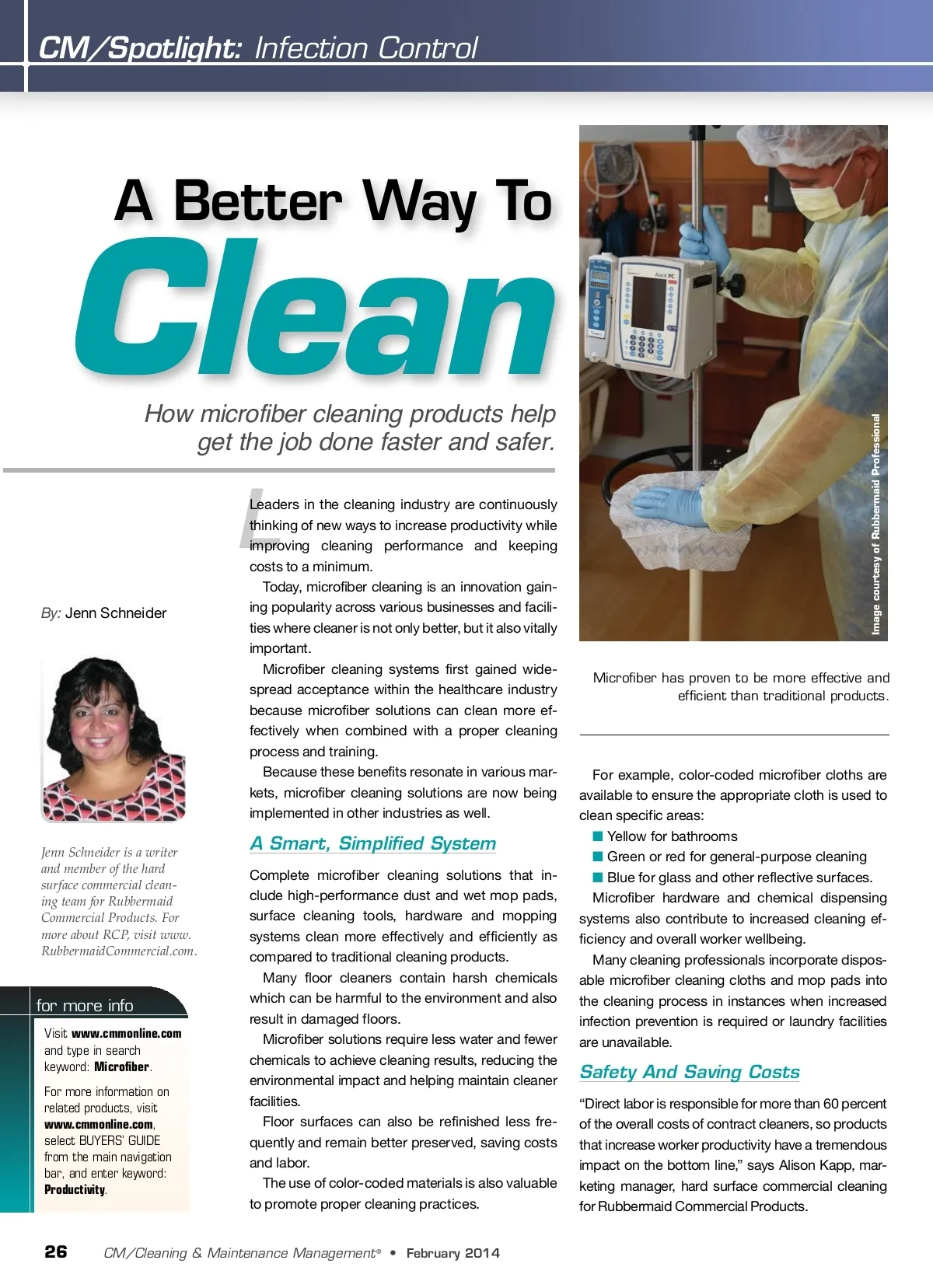
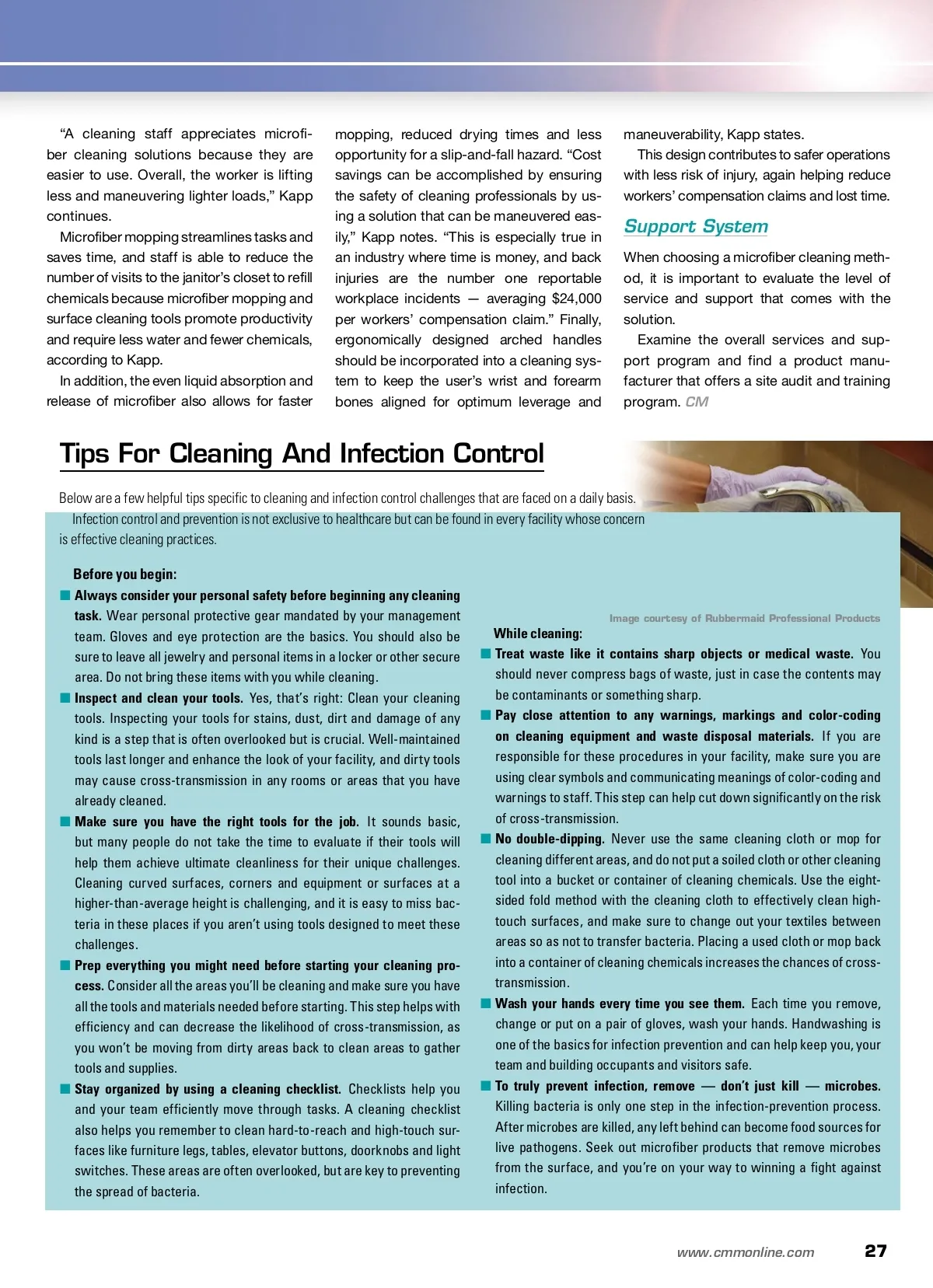
“A cleaning staff appreciates microfi-ber cleaning solutions because they are easier to use. Overall, the worker is lifting less and maneuvering lighter loads,” Kapp continues. Microfiber mopping streamlines tasks and saves time, and staff is able to reduce the number of visits to the janitor’s closet to refill chemicals because microfiber mopping and surface cleaning tools promote productivity and require less water and fewer chemicals, according to Kapp. In addition, the even liquid absorption and release of microfiber also allows for faster mopping, reduced drying times and less opportunity for a slip-and-fall hazard. “Cost savings can be accomplished by ensuring the safety of cleaning professionals by us-ing a solution that can be maneuvered eas-ily,” Kapp notes. “This is especially true in an industry where time is money, and back injuries are the number one reportable workplace incidents — averaging $24,000 per workers’ compensation claim.” Finally, ergonomically designed arched handles should be incorporated into a cleaning sys-tem to keep the user’s wrist and forearm bones aligned for optimum leverage and maneuverability, Kapp states. This design contributes to safer operations with less risk of injury, again helping reduce workers’ compensation claims and lost time. Support System When choosing a microfiber cleaning meth-od, it is important to evaluate the level of service and support that comes with the solution. Examine the overall services and sup-port program and find a product manu-facturer that offers a site audit and training program. CM Tips For Cleaning And Infection Control Below are a few helpful tips specific to cleaning and infection control challenges that are faced on a daily basis. Infection control and prevention is not exclusive to healthcare but can be found in every facility whose concern is effective cleaning practices. ■ Always consider your personal safety before beginning any cleaning task. Wear personal protective gear mandated by your management team. Gloves and eye protection are the basics. You should also be sure to leave all jewelry and personal items in a locker or other secure area. Do not bring these items with you while cleaning. ■ Inspect and clean your tools. Yes, that’s right: Clean your cleaning tools. Inspecting your tools for stains, dust, dirt and damage of any kind is a step that is often overlooked but is crucial. Well-maintained tools last longer and enhance the look of your facility, and dirty tools may cause cross-transmission in any rooms or areas that you have already cleaned. ■ Make sure you have the right tools for the job. It sounds basic, but many people do not take the time to evaluate if their tools will help them achieve ultimate cleanliness for their unique challenges. Cleaning curved surfaces, corners and equipment or surfaces at a higher-than-average height is challenging, and it is easy to miss bac-teria in these places if you aren’t using tools designed to meet these challenges. ■ Prep everything you might need before starting your cleaning pro-cess. Consider all the areas you’ll be cleaning and make sure you have all the tools and materials needed before starting. This step helps with efficiency and can decrease the likelihood of cross-transmission, as you won’t be moving from dirty areas back to clean areas to gather tools and supplies. ■ Stay organized by using a cleaning checklist. Checklists help you and your team efficiently move through tasks. A cleaning checklist also helps you remember to clean hard-to-reach and high-touch sur-faces like furniture legs, tables, elevator buttons, doorknobs and light switches. These areas are often overlooked, but are key to preventing the spread of bacteria. Before you begin: Image courtesy of Rubbermaid Professional Products While cleaning: ■ Treat waste like it contains sharp objects or medical waste. You should never compress bags of waste, just in case the contents may be contaminants or something sharp. ■ Pay close attention to any warnings, markings and color-coding on cleaning equipment and waste disposal materials. If you are responsible for these procedures in your facility, make sure you are using clear symbols and communicating meanings of color-coding and warnings to staff. This step can help cut down significantly on the risk of cross-transmission. ■ No double-dipping. Never use the same cleaning cloth or mop for cleaning different areas, and do not put a soiled cloth or other cleaning tool into a bucket or container of cleaning chemicals. Use the eight-sided fold method with the cleaning cloth to effectively clean high-touch surfaces, and make sure to change out your textiles between areas so as not to transfer bacteria. Placing a used cloth or mop back into a container of cleaning chemicals increases the chances of cross-transmission. ■ Wash your hands every time you see them. Each time you remove, change or put on a pair of gloves, wash your hands. Handwashing is one of the basics for infection prevention and can help keep you, your team and building occupants and visitors safe. ■ To truly prevent infection, remove — don’t just kill — microbes. Killing bacteria is only one step in the infection-prevention process. After microbes are killed, any left behind can become food sources for live pathogens. Seek out microfiber products that remove microbes from the surface, and you’re on your way to winning a fight against infection. www.cmmonline.com 27
CMM – Archives February 2014: 27