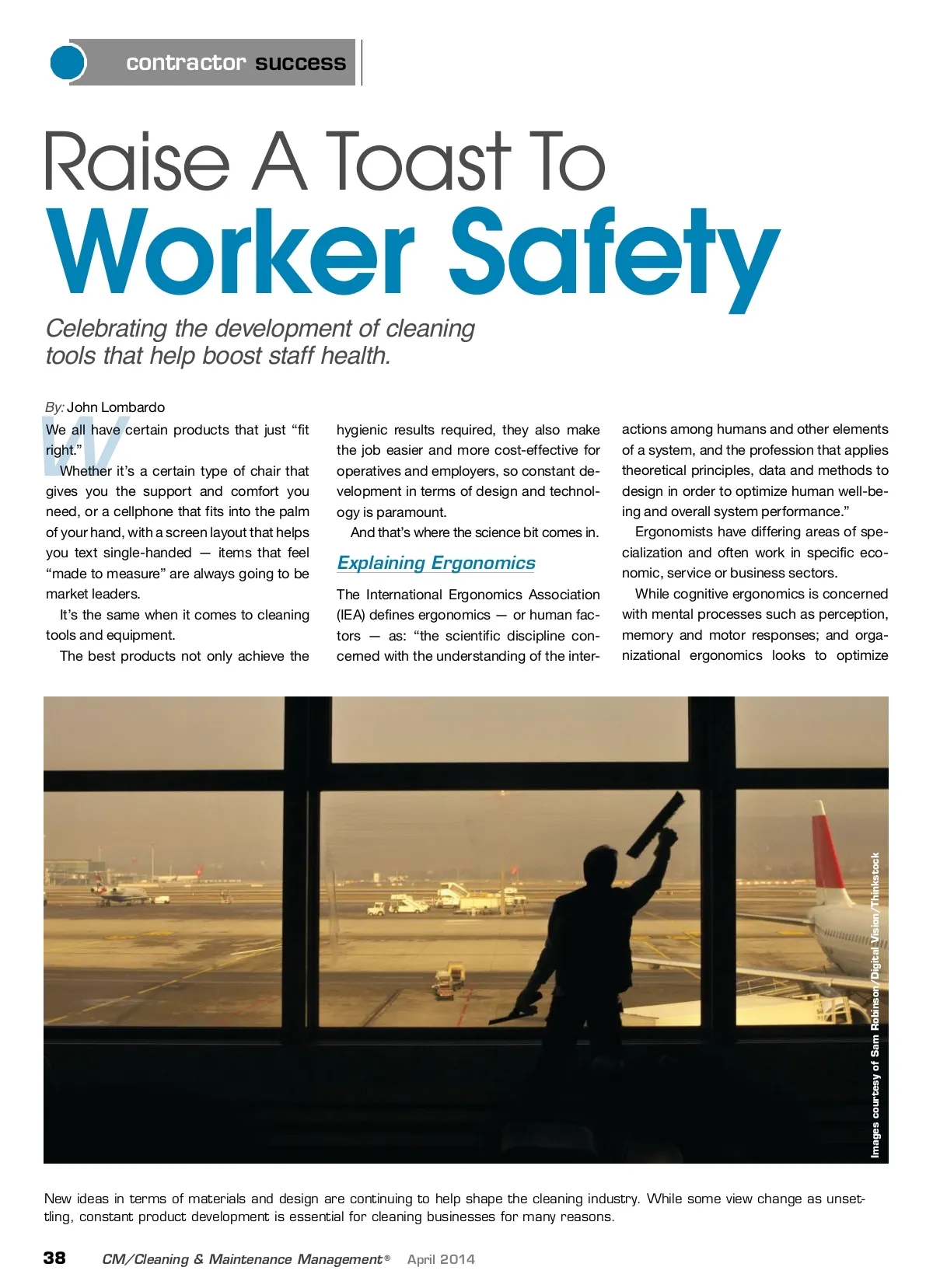
structures, policies and processes; when it comes to cleaning, physical ergonomics is the most relevant branch of the science. Relevant topics within physical ergonom-ics include working postures, materials han-dling, repetitive movements, work-related musculoskeletal disorders (MSDs), work-place layout, safety and health. The National Institute for Occupational Safety and Health (NIOSH) is the U.S. fed-eral agency that conducts research and makes recommendations to prevent worker injury and illness. In 2007, it was estimated that work-relat-ed fatalities, injuries and illnesses in the U.S. cost an estimated $250 billion in medical costs and productivity losses alone.* NIOSH states, “The goal of ergonomics is to reduce stress and eliminate injuries and disorders associated with the overuse of muscles, bad posture and repeated tasks. This is accomplished by designing tasks, work spaces, controls, displays, tools, light-ing and equipment to fit the employee’s physical capabilities and limitations.” These originally came to market to enable operatives to clean high windows from the ground, making the job much safer. However, the materials initially used to manufacture the poles proved to be too heavy and cumbersome, so alternatives were needed. Now aluminum and carbon fiber help make poles that are light and easy to handle but still have the strength and rigidity to al-low the operative to have ultimate control. fortable to the touch when having to work outside in cold weather. The rush to increase sustainability has seen the rapid emergence of cleaning sys-tems that don’t need to use chemicals, sav-ing both money and helping companies with their green agendas. This trend also has added well-being benefits for operatives, reducing the risk of allergic reactions and helping to decrease the incidence of contact dermatitis. Inside A Building The innovations put to good use on the out-side have now also come inside. Thanks to an increase in using glass as a building material, atria and conservatory-type features are now much more common in business premises. Operatives can utilize the same tools and techniques in an indoor setting, improving safety for themselves and other people us-ing the building. Ordinarily, this would require specialist cleaning and logistics to arrange — increas-ing financial outlay because of the high cost of hiring equipment such as scissor lifts, and causing disruption to the working day because areas have to be closed off while cleaning takes place. The telescopic idea has also infiltrated even more areas of cleaning. Telescopic handles for mops, dust pans and litter pickers enable these tools to be adjusted to fit the height of individual workers. This helps to lessen the risk of back strain, a well-known cause of worker ab-senteeism. When it comes to cleaning hard floors in washrooms and kitchens, bucket systems have evolved into complete workstations, now featuring individual compartments to keep clean and dirty water separate and presses that are operated by foot. The addition of robust wheels and adjust-able handles also makes them easily ma-neuverable around sites, contributing to the comfort of the operative. Handles, whatever piece of equipment they’re attached to, are now designed to minimize hand and wrist strain. Materials are used that feel and fit better in the hand, offer a good grip when wet, and some that even feel warmer and more com-End User Input This more operative-centered way of de-signing cleaning tools will continue, and the best solutions will always come from allow-ing cleaning workers to participate and col-laborate in the R&D process. Listening to cleaning operatives is the best way to develop the products that will take the industry forward as they are the ones with the practical experience and knowledge. Designers must spend time with them, observing them at work, and enlist their help in trialing new ideas to ensure that the ethos behind ergonomics flourishes and delivers its undeniable benefits to our sector. Cleaning companies need to understand that what’s good for their employees is good for them too — in terms of reducing worker absenteeism, increasing motivation and loyalty, boosting ROI and creating hap-py customers. Good design for cleaning tools is not just about aesthetics; it’s about creating equip-ment that can help operatives to clean flu-ently and cost-effectively, with minimum effort and strain, resulting in safer, healthier and happier places to work. *Leigh JP. Economic burden of occupational in-jury and illness in the United States. Millbank Q 2011;89:728-72 CM Transformative Innovations New ideas in terms of materials and design are continuing to help shape the cleaning industry. While some view change as unsettling, constant product development is essential for cleaning businesses for a wide range of reasons. It helps companies conform to health and safety regulations, protect the well-being of their workers, and provide a quicker, more efficient and higher standard of results, with increased return on investment (ROI) as the icing on the cake. The exterior of buildings need to make a good first impression, so it’s appropriate that the façade maintenance sector has made some of the most obvious progress. To label this service as mere window cleaning is to do it an injustice — because with more architecturally diverse buildings, signage and solar panels to contend with nowadays, the skills and resources required are light years away from any traditional im-age that might linger in the mind. The unstable ladders and unwieldy buck-ets of yesteryear are long gone — with tele-scopic and modular poles now the tools of choice. John Lombardo is vice president of Global Marketing for Unger. His extensive experience in building brands started at Colgate-Palmolive, which he joined in 1998 as product manager. He moved on to global consumer brand Philips in 2003, pro-gressing from senior brand manager, to director of marketing, and most recently, senior director of dental professional sales. He was educated at the Leonard N. Stern School of Business, New York University, and speaks fluent Italian. www. UngerGlobal.com. www.CMMOnline.com 39
CMM – Archives April 2014: 39