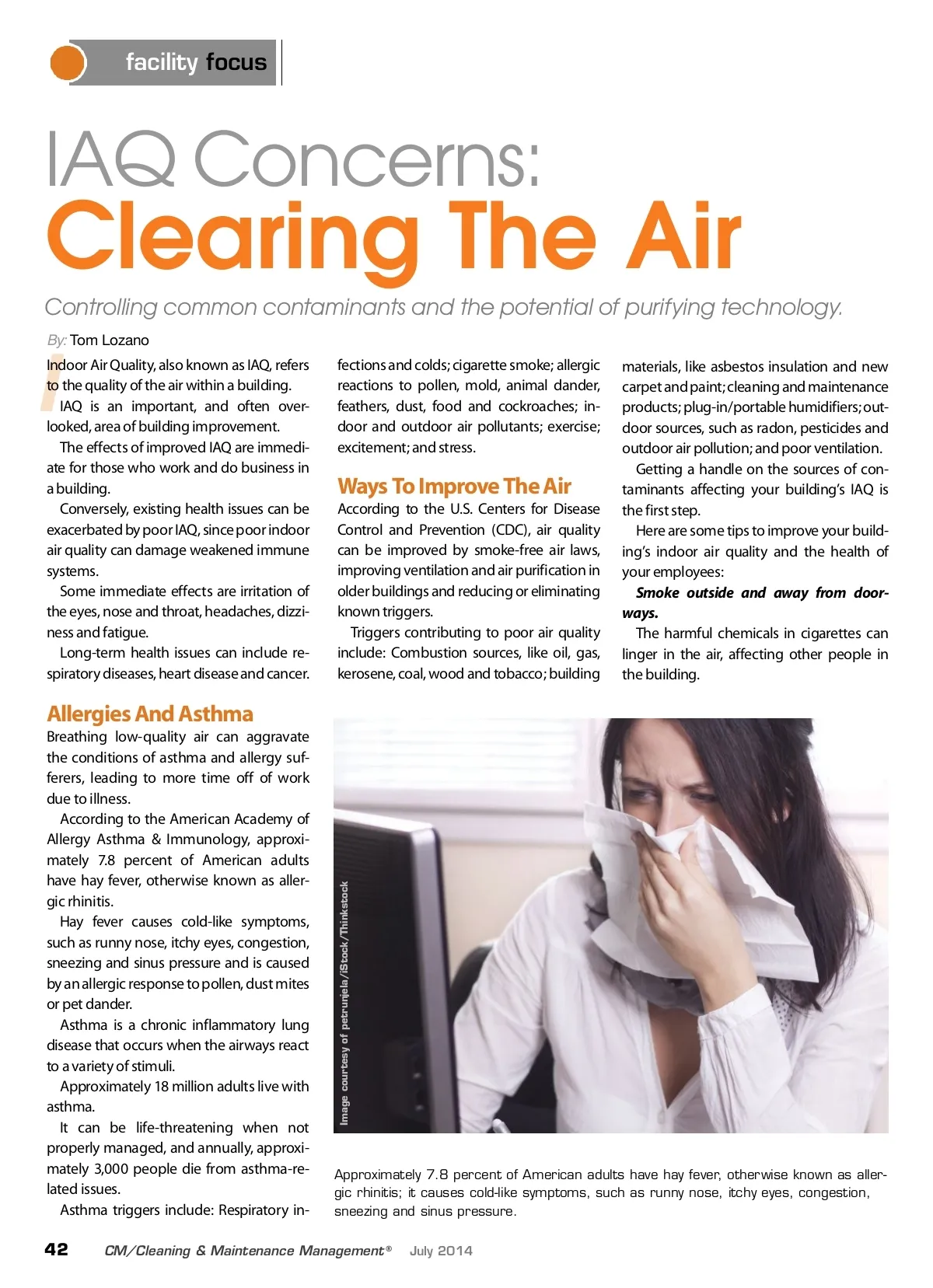
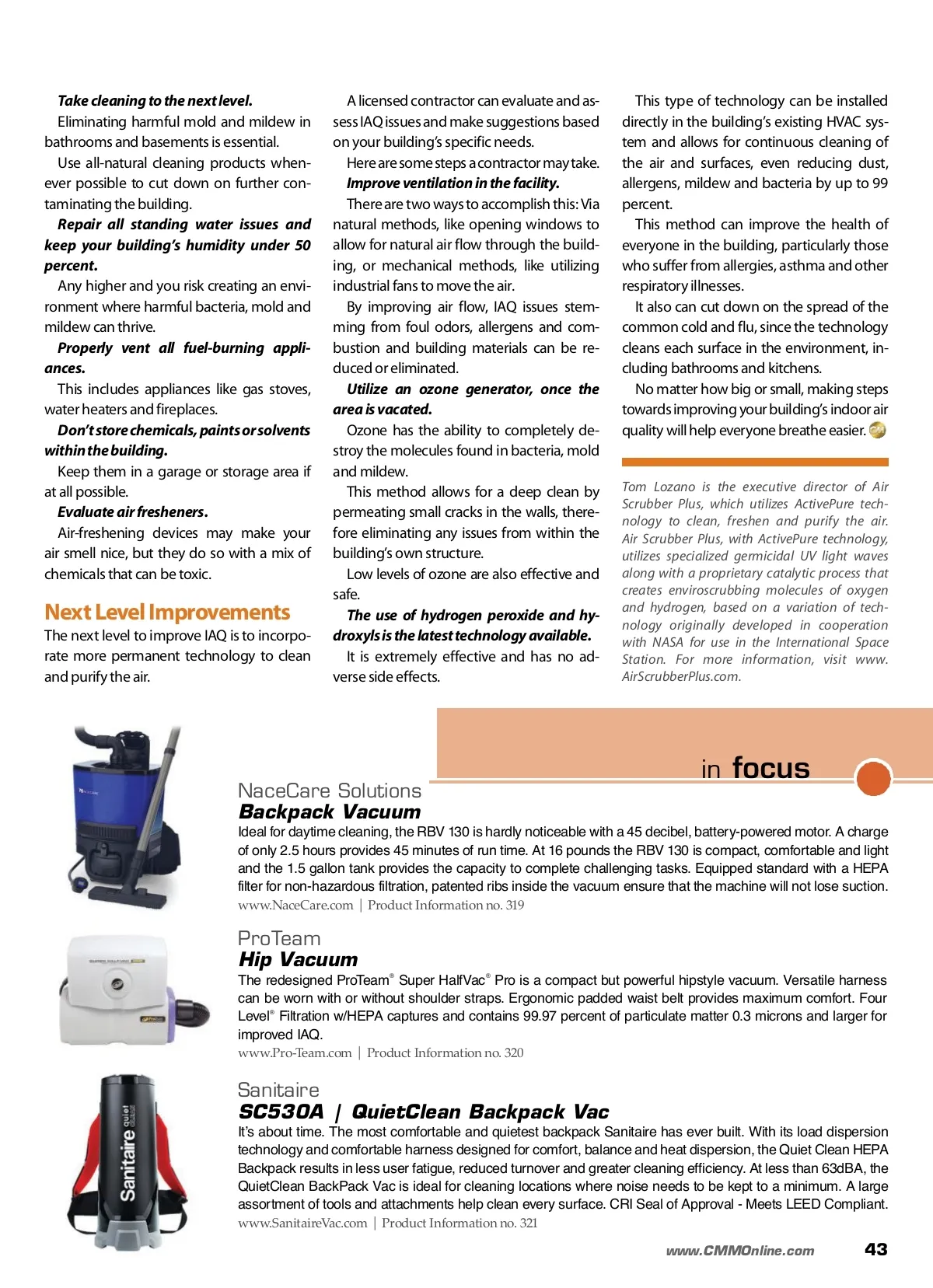
facility focus IAQ Concerns: Clearing The Air Controlling common contaminants and the potential of purifying technology. By: Tom Lozano I Indoor Air Quality, also known as IAQ, refers to the quality of the air within a building. IAQ is an important, and often over-looked, area of building improvement. The effects of improved IAQ are immedi-ate for those who work and do business in a building. Conversely, existing health issues can be exacerbated by poor IAQ, since poor indoor air quality can damage weakened immune systems. Some immediate effects are irritation of the eyes, nose and throat, headaches, dizzi-ness and fatigue. Long-term health issues can include re-spiratory diseases, heart disease and cancer. fections and colds; cigarette smoke; allergic reactions to pollen, mold, animal dander, feathers, dust, food and cockroaches; in-door and outdoor air pollutants; exercise; excitement; and stress. Ways To Improve The Air According to the U.S. Centers for Disease Control and Prevention (CDC), air quality can be improved by smoke-free air laws, improving ventilation and air purification in older buildings and reducing or eliminating known triggers. Triggers contributing to poor air quality include: Combustion sources, like oil, gas, kerosene, coal, wood and tobacco; building materials, like asbestos insulation and new carpet and paint; cleaning and maintenance products; plug-in/portable humidifiers; out-door sources, such as radon, pesticides and outdoor air pollution; and poor ventilation. Getting a handle on the sources of con-taminants affecting your building’s IAQ is the first step. Here are some tips to improve your build-ing’s indoor air quality and the health of your employees: Smoke outside and away from door-ways. The harmful chemicals in cigarettes can linger in the air, affecting other people in the building. Allergies And Asthma Breathing low-quality air can aggravate the conditions of asthma and allergy suf-ferers, leading to more time off of work due to illness. According to the American Academy of Allergy Asthma & Immunology, approxi-mately 7.8 percent of American adults have hay fever, otherwise known as aller-gic rhinitis. Hay fever causes cold-like symptoms, such as runny nose, itchy eyes, congestion, sneezing and sinus pressure and is caused by an allergic response to pollen, dust mites or pet dander. Asthma is a chronic inflammatory lung disease that occurs when the airways react to a variety of stimuli. Approximately 18 million adults live with asthma. It can be life-threatening when not properly managed, and annually, approxi-mately 3,000 people die from asthma-re-lated issues. Asthma triggers include: Respiratory in-Approximately 7.8 percent of American adults have hay fever, otherwise known as aller-gic rhinitis; it causes cold-like symptoms, such as runny nose, itchy eyes, congestion, sneezing and sinus pressure. July 2014 42 CM/Cleaning & Maintenance Management ® Image courtesy of petrunjela/iStock/Thinkstock
CMM – Archives July 2014: 42