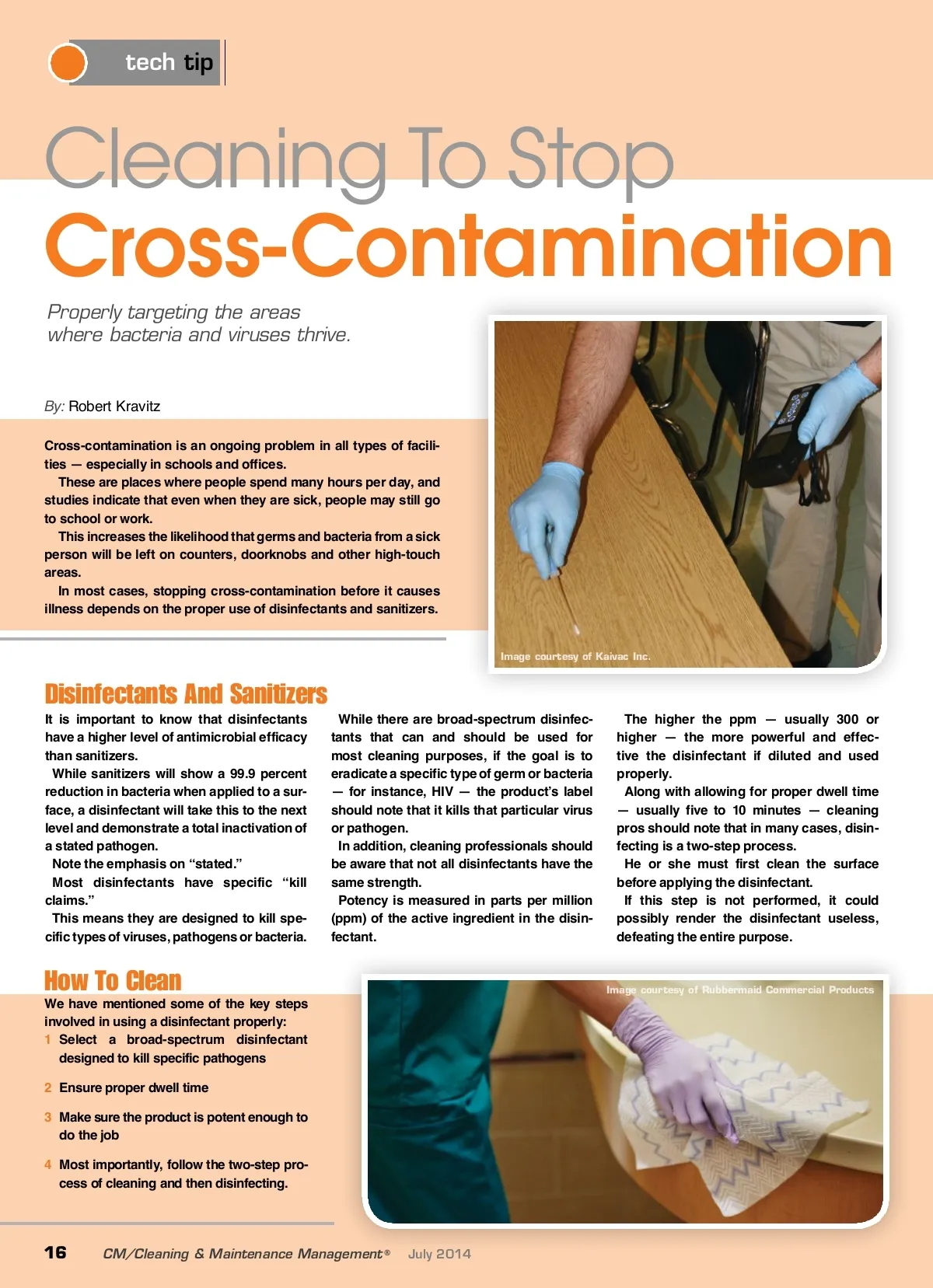
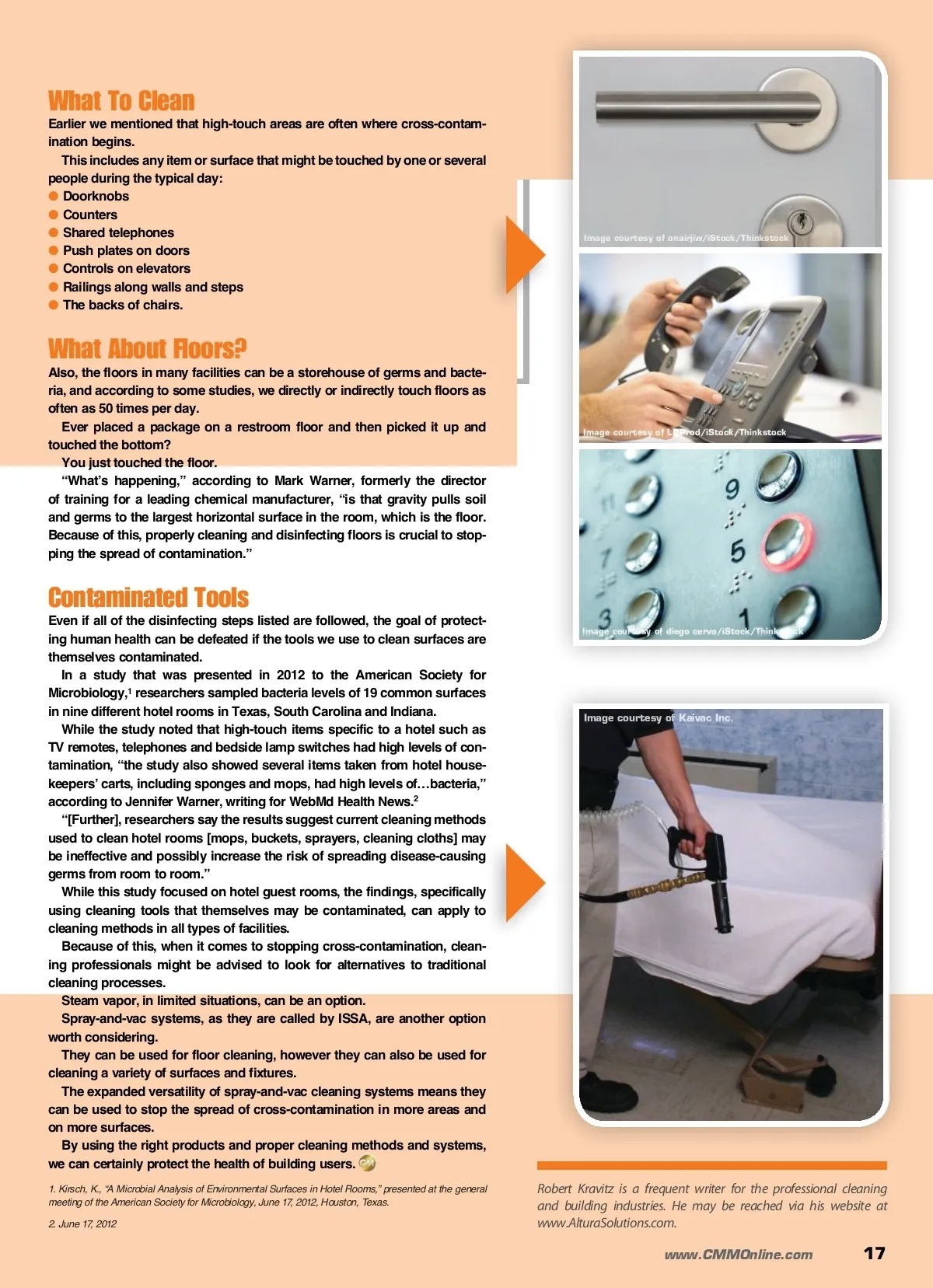
What To Clean Earlier we mentioned that high-touch areas are often where cross-contam-ination begins. This includes any item or surface that might be touched by one or several people during the typical day: ● Doorknobs ● Counters ● Shared telephones ● Push plates on doors ● Controls on elevators ● Railings along walls and steps ● The backs of chairs. Image courtesy of onairjiw/iStock/Thinkstock What About Floors? Also, the floors in many facilities can be a storehouse of germs and bacte-ria, and according to some studies, we directly or indirectly touch floors as often as 50 times per day. Ever placed a package on a restroom floor and then picked it up and touched the bottom? You just touched the floor. “What’s happening,” according to Mark Warner, formerly the director of training for a leading chemical manufacturer, “is that gravity pulls soil and germs to the largest horizontal surface in the room, which is the floor. Because of this, properly cleaning and disinfecting floors is crucial to stop-ping the spread of contamination.” Image courtesy of LDProd/iStock/Thinkstock Contaminated Tools Even if all of the disinfecting steps listed are followed, the goal of protect-ing human health can be defeated if the tools we use to clean surfaces are themselves contaminated. In a study that was presented in 2012 to the American Society for Microbiology, 1 researchers sampled bacteria levels of 19 common surfaces in nine different hotel rooms in Texas, South Carolina and Indiana. While the study noted that high-touch items specific to a hotel such as TV remotes, telephones and bedside lamp switches had high levels of con-tamination, “the study also showed several items taken from hotel house-keepers’ carts, including sponges and mops, had high levels of…bacteria,” according to Jennifer Warner, writing for WebMd Health News. 2 “[Further], researchers say the results suggest current cleaning methods used to clean hotel rooms [mops, buckets, sprayers, cleaning cloths] may be ineffective and possibly increase the risk of spreading disease-causing germs from room to room.” While this study focused on hotel guest rooms, the findings, specifically using cleaning tools that themselves may be contaminated, can apply to cleaning methods in all types of facilities. Because of this, when it comes to stopping cross-contamination, clean-ing professionals might be advised to look for alternatives to traditional cleaning processes. Steam vapor, in limited situations, can be an option. Spray-and-vac systems, as they are called by ISSA, are another option worth considering. They can be used for floor cleaning, however they can also be used for cleaning a variety of surfaces and fixtures. The expanded versatility of spray-and-vac cleaning systems means they can be used to stop the spread of cross-contamination in more areas and on more surfaces. By using the right products and proper cleaning methods and systems, we can certainly protect the health of building users. 1. Kirsch, K., “A Microbial Analysis of Environmental Surfaces in Hotel Rooms,” presented at the general meeting of the American Society for Microbiology, June 17, 2012, Houston, Texas. 2. June 17, 2012 Image courtesy of diego cervo/iStock/Thinkstock Image courtesy of Kaivac Inc. Robert Kravitz is a frequent writer for the professional cleaning and building industries. He may be reached via his website at www.AlturaSolutions.com. www.CMMOnline.com 17
CMM – Archives July 2014: 17