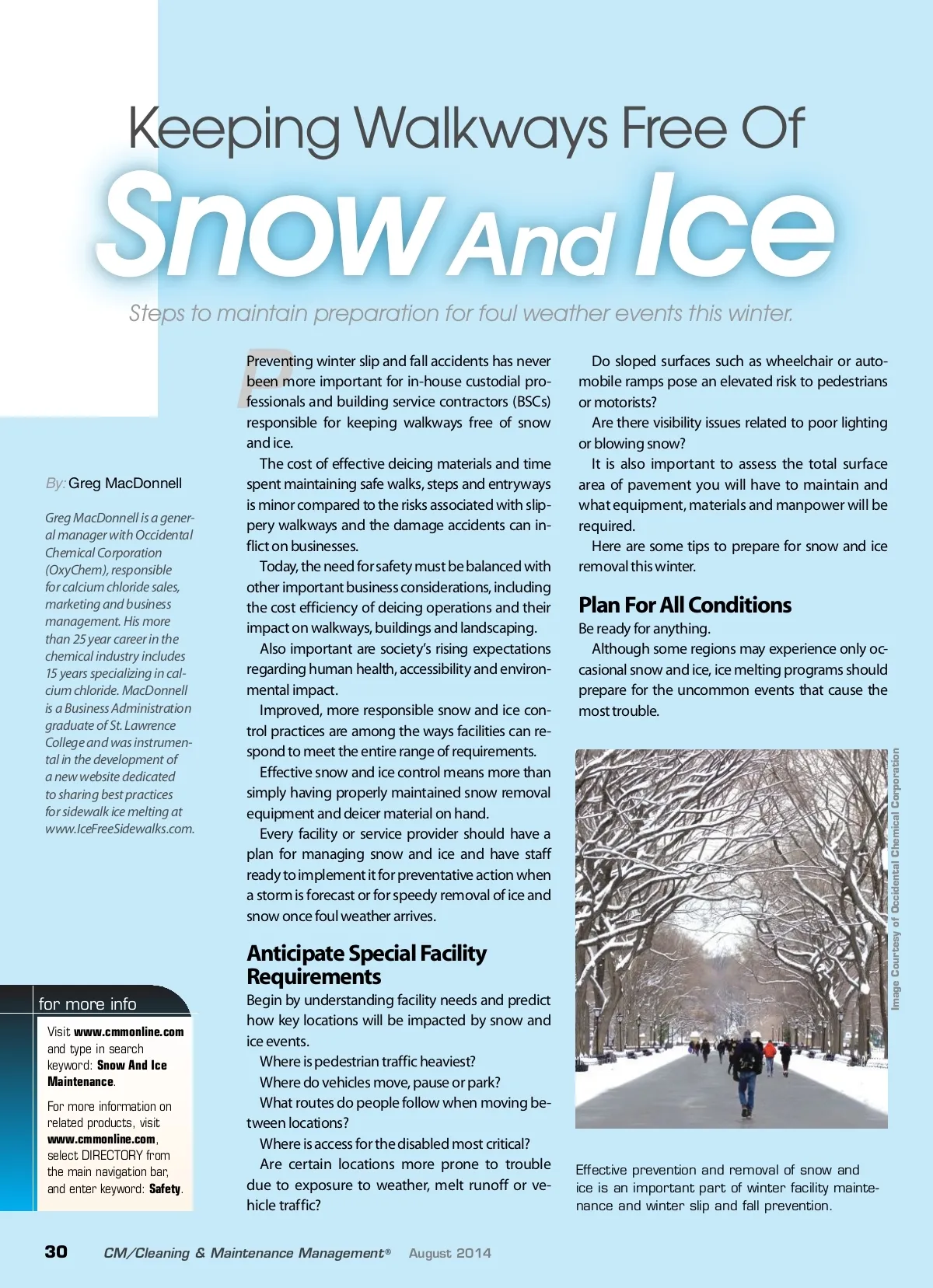
Businesses and individuals in any region expect that sidewalks, steps, entryways and parking lots will remain open and safe dur-ing bad weather and will be quickly returned to ice-and snow-free condition after a storm. Make Mechanical Removal A Priority The most economical and lowest impact method of snow and ice control is mechan-ical removal during and after winter storm events. Prompt removal of snow and ice from walkways and parking lots minimizes com-paction by foot and vehicle traffic. Mechanically removing loose snow before applying ice melter enables the deicer to more quickly penetrate and break the bond between remaining ice and the underlying pavement. This can reduce the amount of deicer re-quired and the potential for impact on walk-ways, buildings and the environment. Then the resulting slushy ice should be re-moved mechanically. Application of calcium chloride should start shortly after snow begins to facilitate easy mechanical removal and prevent ice buildup. Removal of thick ice may require higher application rates to penetrate and undercut the ice layer. door tracking and environmental impact. Choose The Right Ice Melter Several performance characteristics should guide the selection of an ice melter, but two are particularly important: Reliable Cold Temperature Performance — Will the deicer perform well in the coldest temperatures you may experience? Ice Melting Speed — How quickly will the deicer melt ice to minimize pedestrian expo-sure to dangerous conditions? Use Anti-icing Treatments To Prevent Slippery Conditions When foul winter weather is in the forecast, ice melter materials can be applied in ad-vance as anti-icing treatments to keep sub-sequent freezing rain or light snowfall from bonding to pavement. This may eliminate the need to mechani-cally remove light accumulations and can make removal of heavy snow and ice faster and easier. Don’t use anti-icing if rain or freezing rain is predicted because the treatment may wash away. Over-application of liquid anti-icers can re-sult in slippery conditions. In storm events with heavier snowfall and dropping temperatures, anti-icing may not be effective in preventing ice and snow from bonding to the surface. Avoid Excess The goal of any ice melting program is to minimize slip and fall hazards using the least material. When used excessively, all ice melting materials can have an impact on the natu-ral environment, lawns and shrubbery, metal architectural features and interior flooring. Excessive application also increases costs. Using a faster deicer that performs well at low temperatures reduces the tendency to over apply. Calcium chloride, in particular, is known for its cold temperature performance. It has a lowest effective temperature of -25 degrees F (-32 degrees C), which is below that of other common deicers. Calcium chloride also releases a significant amount of heat as it dissolves in contact with snow and ice. This speeds melting action at lower tem-peratures, making calcium chloride even more effective in extremely cold winter con-ditions. Apply Ice Melter Properly The most effective, responsible and eco-nomical snow and ice control programs apply the smallest amount of deicer need-ed to penetrate ice and disrupt its bond to pavement. Calibration of application equipment is important for cost-effective product use and to minimize introduction of ice melter into the environment. Compared to hand application, spread-ers provide more even distribution pat-terns, help avoid formation of deicer piles that can lead to indoor tracking mess and help make sure the proper amount of de-icer is used — potentially reducing waste by as much as 50 percent. This is especially important where large quantities of deicers are applied from ve-hicles across broad surface areas. For smaller areas like entryways and steps, use of a handheld, mechanical dispersing spreader is typically a far better choice than using a simple scoop. Follow the application instructions on product packaging to avoid over-applying deicer. For example, solid calcium chloride ice melters should be distributed evenly and given time to loosen the bond between ice and pavement. Respond Quickly And Reliably Winter maintenance plans should be de-signed to provide clear and safe conditions for the first vehicle and pedestrian traffic to arrive during and after a storm. Adequate supplies of ice melting mate-rial should be available for immediate ac-cess. Maintenance crews should be trained and ready to remove snow and ice quickly and properly. Standards for crew response and per-formance of winter maintenance activities should include adequate time for deicer to penetrate ice and loosen it for mechanical removal. This will help eliminate the tendency to over-apply ice melter in an attempt to achieve faster results, a wasteful practice that may cause large amounts of residual deicer to remain on the surface after snow and ice have melted, increasing the potential for in-Effective Ice Control Ad-dresses All Business Needs Advances in snow and ice control practices have made it easier for custodial profession-als and building service providers to mini-mize the hazards of ice and snow and main-tain access for pedestrians and motorists. By using the right deicing products and following best practices for their application, business needs for cost savings and reduced impact on buildings and the environment can also be met. Together, that’s a robust prescription to meet the challenges presented by the forces of nature and a demanding business climate. www.CMMOnline.com 31
CMM – Archives August 2014: 31