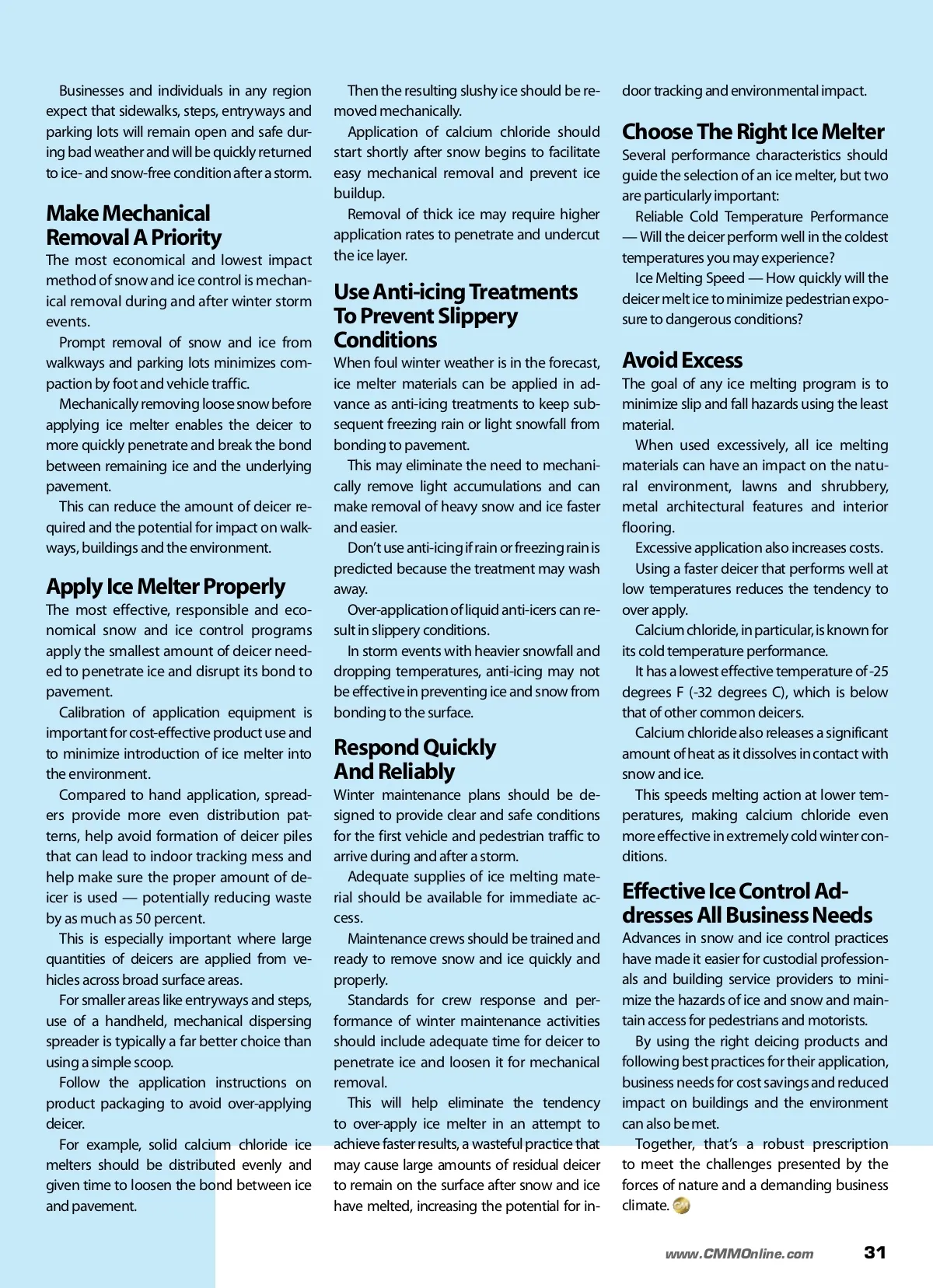
Keeping Walkways Free Of Snow And Ice Steps to maintain preparation for foul weather events this winter. P By: Greg MacDonnell Greg MacDonnell is a gener-al manager with Occidental Chemical Corporation (OxyChem), responsible for calcium chloride sales, marketing and business management. His more than 25 year career in the chemical industry includes 15 years specializing in cal-cium chloride. MacDonnell is a Business Administration graduate of St. Lawrence College and was instrumen-tal in the development of a new website dedicated to sharing best practices for sidewalk ice melting at www.IceFreeSidewalks.com. Anticipate Special Facility Requirements for more info Visit www.cmmonline.com and type in search keyword: Snow And Ice Maintenance . For more information on related products, visit www.cmmonline.com , select DIRECTORY from the main navigation bar, and enter keyword: Safety . Begin by understanding facility needs and predict how key locations will be impacted by snow and ice events. Where is pedestrian traffic heaviest? Where do vehicles move, pause or park? What routes do people follow when moving be-tween locations? Where is access for the disabled most critical? Are certain locations more prone to trouble due to exposure to weather, melt runoff or ve-hicle traffic? August 2014 Effective prevention and removal of snow and ice is an important part of winter facility mainte-nance and winter slip and fall prevention. 30 CM/Cleaning & Maintenance Management ® Image Courtesy of Occidental Chemical Corporation Preventing winter slip and fall accidents has never been more important for in-house custodial pro-fessionals and building service contractors (BSCs) responsible for keeping walkways free of snow and ice. The cost of effective deicing materials and time spent maintaining safe walks, steps and entryways is minor compared to the risks associated with slip-pery walkways and the damage accidents can in-flict on businesses. Today, the need for safety must be balanced with other important business considerations, including the cost efficiency of deicing operations and their impact on walkways, buildings and landscaping. Also important are society’s rising expectations regarding human health, accessibility and environ-mental impact. Improved, more responsible snow and ice con-trol practices are among the ways facilities can re-spond to meet the entire range of requirements. Effective snow and ice control means more than simply having properly maintained snow removal equipment and deicer material on hand. Every facility or service provider should have a plan for managing snow and ice and have staff ready to implement it for preventative action when a storm is forecast or for speedy removal of ice and snow once foul weather arrives. Do sloped surfaces such as wheelchair or auto-mobile ramps pose an elevated risk to pedestrians or motorists? Are there visibility issues related to poor lighting or blowing snow? It is also important to assess the total surface area of pavement you will have to maintain and what equipment, materials and manpower will be required. Here are some tips to prepare for snow and ice removal this winter. Plan For All Conditions Be ready for anything. Although some regions may experience only oc-casional snow and ice, ice melting programs should prepare for the uncommon events that cause the most trouble.
CMM – Archives August 2014: 30