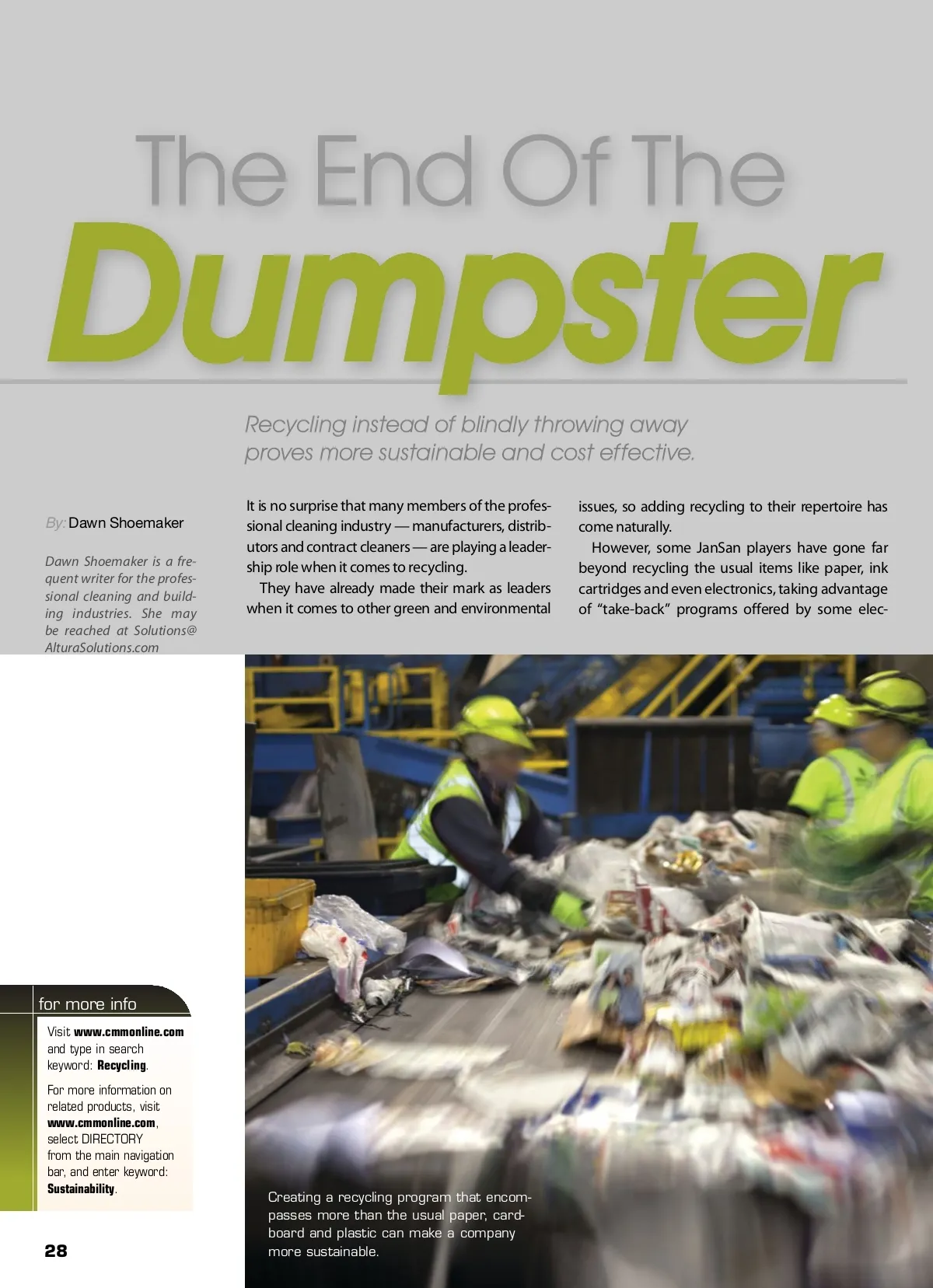
tronics manufacturers. They have investigated and analyzed their entire business operations — and for manufacturers, their manufacturing pro-cesses — looking for ways to recycle used materials, scraps, etc. have been placed in dumpsters and simply hauled off to landfills. This is not sustainable, and what’s more, it’s costly. So Crown has changed its operations. Analysis Benefits This analysis can find ways of reusing mate-rials within an operation to help reduce the amount of new materials that must be pur-chased, which can help reduce cost. Analyzing operations can also identify when waste can be sold as scrap items, help-ing to “recycle” these scraps into profits. An example of the length some compa-nies are going to in their efforts to operate more sustainably is found at Crown Mats and Matting. Crown is one of the oldest mat manufac-turing companies in the U.S. Like other manufacturing processes, producing mats results in a considerable amount of scraps that historically were treated like waste. In years past, much of this waste would Reduce, Reuse, Recycle Many of the ways Crown administrators re-cycle products are specific to the matting in-dustry, but they help demonstrate the types of steps other industry players can take when they decide to get actively involved in a recycling program. Among Crown’s recycling initiatives are the following: About 25,000 pounds of scrap mate-rial such as PVC*, vinyl trimmings and foam used to make some mats is trucked from the company every four to six weeks for recy-cling and reuse purposes. Cardboard boxes (along with office paper, magazines and newspaper) are recycled. Shipping materials are either reused or re-cycled with the boxes. Broken pallet planking, which is pieces of broken wood pallets used for delivering mats and other products, is now recycled. Steel from old pieces of equipment or projects that generate steel scraps goes into special containers that are picked up for recycling. Aluminum cans, plastic bottles and caps are recycled. Some forms of plastic bottles are recycled and can then be used to manufacture new mats. Used but working office equipment is given away. As referenced earlier, many recycled prod-ucts can be sold. A Crown spokesperson verified this, saying “In some cases, we are paid by recyclers [for the recyclable items]. We often give the rev-enue we collect to charity, which means we even recycle what we are paid for recycling.” Parts of bulbs can be recycled, and many light bulbs contain toxins that can be harm-ful to the environment. Proper recycling prevents these toxins from being released into the atmosphere. Batteries Batteries used to power some JanSan equipment, as well as batteries used to pow-er an array of electronics used every day are recyclable. As with light bulbs, some communities have recycling companies that specifically recycle batteries. CDs Instead of tossing CDs, which is very com-mon, they can be recycled into a fine pow-der that is melted down and often used in building materials. Water Filters Some offices have water dispensing sys-tems that filter the water as it is used. These filters are typically disposed of af-ter a set period of time, but they can be re-cycled. Often, they are turned into toothbrushes, cups and other plastic items. Pizza Boxes Believe it or not, some recycling plants will now accept the box as long as any grease or pizza ingredients have been re-moved. Typically, just wiping the box clean with a damp sponge is all that is required. Old Product, New Uses Another form of recycling is finding new ways to use old products. Many organizations will accept old elec-tronic devices including computers, print-ers, copiers and other items found in most office settings. As long as they are in good working order, they are then sold to other companies or given to schools or other organizations that can benefit from them. All this goes to show that JanSan busi-nesses can improve their sustainability, and in so doing, reduce costs by finding innova-tive — and often easy and practical ways — to recycle a wide range of items used every day. * PVC, or polyvinyl chloride, is a polymer used in manufacturing a variety of items, from car interi-ors to medical equipment. Image courtesy of hroe/iStock/Thinkstock Other Ways To Recycle The many steps taken by Crown can apply to other companies in the industry. Additional items — some a bit unusual — that can be recycled in other JanSan-related businesses include the following: Light Bulbs Though it’s often overlooked, many com-munities have light bulb recycling programs. www.CMMOnline.com 29
CMM – Archives August 2014: 29